
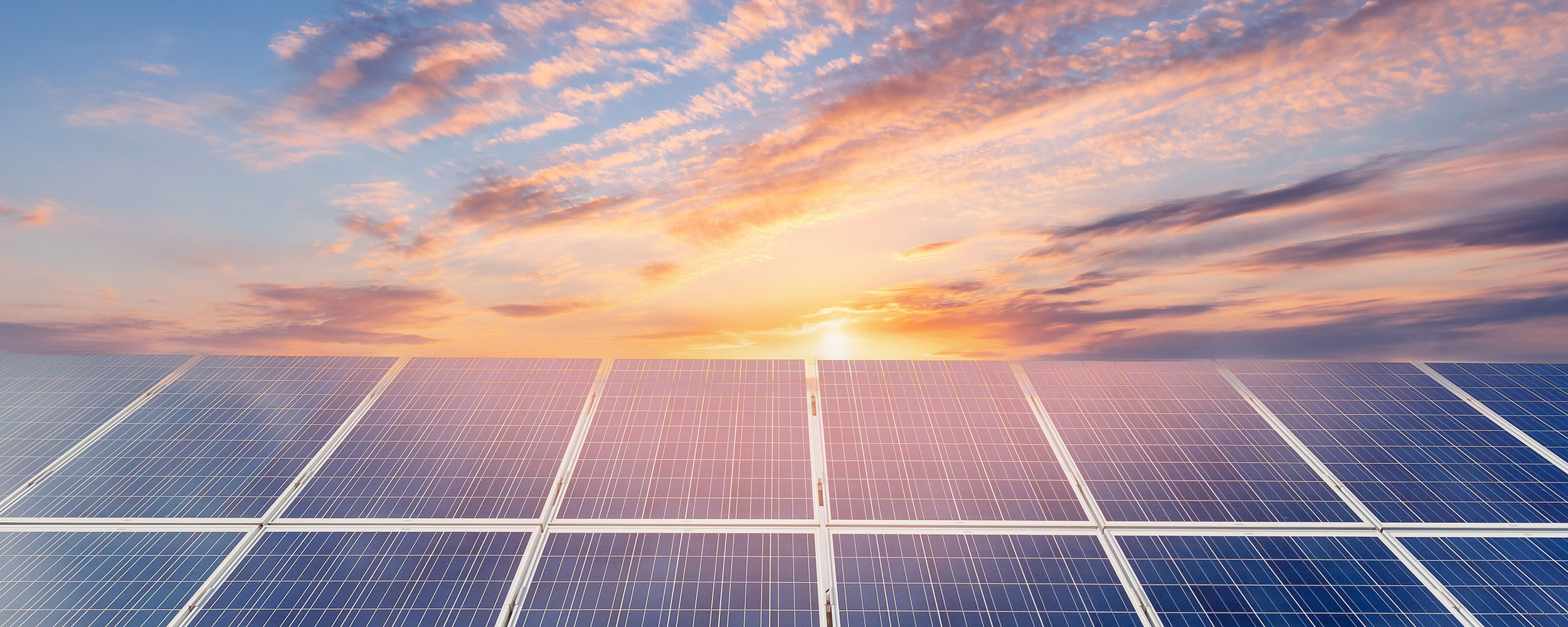
Solar photovoltaic panels are a fantastic invention; they can turn abundant solar energy into electricity. Moreover, they provide shading on building roofs, reducing the heat that penetrates from direct sunlight. Amazing. But, there is one slight hitch – as the panels heat up, they become less and less efficient. A team of researchers at UM are looking into an innovative way to cool PV panels and the roof under the waxing sun.
A few years ago, I thought it would be a smart idea to buy a portable, solar-powered battery pack to charge my electronics on the go. However, after leaving it for an afternoon in the sun to charge up, it broke. There are two lessons here: 1) don’t buy cheap, and 2) solar panels endure a lot of heat while charging. As anyone who has spent a morning in the Maltese summer sun can tell you, you’re hardly going to get any work done. The same is true for photovoltaic (PV) panels, which is a problem, as their one job is to stand in the sun.

As machines heat up, they tend to become less and less efficient. ‘Silicon solar panels, for example, will lose around 0.5% of power for every degree Celsius above 25 degrees,’ explains Dr Ing. Ryan Bugeja, project partner on HYPER. ‘In resolving this issue, we take this opportunity to improve the cooling efficiency of roofs,’ says Prof. Ing. Daniel Micallef, Head of the Department of Environmental Design and lead investigator of Project HYPER. Engineers have worked out various ways to keep solar panels cool and, by extension, efficient. But before we get ahead of ourselves, let’s get a few terms straight first:
- Irradiance: This is the solar energy received from the sun’s rays before it is turned into electricity.
- Ventilated Roof: A roof design that includes a forced air flow system to circulate cool air.
- Building Integrated PV: Solar panels installed on buildings to provide synergistic effects that go beyond the benefits of the photovoltaic panels themselves. They can replace traditional building materials (e.g. using solar panels instead of tiles on the facade).
- U-Values: A measure of the ease with which heat can transfer by conduction through matter. The lower the value, the better the insulation.
- Phase Change Materials: A substance which releases or absorbs sufficient energy when it changes its phase (gas, liquid, solid).
Peak irradiant energy occurs when the sun is at its brightest, typically at noon; however, this is also when the sun is at its hottest. Not to mention that the solar panel itself has also been steadily heating up all morning. This means that, ironically, when the solar panel has the highest potential to produce energy, it is also the least efficient. Hence, the need to cool solar panels.


Ways to Cool PV Panels
Water cooling is one option. Water is circulated through tubes behind the panels, which carry heat away. In turn, this heated water can be used elsewhere in the household. ‘In a previous experiment using a similar set-up, we had gains of around 10% during summer,’ says Bugeja. However, water cooling requires pumps and runs the risk of leaks, especially at a larger scale.
Another relatively simple option to keep solar panels cool is to ensure they are well ventilated. This involves installing solar panels at a tilt or integrating them into a ventilated roof. ‘Optimal tilt depends on the location. For Malta, the ideal would be between a 30 and 36 degree tilt,’ explains Prof. Ing. Luciano Mulè Stagno, Director of the Institute for Sustainable Energy and project partner on HYPER. ‘While this angle is the most efficient angle, at the same time, it does not allow the PV to be well integrated with the ventilated roof.’
Even without solar panels, ventilated roofs offer enhanced U-values and reduced heat gains. However, the team behind Project HYPER aim to take this even further by using PCMs on the backside of PV panels within a ventilated roof system. But what is a PCM, or phase change material, exactly?
What is a PCM?
‘Basically, everything changes phase at one temperature or another; liquid, solid or gas,’ says Micallef. ‘Let’s use ice as a simple analogy,’ explains Mulè Stagno. ‘When water (liquid) is exposed to heat, every heat packet will increase its temperature. While when ice (solid) is exposed to heat, the first heat packets would melt the ice, rather than raising the temperature.’ This is known as ‘latent heat of fusion.’ While melting, the heat energy needed to change a substance from solid to liquid does not cause any increase in temperature. The temperature only changes after the phase change is complete.

Using this nifty bit of physics, the team will use paraffin wax at the back of the PV panel. The wax will act as a thermal sponge, absorbing the heat throughout the day and then melting when radiance is at its peak. As the wax melts, it will absorb a large amount of heat without the temperature rising, thanks to its latent heat of fusion. As the wax melts throughout the afternoon, it helps to stabilise the panel’s temperature. The wax would then solidify during the cooler evenings, facilitated by the airflow found with ventilated roofs. That’s the idea anyway. This is where simulations and model-scale testing come into play.
‘Paraffin wax melts at around 35 degrees, and even though this might not be the ideal temperature, we want to verify the simulation model in practice first,’ explains Micallef. ‘We will be running most experiments in winter or spring, so if we chose something with a higher melting point, then the wax might not melt.’ The simulations determined how the team would design the experiment and scale model. ‘The scale model is around 1:10, so if the roof is 10 m by 10 m, then the scale model is 1 m by 1 m,’ explains Micallef. However, building the prototype presented its own challenges.


Burning the Candle at Both Ends
‘The first challenge is what I like to call island syndrome,’ laughs Bugeja. ‘Sourcing materials from foreign imports, shipping delays, problematic materials that need to be sent back and waiting for replacements, that sort of thing.’
Working with melted wax was also rather tricky. ‘We needed to create a chamber that would not leak when the PCM melts,’ explains Micallef. ‘Besides that, when wax melts, it increases in size, so if you’re placing it in a container, it needs to accommodate both the solid and the expanded liquid phase. Our design included a backplate which would bend in order to handle the extra volume,’ he says.
With the model ready, the next step is to collect the test measurements. The team anticipates their set-up will improve efficiency by 5–10%, as well as an approximate 20% reduction in the roof’s heat gains.


‘In 2024, Malta had about 250 Megawatts of installed solar capacity (some 600 or 700 thousand panels). Gaining just 5% on that would award you with substantial energy yields,’ explains Mulè Stagno. ‘With building-integrated PV, you’re blocking natural ventilation, which means they’d work less efficiently. By having the wax and a forced air flow, you’d be able to improve their efficiency as well as that of the roof,’ he adds.
While solar panels offer clean, renewable energy, maximising their power output means improving their efficiency. Finding a way to keep solar panels cool is the key, along with the added benefits of a ventilated roof. The question is: can PCMs in conjunction with a ventilated roof hold a candle to water cooling? Or are they just a candle in the wind?
Project HYPER would like to acknowledge Terrence Cilia for building the prototype and Sudarshan Babu Ramesh for his support in administration. Project HYPER is funded by Xjenza Malta under the Research Excellence Programme (REP-2024-013).




Comments are closed for this article!