
Author: Chris Styles
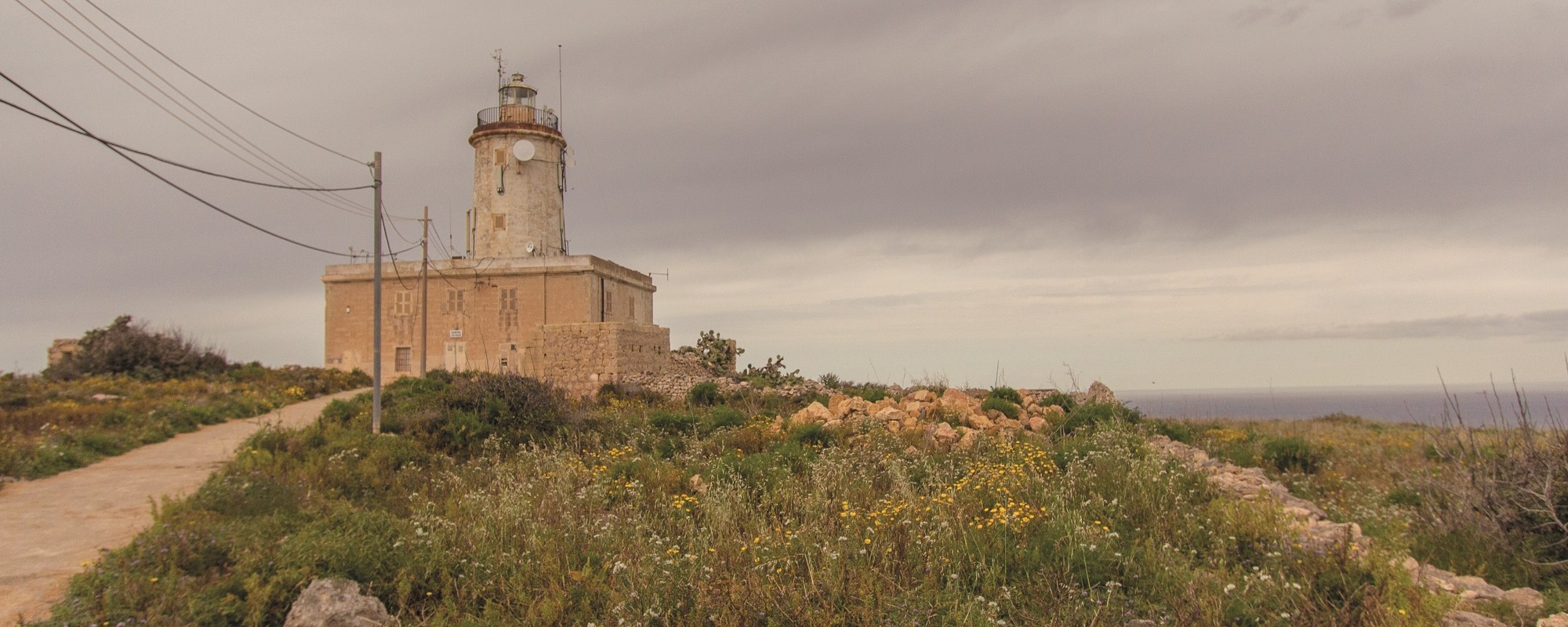
On one of the highest spots in Gozo there proudly stands a lighthouse. Built in 1840, it continues to warn nearby ships away from the shallows. After a long night shift, the lighthouse has another crucial role to play. A team of researchers from the University of Malta, led by Prof. Raymond Ellul, has converted this historic piece of Malta’s heritage into a remote laboratory.
It turns out this is the perfect spot for an air monitoring station. North of the island, in the seas between Gozo and Sicily, lies one of the busiest stretches of international waters on Earth, seeing approximately 85,000 cargo ships passing by annually. Each of these vessels constantly belches out masses of harmful gases, such as carbon dioxide (CO2), nitrous oxide (NOx), and sulphur dioxide (SOx). High levels of sulphur dioxide are associated with respiratory disease, preterm births, and at very high levels, death. Nitrogen oxides also cause respiratory disease and headaches, reduce appetite, and worsen heart disease, leading to death. Prevailing winds carry these toxic gases towards the Maltese Islands.
Apart from shipping, some of these harmful gases are released by natural processes, such as volcanic eruptions from nearby Mt Etna. Therefore, sophisticated equipment and mathematical modelling help researchers discriminate just how much cargo ships impact our air.

When Transport Malta first opened the doors of the lighthouse to researchers in 1996, the team had only three pieces of monitoring equipment. ‘That was all we could borrow from our German friends,’ Ellul recalls. ‘At that time research funding at the University of Malta was practically non-existent.’ Today the laboratory is full of blinking lights and monitors.
Before the station opened, there was very little information on the rate of emissions in the Mediterranean. Meanwhile, similar systems had been set up in the Baltic Sea and proved effective. Although Ellul has not observed the volume of gas emissions to significantly increase since the 1990s, he warns, ‘What is clear is the trend in temperature which indicates an increase of 3–5 degrees if projected to 2100. It is not simply a case of pollution increasing or decreasing, as the pollutants monitored exhibit very complex patterns [and interactions].’ According to emission expert James Corbett’s (University of Delaware) data, 27,000 people in Europe die annually due to the toxic fumes emitted by ships.
Having precise data will help the islands keep officials and experts informed on the potential impacts of these fumes and hopefully make proactive changes. The complex system of monitors, sensors, and algorithms that Ellul and his team are operating in that lighthouse on top of that hill is crucial for this.
You can read more about Prof. Ellul’s research in THINK Issues 7 (2013) and 20 (2017).



Comments are closed for this article!