
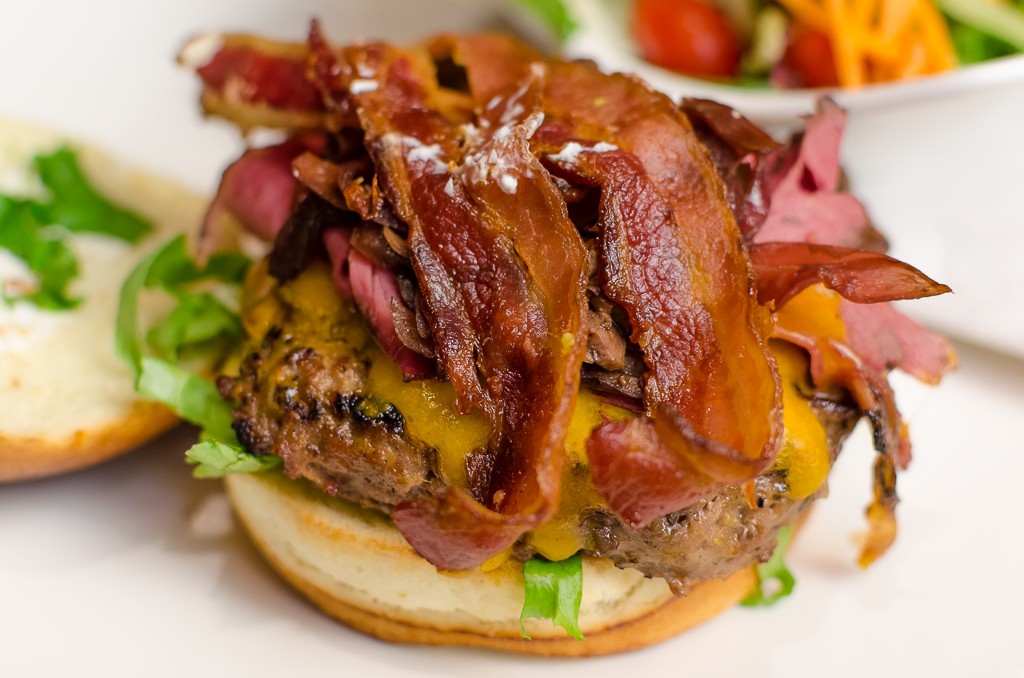
Our insatiable, carnivorous appetite persists in driving an increase in the global demand and production of meat. This continues to fuel controversy over the meat industries impact on the environment and its effects on our own health. To continue the discussion, S-Cubed, the Science Student Society has recently held a debate to discuss our meat eating habits. Words by Scott Wilcockson.
Processed meats have been moved to DEFCON 1 regarding carcinogenicity, with the World Health Organisation (WHO) recently reporting that the consumption of 50g a day increases the probability of developing colorectal cancer by 18%. Limited evidence has also seen red meat classified as ‘probably carcinogenic’, while decades-long research has shown the negative impact of diets high in meat and saturated fats. This leads to the question; Should we be making more of an effort to curb our meat addiction?
Human nutrition researcher, Dr Claire Sillato Copperstone, says it’s ‘not a case of good or bad food, it’s a case of good or bad diet’. While processed meats should be avoided, red meat is still recommended as part of a healthy balanced diet. Moderation is key, says nutritionist Petra Jones, you should aim to reduce your intake to a maximum of 500g per week.
Eating meat does have health benefits, providing essential vitamins, protein, and fatty acids. However, the nutrients found in meat can also be found elsewhere, a vegetarian diet can provide the body with all it needs. It is simply a matter of informing yourself (or through a nutritionist) about your food and knowing how to effectively balance your diet. Ultimately, how much meat you decide to eat is a personal decision subject to a person’s needs.
The benefits of reducing meat intake are very clear and not just for our selfish concerns of longevity but also on a worldwide scale. Our increasing demand for meat continues to place a great burden on our little blue planet.
The meat industry contributes towards man-made climate change. It represents one of the top contributors to greenhouse gas emissions. This is compounded by the growing need for arable land, the emissions of the animals themselves, and the transportation costs for getting that burger onto your plate. This all adds up to one big carbon footprint, roughly 15% of our total greenhouse gas emissions. More than all transportation combined.
Dr Oliver Frendo points out that ‘EU legislation on environmental protection is the strictest in the world’. For example, animal waste, a major contributor to their emissions, is used to make energy or fertiliser which also reduces the need for chemical fertilisers. But is the rising demand for meat sustainable on a planet with finite space and resources?
While reducing our consumption of meat would definitely benefit both our own health and that of the planet, this news isn’t new. People continue to drink alcohol, smoke cigarettes, and drive gas-guzzling vehicles. Humanity has proven stubborn and slow to change. So how can we change that?



Comments are closed for this article!