
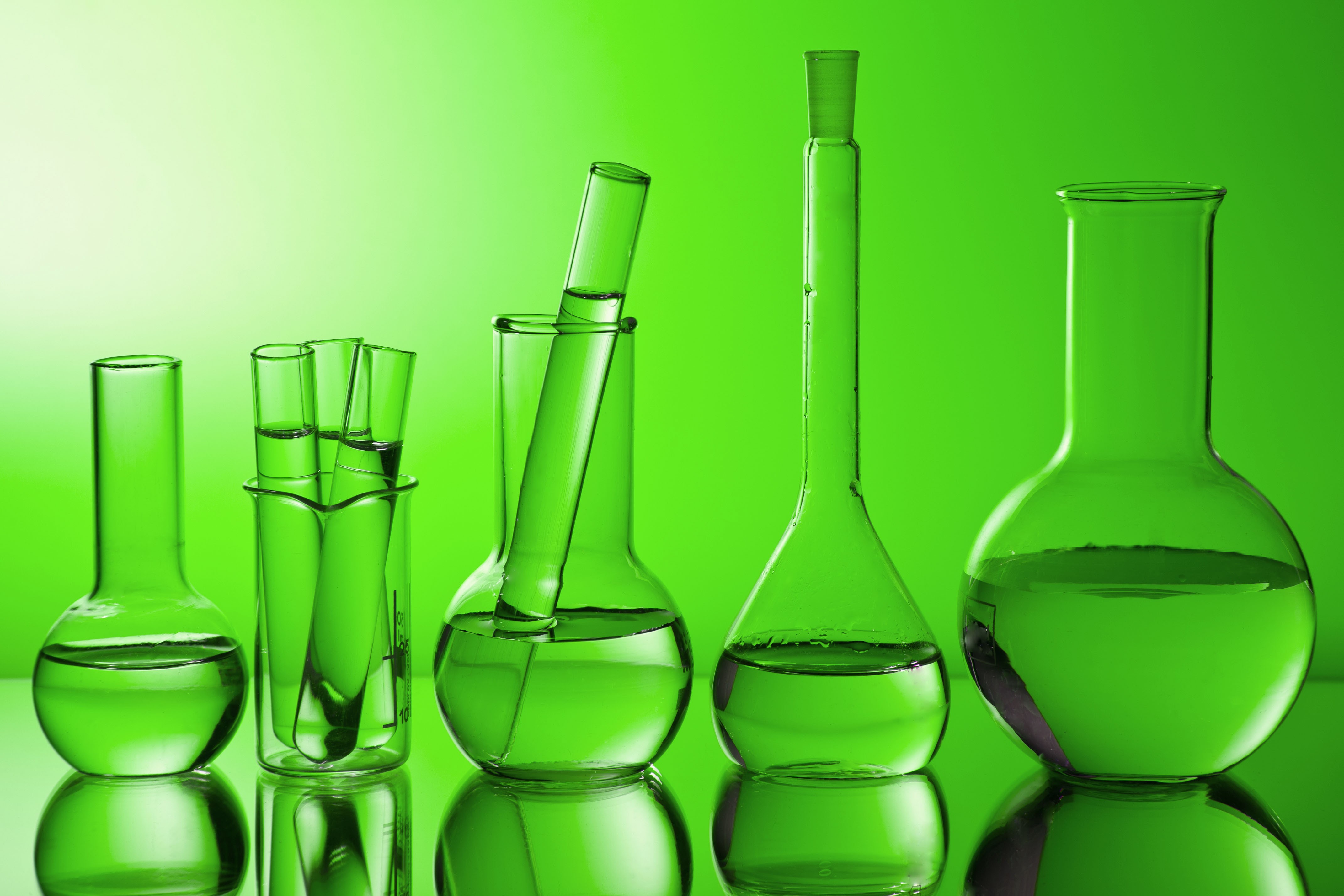
Producing Food products, pharmaceuticals, and fine chemicals leads to hazardous waste and poses environmental and health risks. For over 20 years, green chemists have been attempting to transform the chemical industries by designing inherently safer and cleaner processes.
Chemists in academia rigorously test chemical processes which can then be implemented by industrial green chemists. Anthony Debono (supervised by Prof Giovanna Bosica, Department of Chemistry, University of Malta) recently attempted to apply the Twelve Principles of Green Chemistry to a chemical reaction called the aza-Michael Addition, which is a carbon-nitrogen bond-forming reaction used for industrial purposes. Normally, the chemical reaction occurs between nitrogen containing compounds called amines and compounds normally associated with a fruity smell such as α,β-unsaturated esters (electron-deficient alkenes). Others have studied this chemical reaction, but the reaction with dimethyl maleate — an additive in plastics, agriculture and pharmaceuticals — as a ‘Michael acceptor’, had not been studied extensively.

Debono tested the process to find out how much and how quickly the product was being produced under many different conditions. The most environmentally-friendly reaction was then identified by maximising yield and minimising waste. Debono showed that under the right conditions no catalyst or solvent was needed. Further tests showed that dimethyl maleate is quite an atypical Michael acceptor since it reacts quite rapidly under mild conditions. This makes it an ideal chemical to produce green reactions and new compounds.
Many of the products obtained were actually novel, so they had to be isolated and analysed to identify them. This study may be useful for other researchers working on carbon–nitrogen reactions that are used in industries from plastic manufacturing to food production.
Green chemistry shows how ingenuity and creative design in chemical processes can help sustainable development. As Paul Anastas, the founding father of green chemistry, said, ‘we used to think that we couldn’t maintain our quality of life without toxic, hazardous and depleting substances. Green chemistry belies that myth every day.’
This research was performed as part of an M.Sc. at the Faculty of Science at the UoM. It was partly funded by the Strategic Educational Pathways Scholarship (Malta), which is part-financed by the European Union — European Social Fund (ESF) under Operational Programme II — Cohesion Policy 2007–2013, ‘Empowering People for More Jobs and a Better Quality of Life’.



Comments are closed for this article!