
Spheres of Influence, Performative Realism, and the Mad Gods of Our Disintegrating World
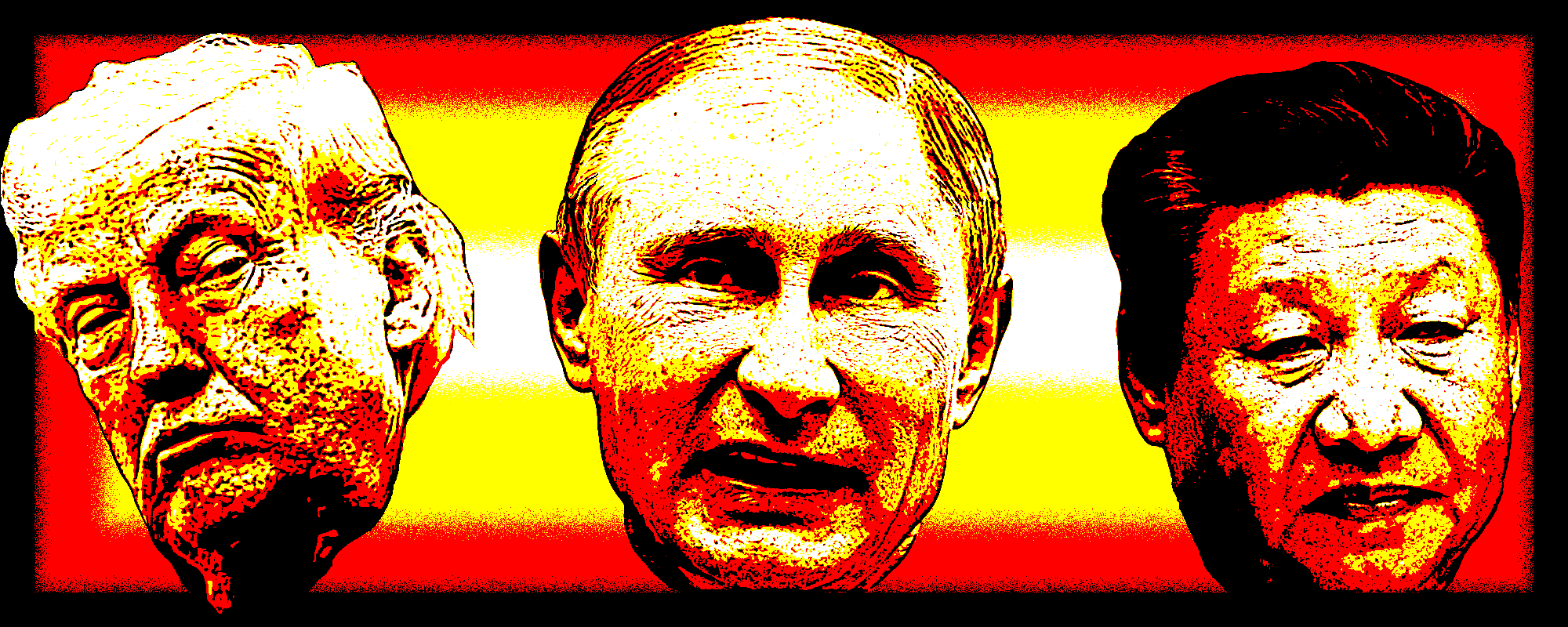
The strategic trinity of the United States, Russia, and China has adopted rhetoric founded in Realism, a theory of politics based around hard power and spheres of influence. THINK’s Jonathan Firbank examines this ‘Performative Realism’, and what it means for a European Union that is increasingly in the trinity’s crosshairs.
The liberal world order was always part hallucination, an egregore sustained by collective belief. As Mark Carney eulogised at Davos, ‘the system’s power comes not from its truth but from everyone’s willingness to perform as if it were true.’ That performance didn’t just mask our societal hypocrisies – it was structural. It created rhetorical pressure on the malevolent, and rhetorical encouragement for the rest of us. But the white lie of Liberalism has collapsed, and that collapse precipitated a feeding frenzy. Grifters, no longer having to feign shame, have spent this century dismantling the institutions that briefly restrained them. They have sought, and recently found, an alternate hallucination – the political philosophy of Realism. Rather than being deployed to interpret international relations, Realism is now deployed as a justification for ‘great powers’ to dominate the rest of us. Increasingly, they are turning their attention to the European Union.
Was it Liberal to Call it Realism?
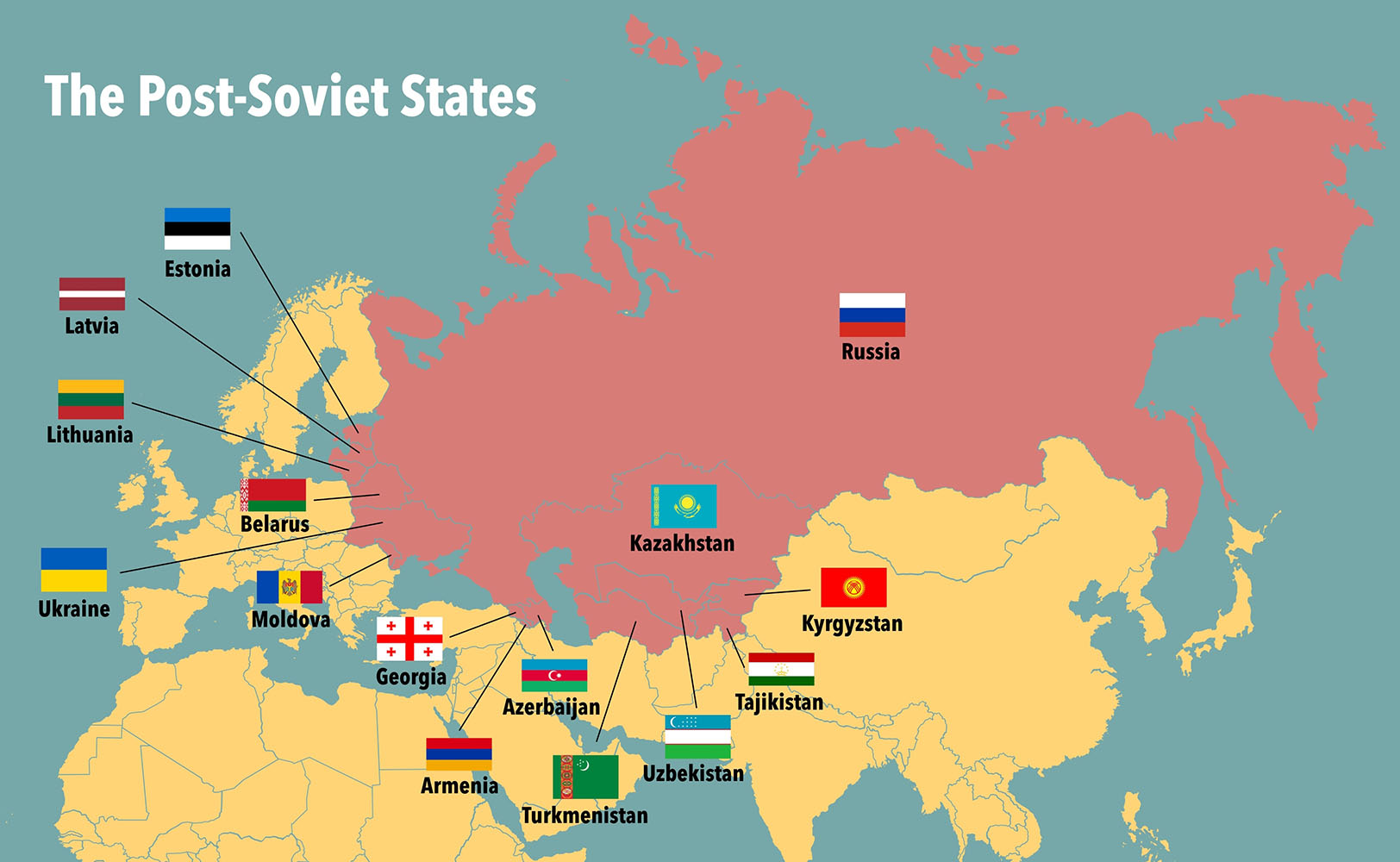
Liberalism, as a theory of international relations, has always competed with Realism. In very rough terms, Liberals believe in the primacy of soft-power interdependency, whether economic or via more explicit international cooperation. Realists (again, roughly speaking) see a world where competing nations are only kept from war by a counterbalance of hard power. A recurring trope in Realist thinking, particularly the pop-Realism of public intellectuals, is the concept of ‘spheres of influence’. This idea tends to be baked deepest into those who formulated their worldview during the Cold War. A sphere of influence is a collection of lesser nation states that are presumed to be within the control of a hegemonic, greater nation state. Often, embarrassingly, this space will be perceived as a literal circle with a big, powerful country in the middle. The peripheral nations, like the birds that clean an alligator’s teeth, survive only as long as the central nation permits it. The relationship is so lopsided that these weaker nations, in a perverse way, belong to their bully. The most cited example of this is Russia. Russia has invaded every nation it has a border with, except Mongolia, which nonetheless toed a precarious line as it was subsumed into the Soviet Union. Today, Belarus is a Russian vassal state while Georgia and Ukraine are partially occupied. To the Realist, Russia’s neighbours have no agency. This implicitly makes them belong to Russia, despite it lacking the capacity of Stalin’s USSR.
Conversely, the best evidence of Liberal interdependence is the EU. For example, Roman legions aren’t poised to invade Malta to secure a new port. The multifaceted interconnection and cooperation between Italy and Malta makes that an absurd suggestion, despite their hard-power discrepancy. But Liberalism as a theory can also be reductive, oft-founded in 90s optimism. In ‘99, Thomas Friedman suggested that no two countries with a McDonald’s would go to war, a tongue-in-cheek example of a Fukuyaman assumption: that soft economic and cultural power would eventually make war unthinkable. The ‘Golden Arches Theory of Conflict Prevention’ was disproven that same year, with NATO’s intervention in Serbia. Political theory is just a lens through which we can perceive the world; reality will always be more complicated than what Liberal or Realist theory can express. Climate, culture, technology, and the psychology of leaders are just a few examples of things that can be as influential as a nation’s economy, military and geography. And, of course, they all influence each other in more ways than the human mind can process.
Global Putinism
But what if very powerful people want the theory of Realism to be true? Perhaps, for example, because their psychology is psychopathic. Someone who is pathologically coercive cannot imagine a world that isn’t. Perhaps Realism provides rhetorical cover for exploitation that will enrich people. Or perhaps Liberal institutions, with all their rules, have impeded someone who now wants to dismantle them, out of self-interest or revenge? If the only truth of human civilisation is ‘might makes right’, any sin is permissible. This paragraph thus far could describe any number of tinpot, dictatorial regimes, Russia included. But it could also describe the most powerful regime in the world today: the US. The United States’ 2026 administration has Putinist credentials; Putin is in constant, friendly communication with Trump and the admin is littered with Putin-apologists and oligarchs with Russian interests. But again, this is just a lens through which the world may be perceived. The perfect storm that produced Trump’s America is far bigger than a relationship between Don and Tsar. Nor is that friendship a prerequisite for the reality we now face – both Russia and the US, deploying Realist rhetoric, aspire to sabotage and seize territory from the great Liberal power, the EU.
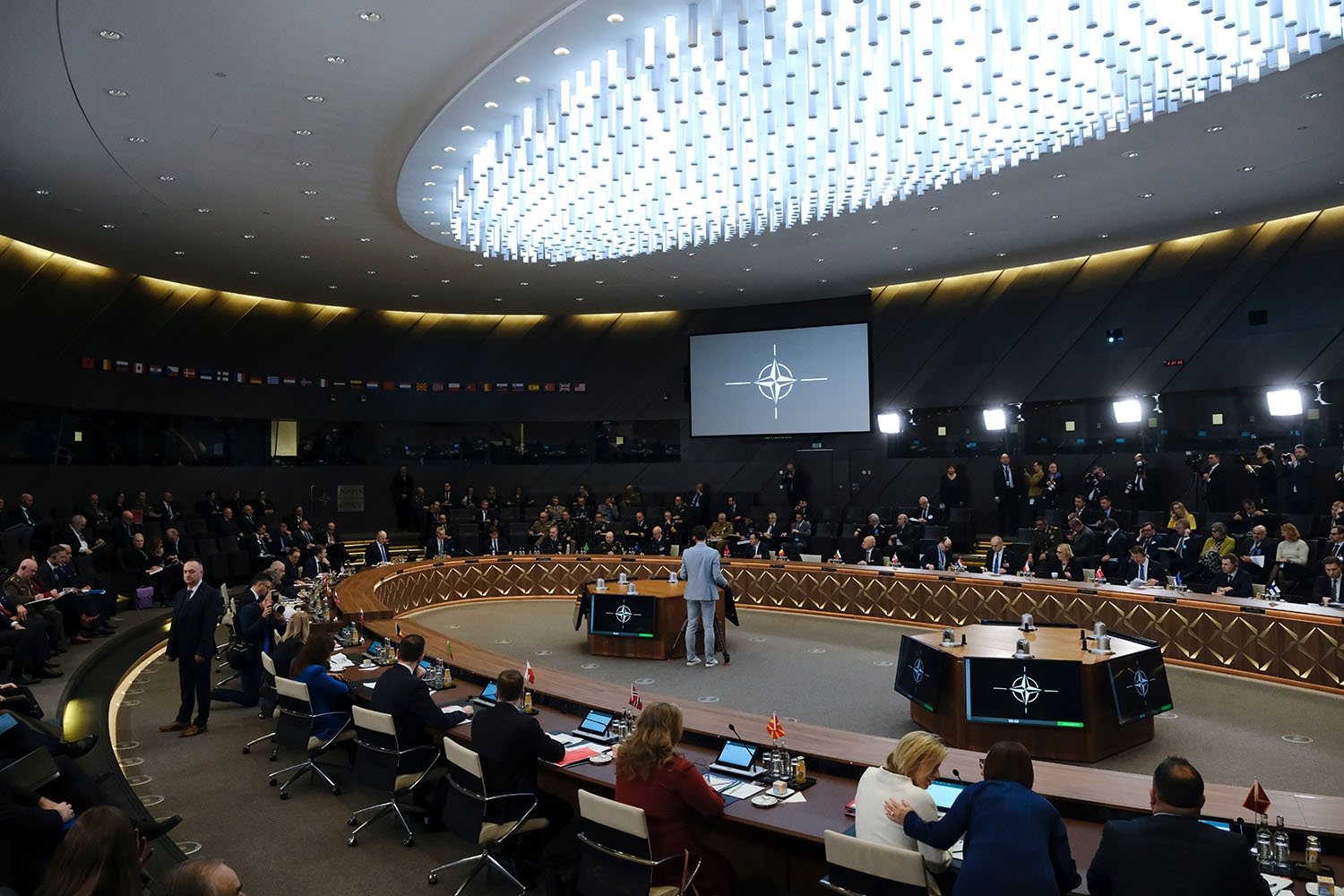
Both are well documented. The US 2025 National Security Strategy (NSS) states a goal of cultivating ‘internal resistance’ against Europe’s ‘trajectory’. This manifested most obviously in their intervention on behalf of an anti-EU Orban and Musk’s mid-DOGE support for Britain and Germany’s far right. This mirrors Russia’s interference in European elections, which is omnipresent but has been felt most keenly in Romania and Moldova. The same document expresses a desire to impede the growth of NATO, a Liberal defensive bulwark. The NSS echoes Putin’s 2021 Realist manifesto, On the Historical Unity of Ukrainians and Russians. Ironically, the latter text is less hostile to NATO than the text from NATO’s greatest power. These two documents deserve their infamy. The US NSS revives the Monroe Doctrine, a centuries-old strategy that mutated into the domination of the Western hemisphere, erasing the agency of 34 countries. Putin’s essay, again, is less dramatic but is a carefully curated attempt to erase Ukrainian agency. Putin invaded Ukraine a year after he wrote this statement of intent. Trump demanded Greenland a year after the NSS was published.
And of course, there is a third corner of the strategic triangle, China. The sphere of influence that China means to dominate is harder to perceive, as it does not have a neat geographical border. Instead, it applies to ethnic Chinese wherever they may be. Taiwan, Hong Kong, and distant communities of emigrants are all considered to ‘belong’ to the CCCP. They are surveilled, illegally policed and, especially in the case of Hong Kong, brutally repressed. This borderlessness represents a challenge to the sovereignty of EU nations, whose Chinese communities are predated upon by a totalitarian emerging superpower.
Greenland
Trump genuinely wanted to conquer Greenland; he sought no secondary concession in exchange for unwinding the crisis he created. There were reports of internal pushback and, externally, Secretary General of NATO Mark Rutte was able to diffuse Trump’s obsession, so Greenland was never seized. But the US was ‘cultivating internal resistance’, drafting war plans and preparing the media landscape for an attack, bloodless or otherwise, on their European neighbour. The effort continues: political agents are sent to Greenland to sway opinion, propaganda stunts involving a US hospital boat and bribed petition signatures are implemented, and new military bases are planned that would have high utility in a conflict. Now that the US has climbed down from an unwinnable conflict in Iran, Greenland could creep back into the spotlight, over days or decades. Precariously close to its predator, Greenland may represent an ‘easy win’ despite the US’s recent deficit of munitions and military competence.
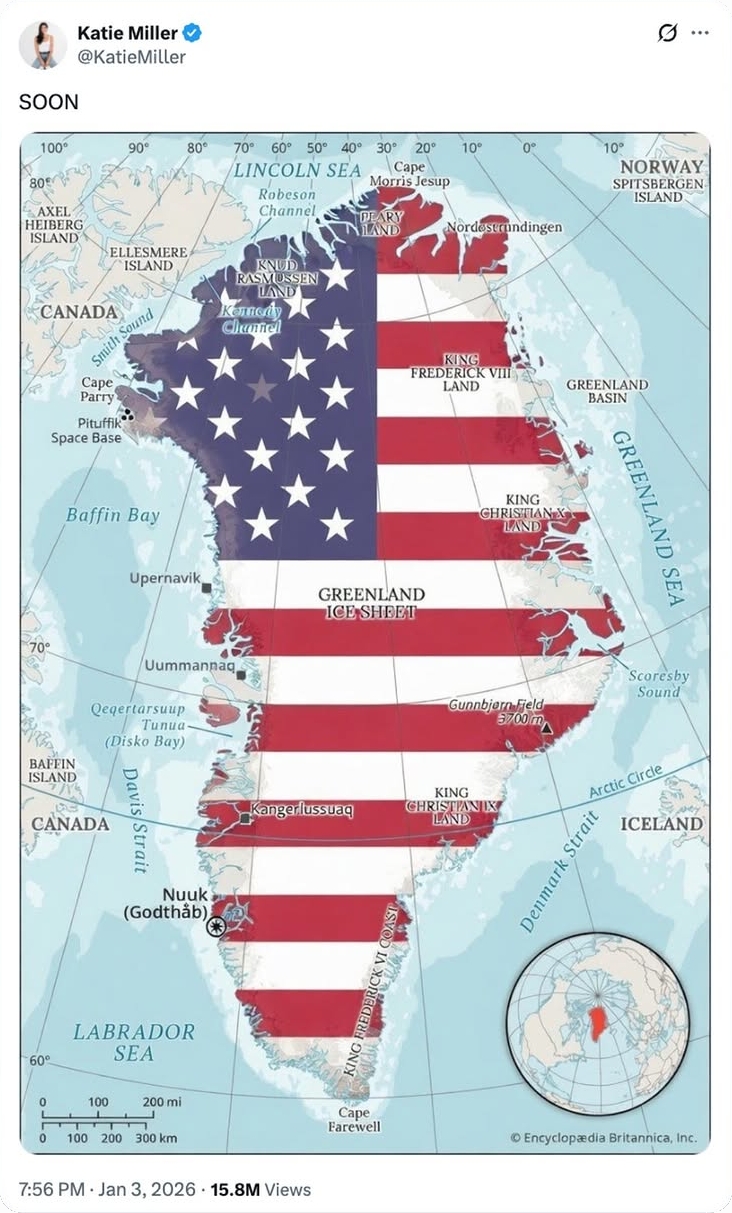
From a Liberal perspective, the US invading Greenland is as crazy as Italy invading Malta. Greenland: already hosts US bases; is a democratic nation that shares ‘US values’; is part of the Danish Kingdom, the US’s oldest ally; and its people are EU citizens. The capture of Venezuela’s Maduro and the strangulation of Cuba had pretext – both regimes are comparatively oppressive and rhetorically hostile to the US. They align with rivals (if Russia is still America’s rival) and fly socialist/communist banners still loathed by many Americans. But these pretexts do not apply to Greenland (nor the similarly threatened Canada).
Amidst the violent frenzy that culminated in hundreds of dead Iranian schoolgirls, Greenland only makes sense if you see it through the lens of what has been called ‘Performative Realism’. Oldschool Realists would argue that invading Greenland is meaningless because it already de facto ‘belongs’ to the US by virtue of the deep political and military interconnection it shares with its great power neighbour. When that argument was put to Trump, he stated that owning Greenland outright was just psychologically important for him. Seizing Greenland would be, like every other action by the new US, a performance first. An expression of dominance that would feed the narcissistic or sadistic tendencies of a few key players and their most hardcore supporters. A visibly psychologically stimulated Stephen Miller justified attacking Venezuela and Greenland in the same breath when he said the ‘iron law’ of the world is that it is ‘governed by strength, governed by force, governed by power.’ The world that is governed by cooperation, governed by community, or even governed by effective governments, is invisible.
Performative Realism
Performative Realism is a phrase repurposed by Matthew Frederick in his essay Performative Realism: The Dangerous Turn in US Foreign and Defense Policy. He identifies in the Trump administration a Realist discourse but none of the forward planning, statecraft or effective political infrastructure that a traditionally Realist power would depend on. The new, populist America dismantles its own state capacity and excommunicates sources of expertise. This could not be further from the bureaucratic, pragmatic and efficient elitism of, say, Bismarck’s Prussia. China demonstrates a less extreme but more important comparison between traditional Realism and Performative Realism. The institutional discipline and understated rhetoric of Deng Xiaoping’s China contrasts with the China of today. It now deploys jingoistic domestic messaging and performative shows of military strength to mask chaos, corruption and purges.
Still, China has emerged as the most internationally stable member of the strategic triad, confining its human rights abuses to comparatively unseen spaces. Meanwhile, America and Russia crow their brutal philosophy as they rain misery on the nations around them. The language of Realism is deployed retroactively to explain spasmodic, authoritarian violence. Realism is no longer a lens through which to view the world. Instead, it’s a convenient justification that comes from the same void as an abuser’s excuse. Prior leaders of each power made decisions that contradict Realism’s self-evidence, by acknowledging a world beyond ‘might makes right’. Trump’s Donroe Doctrine, Putin’s Russkiy Mir and Xi’s Zhonghua Minzu (for want of a better term) are theoretical, Realist spaces that exist to retroactively justify each man’s pathological domination. This Performative Realism is a hallucination that must grow, in line with the growing failures it conceals.
And between these three hallucinating superpowers, the mad gods of our time, lies the European Union. As it is definitively Liberal, it is increasingly the enemy of Performative Realists. Powers that define themselves in oppositional terms must despise a power that represents an alternative. Again, this is well documented. The Trump administration opened this term’s performance with an explosion of verbal abuse towards the EU. As Russia probes with drones and spies and China usurps rule of law, America now threatens with economic and political coercion. They undermine Europe because they see the EU as a threat – it represents an alternative their populations would likely prefer. This is not a hallucination. Liberal values, rule of law, institutional resilience and deep alliances are a perfect counter to the incompetence and transience of authoritarian regimes. China menaces Taiwan, for representing a Liberal alternative. Russia invades Ukraine, for representing a Liberal alternative. The US sabotages the EU, for representing a Liberal alternative. Taiwan survives, Ukraine survives and – may it long be the case – the EU survives.
Disclaimer: The opinions expressed in this article are solely those of the author and do not necessarily reflect those of the University of Malta.


Comments are closed for this article!