
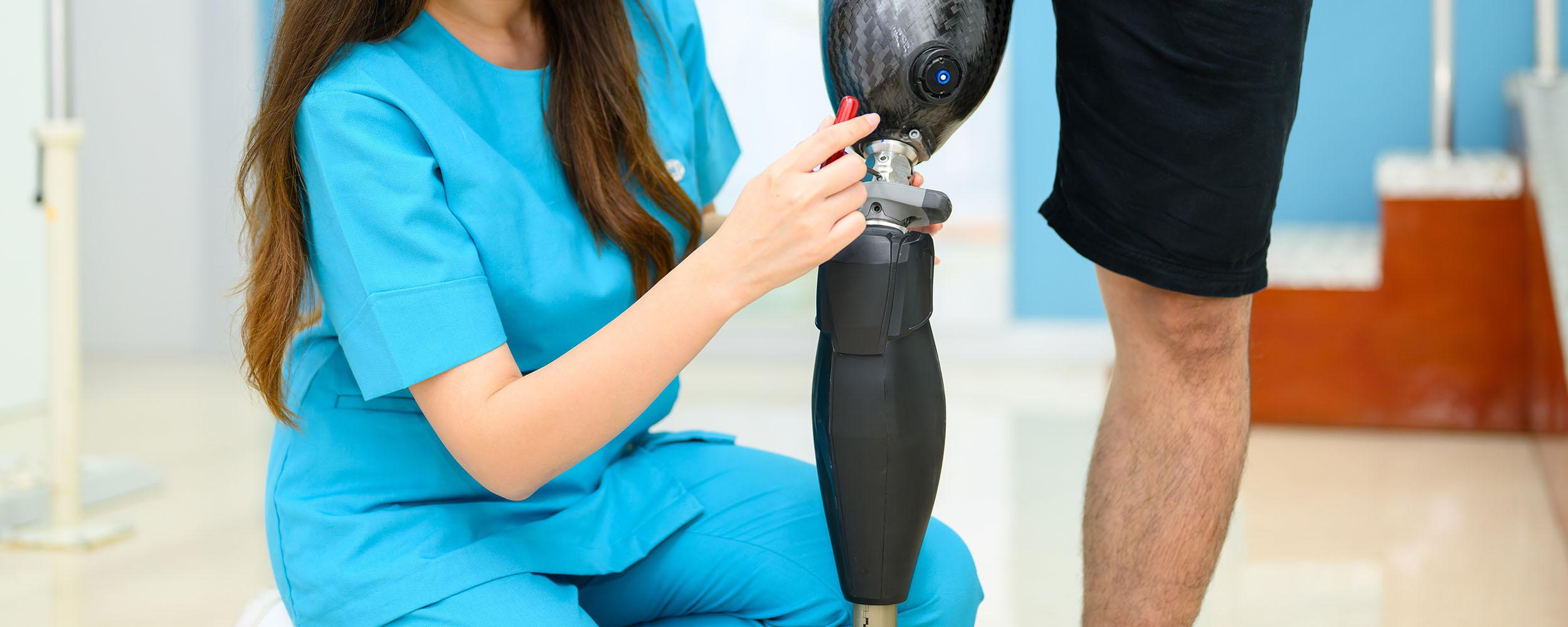
In a country with more metal bands per capita than anywhere else, you’d expect to hear sick guitar solos and wicked vocals around every corner. But for a group of students in Oulu, Finland, the only sound was the buzz of 3D printers, building the next generation of wearable rehabilitation tech.
The EDUWEAR Project brings together engineers and occupational therapists from across Europe to participate in an interdisciplinary e-learning course, complemented by hands-on exercises, to learn how to design custom and wearable rehabilitation devices. Ultimately, developing such complex technical systems requires an eclectic range of skills. Most engineers can’t tell a femur from a phalanx, while students in healthcare professions might struggle to explain the differences between torsion and tension. But, by bringing students from these distinct fields together, the idea is to foster greater understanding through interdisciplinary, hands-on learning.
Summer in Honolulu! I mean, Oulu…
As part of the three-year project, students of engineering, computer science, and healthcare from universities in Finland, Italy (University of Pisa), Scotland (University of Strathclyde), and the University of Malta came together at the Centre for Ubiquitous Computing (UBICOMP) at the University of Oulu in Finland. Over the course of three days, the 22 students developed a concept – a smart, wearable rehabilitation device with a sensor to track finger movements.

These types of wearable devices are designed to support patients undergoing rehabilitation, such as stroke patients or those with neurological conditions, and are invaluable to facilitate the healing process. However, to maximise the effectiveness of these tools, it is imperative that engineers and allied health professionals collaborate. This sentiment is at the heart of the EDUWEAR Project and the Summer Course at Oulu. But with only three days to design and develop a functional prototype, the Finnish saunas would have to wait.
The first day of the summer course started with a crash course on safety and basic fundamentals. Even though there were various allied health students attending, learning how to avoid getting cut by a laser is always a good idea. After that, participants were split into four multidisciplinary teams, making sure to include students and experts from diverse backgrounds to encourage cross-disciplinary collaboration right from the get-go.
Building a rehabilitation device requires a basic knowledge of anatomy, something which the health sciences students happily provided to their engineering teammates. Julia and Lisa, newly graduated occupational therapists who participated in the project, explained that, besides struggling to explain therapeutic concepts to professionals with limited understanding of rehabilitation concepts, there was also a language barrier to contend with.
Despite initial challenges in being recognised by the larger engineering group, the collaboration ultimately proved rewarding for Julia as other students became more engaged with the healthcare aspects of the project. ‘Such collaborations require a team approach and are most effective when professionals from different disciplines come together to share knowledge and learn from each other, without any power dynamics,’ Julia explains. Local engineering student Mark highlighted the significance of understanding disability models and environmental factors in the design process, as well as advocating for a broader perspective beyond technical requirements.


(Photos courtesy of the EDUWEAR Team)
On the first day, engineering students learned more about human anatomy, and the next day, allied health students got first-hand experience with 3D printing and scanning technologies. Students became familiar with 3D scanners and scanned and printed their own hands – a crucial step if you want to design a wearable device that actually fits the wearer’s hands. For some, it was their first time using this kind of equipment. However, with the clock ticking, the teams were soon tasked with brainstorming and developing their own wearable devices. On the third and final day, the teams received a quick overview of coding in the morning, while in the afternoon, they completed and presented their final prototype.
Following the prototype presentation, students discussed the importance of involving patients and occupational therapists when developing these kinds of products. While this is sometimes the case for certain products, it is, unfortunately, hardly the industry standard. For the EDUWEAR Project, on the other hand, having engineers and allied health professionals working together ensures that smart wearables effectively respond to real therapeutic needs. Adrian, another local engineer and a researcher, adds, ‘Working with other, non-engineering students showed how these different perspectives can help shape the final product. Working with occupational therapists helped us to better understand the needs of the intended end users. Their perspectives helped us realise certain requirements that we, as engineers, would not have realised alone.’ However, the workshop in Finland was just a smaller part of a much bigger picture.

(Photo courtesy of the EDUWEAR Team)
From Circuits to Curriculum: An EU-Wide Course
While the Summer Training at Super Fablab was certainly super fab, the EDUWEAR Project has its sights set on broader horizons. The project itself sets out to build a whole new model of engineering education. The project is coordinated by Prof. Ing. Philip Farrugia from UM’s Department of Industrial and Manufacturing Engineering. The other members of the UM team include Prof. Ing. Pierre Vella, Dr Ing. Edward Abela, and Dr Ing. Emanuel Balzan, from the same department, while Dr Nathalie Buhagiar and Dr Vickie Gauci represent the Department of Occupational Therapy and Department of Disability Studies, respectively.
Ultimately, the goal is to create an interdisciplinary EU e-learning course. The course itself would integrate engineering and health sciences and would include several hands-on exercises. The program itself has three phases: analysing the students’ training needs, the development of an online course, and a second summer course at the NICOMED Rehabilitation Centre in Cyprus.

During the first phase, the researchers identified the major competencies gap using a series of interviews and focus groups, as well as the summer course at FabLab in Finland. This information is then used to develop the online course in the second phase. The ultimate goal is to have an EU-wide course for students. However, to ensure a consistent online learning experience across various countries, the researchers will also develop student and instructor manuals. These materials will also be shared with students, teachers, and industry stakeholders to provide further feedback. Finally, the second summer course in Cyprus would allow for a practical evaluation of the skills participants acquired.
Once the project is complete, towards the end of 2027, EDUWEAR hopes not only to offer a validated course but also to lay the foundation for a future European Master’s degree in wearable technologies for health. If the buzz of 3D printers in Oulu is any indication, the next generation of engineers and therapists won’t just be building rehabilitation devices – they’ll be learning to speak the same language.

The EDUWEAR Project is co-funded by the European Union through the ERASMUS+ Programme (Project Ref. Number: 2024-1-MT01-KA220-HED-00024434).



Comments are closed for this article!