
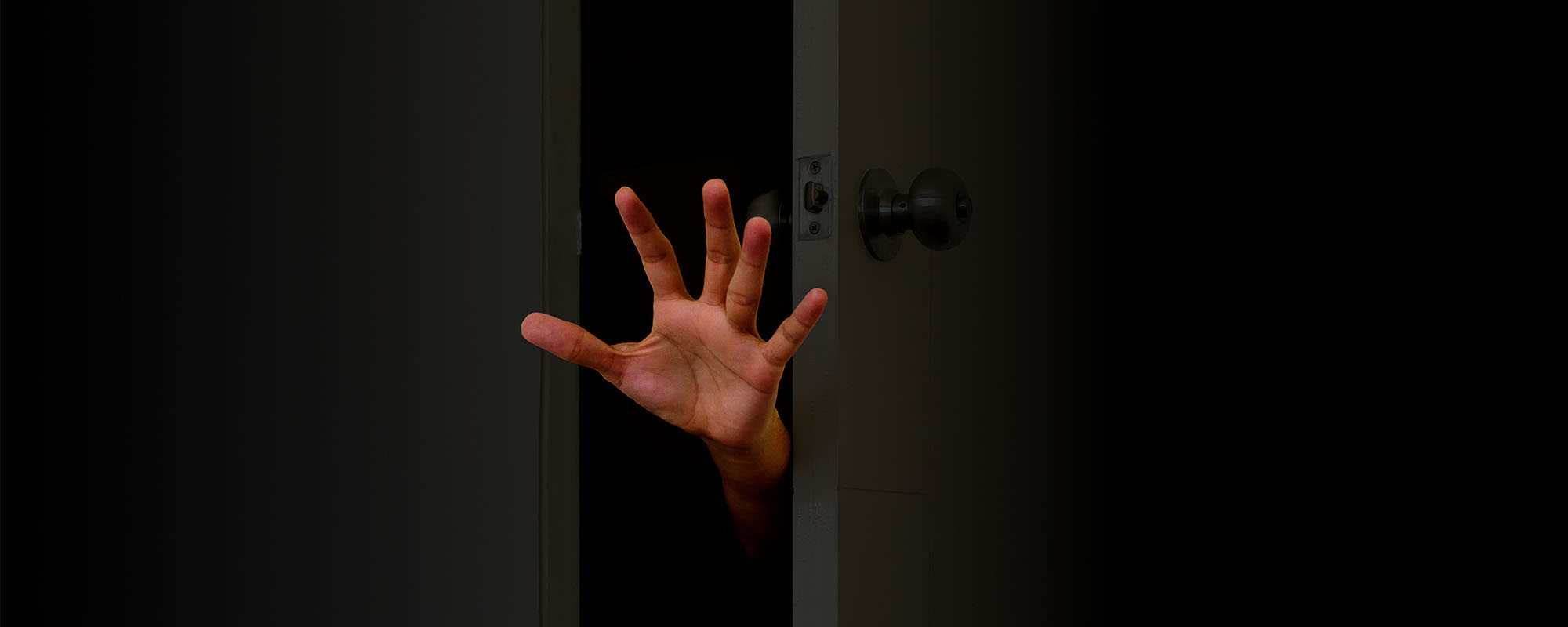
You’re alone in a dark room, your laptop casting flickering shadows as a horror film builds to a crescendo. The music tightens. A breath catches. Something is coming. And you? You can’t look away. In fact, no matter how absolutely terrified you are, you’re loving every second of this. How does that make sense?

Horror is one of the most paradoxical genres we consume. We want to feel safe in our daily lives, and yet we willingly seek out stories that make our skin crawl and our hearts race. It’s a question psychologists, writers, and audiences have been wrestling with for decades: Why do we enjoy being scared? The short answer is – fear, when managed just right, makes us feel alive.
So, what makes fear… fun? A large part of it comes down to context. When we watch a horror film or read a ghost story, we know we’re not really in danger. No matter how scared we get, it is fear in a sandbox, and the viewer has ultimate control over their own experience. Psychologists call this ‘benign masochism’ – the idea that humans can enjoy negative emotions if we know they’re under control. Think spicy food, sad music, or tragic movies. Horror belongs on that same shelf, a microdose of the adrenaline rush that comes from fearing for your life.
Why We Crave the Dark
The idea that we enjoy being scared because it’s ‘safe’ isn’t new, but it’s powerful. According to Rebecca Caruana’s dissertation research in The Psychology of Attraction to Horror Films (2022), most horror fans report having early, negative encounters with horror that later transformed into an affection for the genre. Over time, their fear gave way to excitement and even comfort. This transformation often involved desensitisation and increased predictability; we learn to anticipate what’s coming (the flickering lights, the eerie silence) and that sense of control makes fear feel manageable, and enjoyable, even.
This progression from fright to pleasure is a recurring theme. According to Caruana and broader research, horror satisfies something deep and complex, often wrapped in the following psychological traits:
- Sensation Seeking – People who enjoy horror tend to crave intensity. They’re looking for that spike of adrenaline, the way others chase skydiving or spicy food.
- Catharsis – Horror gives us a safe way to confront dark emotions (fear, anger, grief) and come out the other side unharmed.
- Mastery and Control – Watching horror is a kind of bravery test. You endure it. You survive it. And you walk away feeling weirdly strong.

In the foreword to Night Shift (1978), legendary horror author Stephen King famously wrote: ‘We make up horrors to help us cope with the real ones.’ He’s not being flippant. King sees horror as a sort of pressure valve, an outlet for the things we repress. The genre at its core isn’t about blood or death for its own sake; it’s about control. In a horror story, the monsters might be real, but they’re confined to the page or screen. You get to face them, you might even laugh at them, and when the story ends, you’re still here.
The Different Faces of Fear
Caruana’s dissertation also draws on an important distinction between realism and fiction in horror. Her participants preferred psychological thrillers – stories that feel like they could happen. That slim possibility turns fear into fascination, and this is where horror shines: it plays in the blurred space between the impossible and the plausible. The more it brushes against reality, with a focus on social anxieties, cultural fears, and personal trauma, the more disturbing and meaningful it becomes.

Jordan Peele’s Get Out (2017), for instance, didn’t need a supernatural demon. The monster was racism itself – quiet, polite, terrifying. Other films, such as The Babadook (2014), or the miniseries The Haunting of Hill House (2018), use their supernatural elements to represent abstract constructs such as grief, allowing viewers to connect deeply with the characters and events on screen despite the unreality of the monsters. Some ground themselves almost fully in reality, such as Funny Games (1997) and Hush (2016), home invasion stories that tap into our worst nightmares. And others use a mix of all these elements, such as Ryan Coogler’s Sinners (2025), where vampires and the horrors of the Jim Crow era come together to portray themes of cultural heritage and systemic oppression.
King describes horror as having three levels:
- Terror – the highest, most refined form that ‘comes from dread’.
- Horror – the shock of the grotesque.
- Revulsion – anything gross.
The best horror stories (like the best of King’s work) deal mostly in terror. They let the fear creep in from the edges, and that makes them linger in the back of our minds for a long time.

Safety in Numbers
Another important draw is the sense of community horror media brings through its fanbase. While horror films frequently explore themes of isolation, dread, and psychological rupture, the experience of horror fiction is profoundly communal. Prof. Krista Bonello Rutter Giappone, a researcher with a particular interest in horror films, had this to say about the communal aspects of horror media:
‘To a great extent, I believe an interest in horror is also sustained by the dedicated fan community around the genre. I believe horror has one of the most enduring and committed fanbases, who collectively invest emotionally and engage in knowledge-sharing (rather than gate-keeping). The horror genre does operate on the level of the individual (vulnerability, isolation, etc.), but the joy and enthusiasm that it provokes are also fed by that sense of community.’
Fans gather not just to be scared, but to share reactions, recommend obscure gems to each other, dissect subtext, and celebrate the genre’s rebellious spirit. Unlike more hierarchical fandoms, the horror community is largely democratic, where cult classics are as beloved as ‘prestige horror’, and obscure slashers can be discussed alongside arthouse terror. This openness builds a unique sense of belonging, where fear becomes not just a personal thrill, but a shared language. Horror, then, isn’t just about being alone in the dark; it’s about knowing someone else was right there with you, screaming too.

Who Watches Horror?
While the horror community thrives on shared passion and collective enthusiasm, the ways people engage with the genre vary and are deeply personal. Not every scream comes from the same place, and not every viewer is chasing the same thrill. Our reasons for loving horror are as varied as the subgenres it offers, from ghost stories to grotesque gore-fests.
Drawing on Johnston (1995)’s horror fan typology, Caruana identifies four general archetypes of horror fans:
- Gore Watchers – characterised by low empathy and high thrill-seeking, with a love for blood and punishment.
- Thrill Watchers – described as adrenaline junkies, who enjoy being scared for fun.
- Independent Watchers – people who use horror to feel brave or different in some way.
- Problem Watchers – viewers who use horror to process their real-life emotional distress.
Each group has a different reason for pressing play, but all are navigating something internal. It’s not just about what’s on screen; it’s about what’s in us.

Horror may deal in the shadows, but its impact on our lives is illuminating. It allows us to test our limits, feel deeply, and ask questions we usually avoid about death, control, trauma, and the things we don’t understand. It lets us simulate danger and survive it, whether through a masked killer, a haunted house, or the quiet horror of something too real. And perhaps most intriguingly, it lets us do all this together.
Martina Treeby is a student with UM’s Department of English. This article was prepared in partial fulfilment of Creative Writing 2 under the supervision of Dr Aaron Aquilina.


Comments are closed for this article!