

Science has quite a few skeletons tucked away in its closet; small, rhesus monkey-shaped ones. The results of these morbid experiments have moulded how we understand loneliness and love. What happened exactly?
Trigger Warning: Abuse, Animal Cruelty
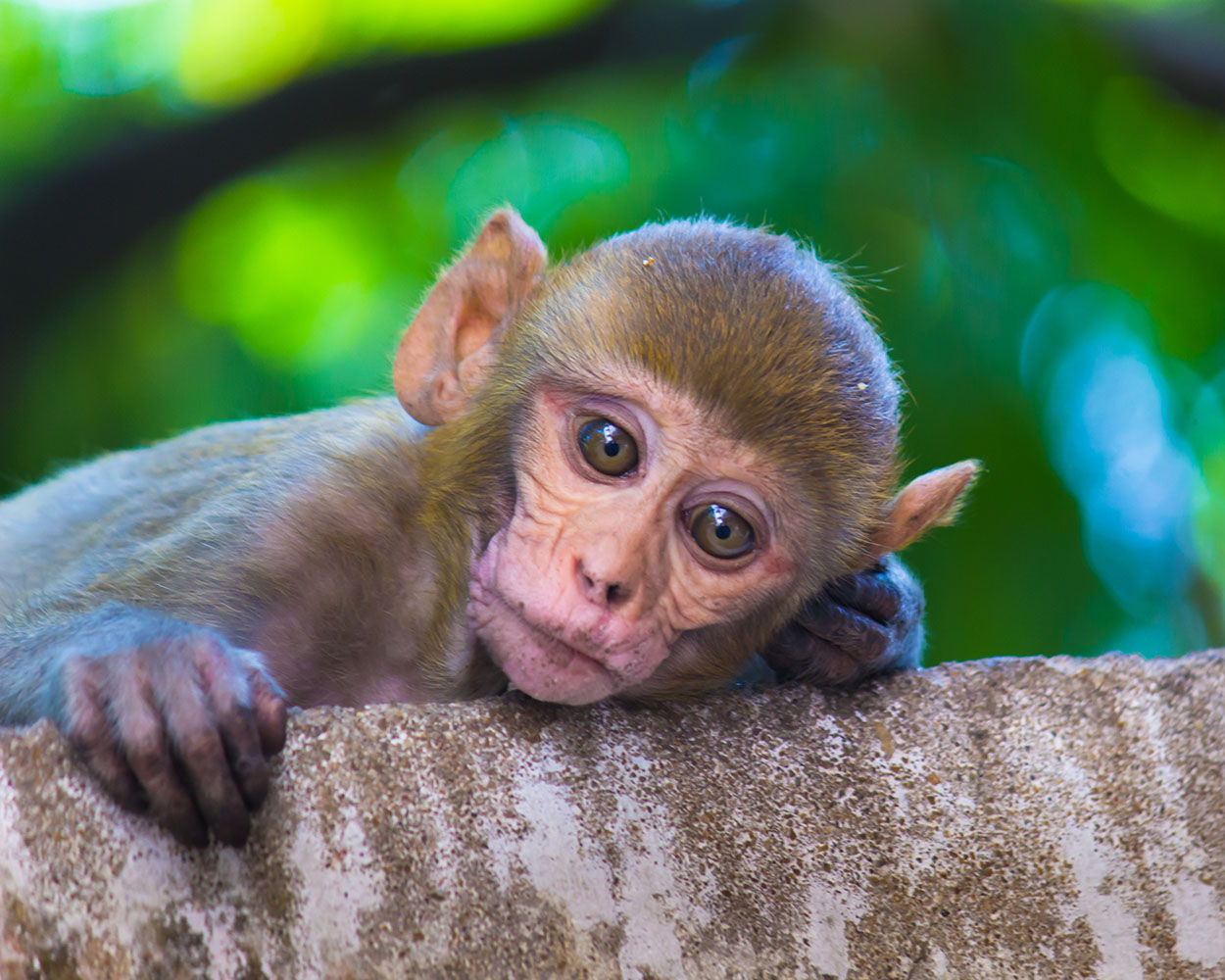
It’s the 1930s (aka the Dirty Thirties). The world is reeling from the First World War, and the stock market has just crashed, triggering the Great Depression. Flat caps were still fashionable, asbestos marketed as a wonder material, and lead-based paint used widely in nurseries. But that was only the start of a child’s problems. Psychology was still in its infancy, and childcare ended at feeding. In fact, the dominant position was that babies didn’t love their mothers; they only needed them for food. Parents were warned not to hug or kiss their children as physical contact or affection was considered harmful. ‘All this created generations of fractured relationships and attachment disorders,’ explains Dr Roberta Attard, Deputy Dean of the Faculty of Social Wellbeing and a clinical psychologist who specialises in child deprivation, trauma, and abuse.
Contact Comfort and Toxic Love
This is where our mad scientist, Harry Harlow, comes in. Harlow’s character arc is less an arc and more like a cinderblock thrown out of the back of a moving car. He starts his already questionable ethical experiments on maternal attachments by pulling rhesus monkeys away from their mothers, instead offering them a choice between a cloth or wire mother. Soon enough, he starts building rejecting mothers, mothers that push the baby monkeys away using compressed air or blunted spikes. Fast forward to 1967, Harlow’s wife is diagnosed with cancer, Harlow gets depressed, undergoes electroshock therapy, and returns to work, ‘cured’. He abandons his research into maternal attachment and develops an interest in isolation and depression. Suddenly, he’s using forced isolation devices he himself dubbed ‘The Pit of Despair’ to force monkeys into depression. But let’s not get ahead of ourselves.
Originally, Harlow wanted to study love, specifically the love between a mother and child. Was that love based solely on nourishment, as believed at the time, or was there something else to it? Of course, the best way to understand the heart is to break it.
Baby monkeys were presented with two ‘mothers’ – one made from soft cloth, while the other from wood and wire. In some cases, the cloth mother was barren and provided no milk, while the wire mother did. The question was simple – which ‘mother’ would the monkeys prefer? The results shook psychology at the time. The monkeys consistently went for the cloth mother, even if it didn’t provide food. In a 24-hour period, the monkeys would spend 18 hours a day with the cloth mother and would only visit the wire mother to feed, spending less than an hour a day (video available below). ‘The monkeys would spend the bare minimum of time on the wire mother. They wouldn’t even have the whole feed, they would feed in bouts,’ adds Attard. ‘Another thing was that monkeys raised by the wire mother had soft faeces. This is not normal, which suggests a metabolic disorder.’
Harlow himself attributed this disorder to a lack of ‘contact comfort’ (the physical and emotional comfort an infant receives from physical contact with their primary caregiver). Interestingly, this lines up with modern research, which shows how psychological trauma can disrupt the gut biome and, in turn, those microbial shifts affect psychological development. As Prof. Godfrey Grech (from UM’s Department of Pathology) explained at the Richmond Foundation Mind, Body & Partners in Mental Wellbeing Conference: ‘If we have a shift in these microbes, definitely we have a shift in metabolic health, and that shift is then reflected into other conditions, including mental health disorders.’ Attard adds, ‘Children who experience the loss of a carer have a higher risk of illness. They are more likely to have immunity issues and tend to get sick more often.’
Harlow had proved that the mother-infant relationship was based on more than milk – it demanded contact comfort. Fresh off this success, Harlow expands the experiments and examines the relationship between the infant and the surrogate mother. ‘He filled a room with objects to see where the monkeys would go when frightened. The babies would start screaming, but in the absence of a surrogate cloth mother, they would go to a cloth on the floor or something soft. Similarly, children tend to be attached to blankets, a soft toy or a teddy bear. These transitional objects tend to be warm and soft and offer children tactile sensory comfort, very much like the body of a person they are attached to,’ Attard explains.
As time went on, Harlow’s experiments started taking a darker turn. What would happen if the mother rejected the child?
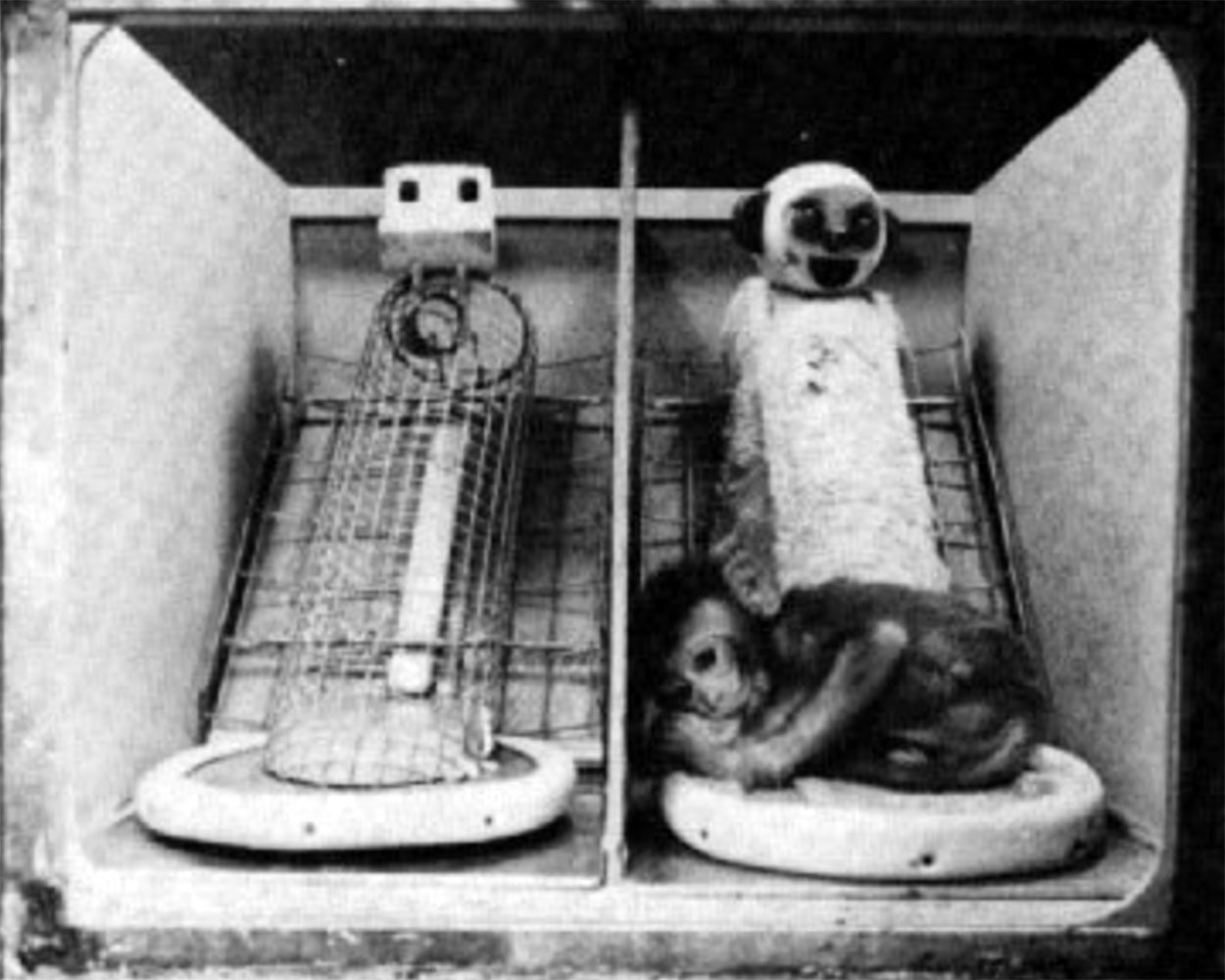
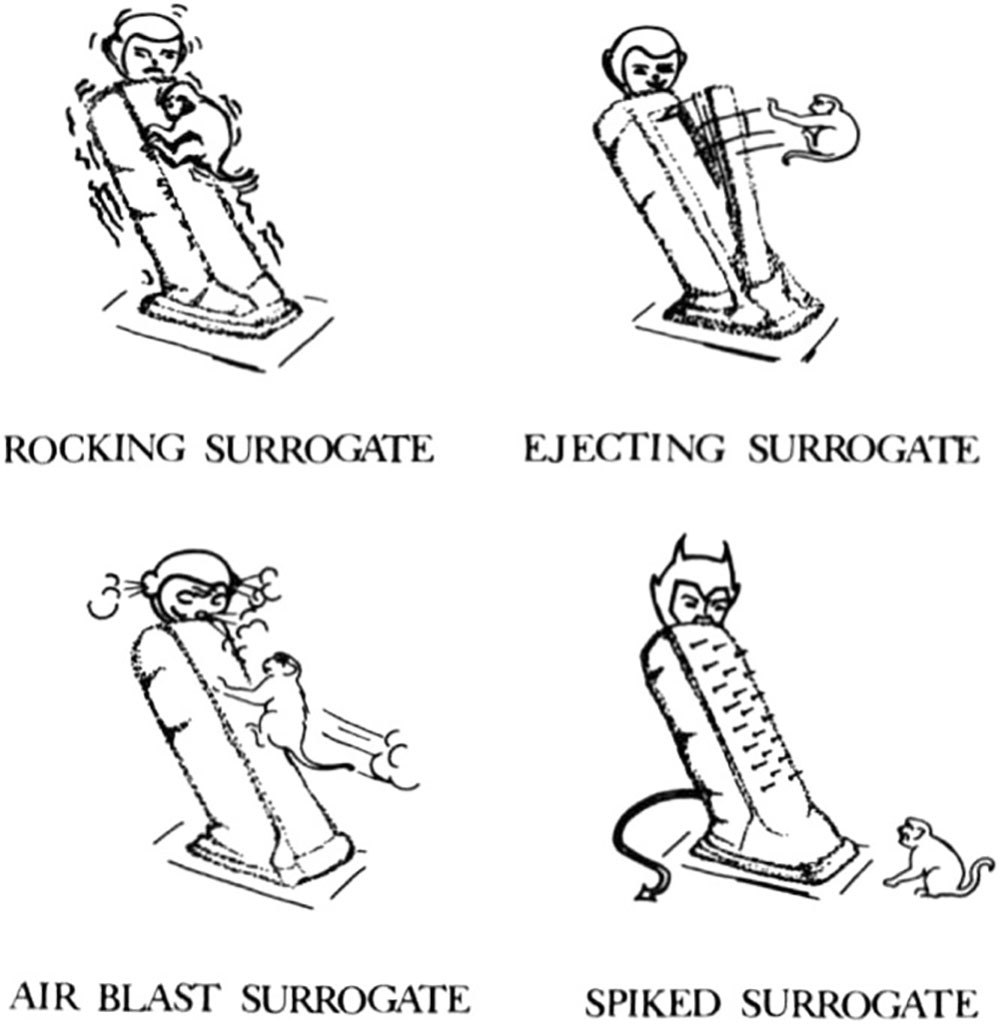
He created four cloth mothers. All had a soft body for cuddling, yet each was booby trapped. One rocked so violently that the infant’s teeth chattered. The second blew compressed air against the infant to throw them off. The third had a steel frame that flung forward and hurled the baby off. While the fourth had (blunted) brass spikes that pushed against the clinging child. Unknowingly, Harlow had replicated the intermittent affection found in toxic child-parent relationships.
Despite being thrown off, the baby monkeys repeatedly ran back to hug their mothers again. The more they were pushed away, the tighter they clung. ‘Look at situations where children are abused by their carer, their attachment figure on whom they depend for their survival. The child will experience a pull-push attachment to their carer, behaving like yo-yos. They still require affection from their carer, much like the monkeys,’ explains Attard. ‘But when in similar situations, for example, saying that you’re hungry, you’re sometimes treated one way and sometimes another, that causes higher levels of psychopathology and disordered attachment. The worst thing you can do to a child is to constantly put them in situations where they can’t predict how the person they’re attached to will behave, especially towards them.’ But Harlow wasn’t done. What if love didn’t come at all, not even from a spiky cloth surrogate?
Isolation, Broken Mothers and Depression
Following his own depression, Harlow wanted to study and find a way to treat it. However, to do so, he needed depressed monkeys to cure. For social animals, such as rhesus monkeys and humans, the most logical approach is to isolate them.
At first, the monkeys were confined to a closed-off cage fitted with one-way mirrors. Scientists could observe the monkey, but the monkey couldn’t look out. They were raised almost from birth, without seeing anything except the experimenter’s hands. The monkeys emerged after 30 days so profoundly disturbed that two refused to eat and starved themselves to death. Those isolated for six months or more wouldn’t play, explore, or even move.
As the monkeys from the original cloth vs wire mother experiment grew older, Harlow wanted to answer another question. What kind of mothers would these motherless monkeys make? The monkeys raised by surrogates were incapable of having any kind of relations, including sexual. To address this, Harlow created a forced mating device (which he himself dubbed – the rape rack). In his own words: ‘Not even in our most devious dreams could we have designed a surrogate as evil as these real monkey mothers. These monkey mothers that had never experienced love of any kind were devoid of love for infants, a lack of feeling unfortunately shared by all too many human counterparts.’ Most of the loveless mothers just ignored their infants. Unfortunately, not all did. One held her infant’s face to the floor and chewed off his feet and fingers. Another took her baby’s head in her mouth and crushed it.
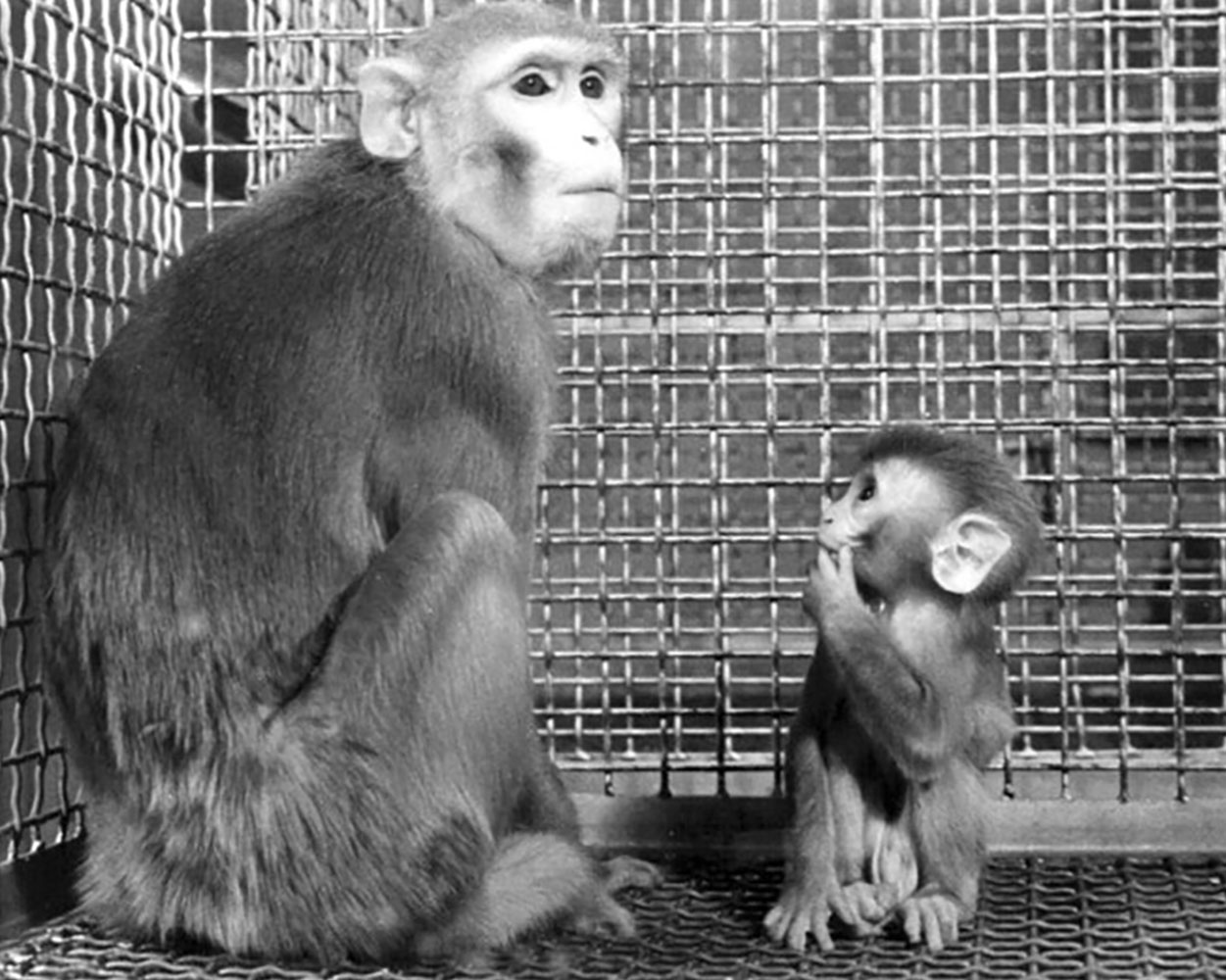
Yet, these humanitarian holocausts offer a glimpse into parent-child abuse. ‘Obviously, it is important to remove the child from the repeatedly abusive parent, even if temporarily, as some of the damage done may not be easily repaired from a neurological perspective. However, we also need to offer remedial help to parents who have themselves been poorly parented. Unless we do that, we continue to propagate intergenerational trauma,’ Attard points out.
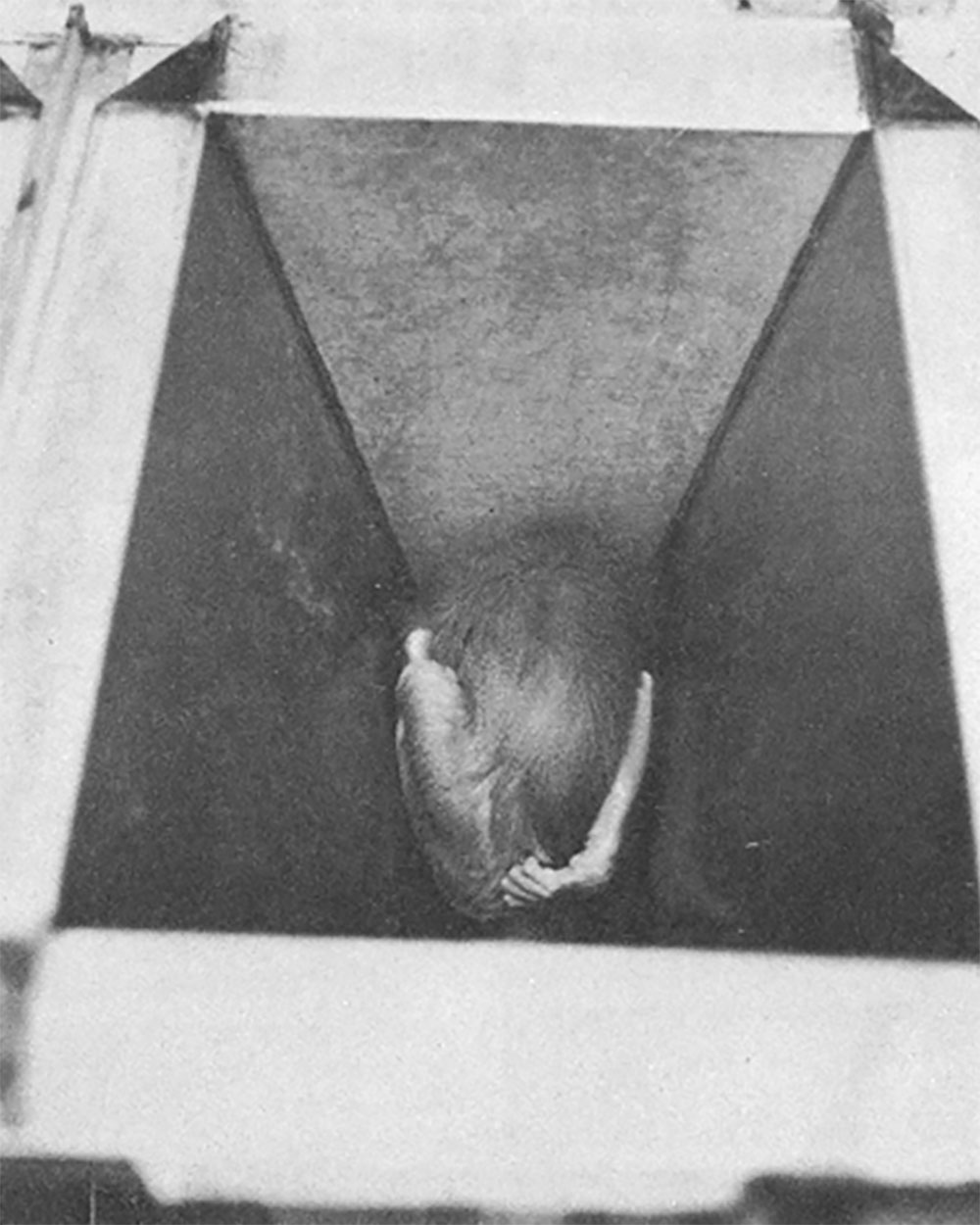
Despite all this, Harlow hadn’t yet created depression. The ‘breakthrough’ came with the vertical chamber apparatus – the ‘Pit of Despair’. Shaped like a narrow, inverted pyramid with the wide opening at the top covered in mesh, the device was suspended from a height. The monkey would be placed inside and would spend the first day or two trying to escape by scrambling up the steep sides, only to slide back down to the bottom. After two or three days, ‘most subjects typically assume a hunched position in a corner of the bottom of the apparatus,’ Harlow writes.
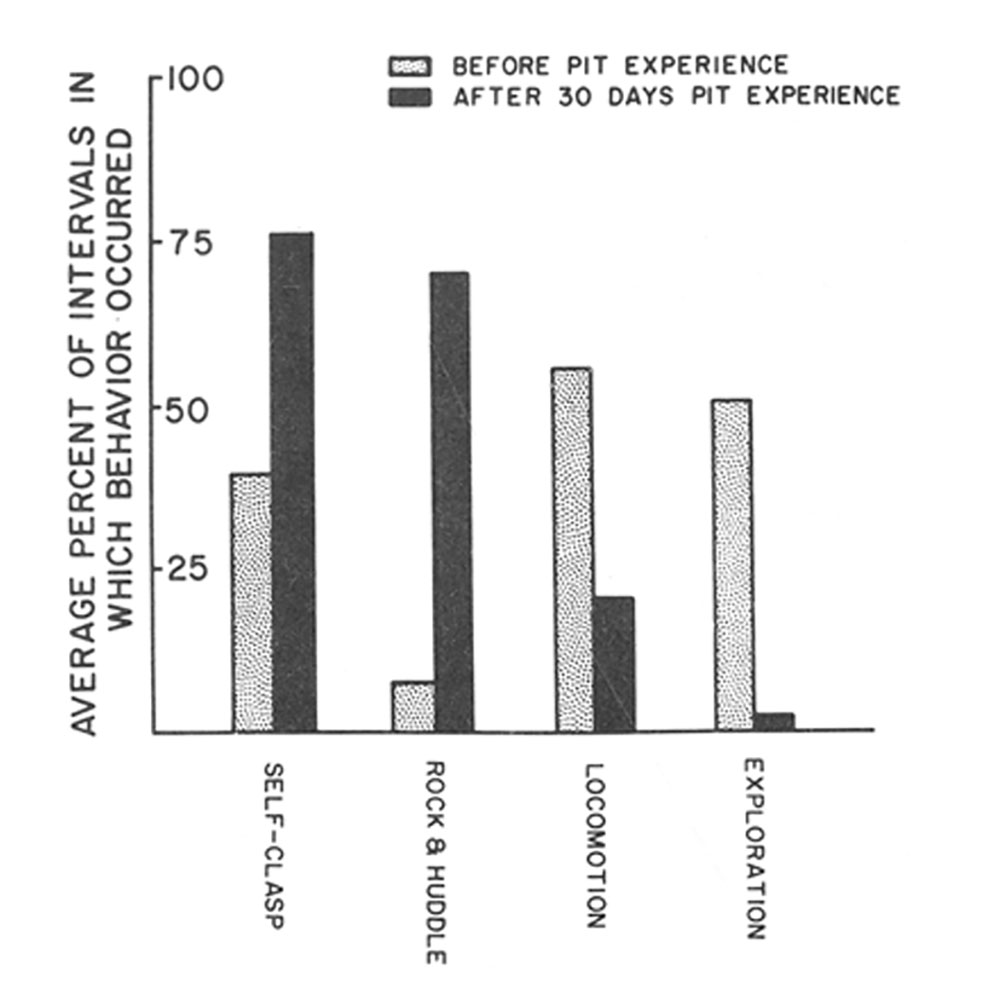
Right: Typical posture of animal during pit incarceration
(Images from Stephen Suomo and Harry Harlow’s study, Instrumentation and Techniques)
Despite Harlow’s morbid and unsettling approach, according to his biographer, one of the most guiding principles in his laboratory was that there was no justification for damaging an animal unless part of the test was to learn how to fix the problem. So, how did Harlow treat depression?
He found that the most effective way to rehabilitate depressed monkeys was to pair them with younger, socially healthy monkeys, which he dubbed ‘therapist monkeys’. Over time, the younger monkeys’ playful and curious nature would coax the depressed monkeys out of their catatonic state. However, the longer the monkeys were trapped in the pit, the harder it was to recover. While monkeys trapped for 30 to 60 days could recover, recovery became less likely after 90 days, and impossible after six months.
Similarly, having a gentle and supportive network can help people through their healing process. ‘The biggest factor for rehabilitating victims of child abuse is having a strong support system,’ points out Attard.
Harlow Today
To say Harlow is a controversial figure is an understatement. His experiments had a sadistic twist; he purposefully gave his devices morbid names to rile people up, and, as Attard puts it, he is a persona non grata in the field.
But, from a clinical point of view, ‘the more you think about it, the repercussions of his results become more interesting – particularly, for children who are removed from their homes and how it affects them,’ Attard notes. ‘The relevance of Harlow’s experiments is underestimated. We will not be repeating his experiments for sure. However, these findings are frequently undervalued, despite their significance for understanding childhood development, attachment formation in children, and the role of transitional objects in developmental processes,’ she says.

Yet, while Harlow’s experiments offer insights into the human condition, they also reveal a much more diabolical side. How far are we willing to go to further our knowledge, and where do we draw the line? Surely, no modern ethics board would ever allow this. Surely…
Further Reading
Blum, D. (2002). Love at Goon Park: Harry Harlow and the science of affection. Perseus Publishing.
Harlow, H. F. (1958). The nature of love. American Psychologist, 13(12), 673–685. https://doi.org/10.1037/h0047884
Harlow, H. F., & Suomi, S. J. (1971). Social recovery by isolation-reared monkeys. Perception & Psychophysics, 10(4), 307–312. https://link.springer.com/content/pdf/10.3758/BF03209902.pdf
Slater, L. (2004). Opening Skinner’s box: Great psychological experiments of the twentieth century. W. W. Norton & Company.
van Rosmalen, L., Luijk, M. P. C. M., & van der Horst, F. C. P. (2022). Harry Harlow’s pit of despair: Depression in monkeys and men. Journal of the History of the Behavioral Sciences, 58(2), 204–222. https://doi.org/10.1002/jhbs.22180




Comments are closed for this article!