
Skip to content

Vib Ribbon

Facebook
Twitter
LinkedIn

Game Review_Costantino

If you’re into music-centric games, you’re in for a treat. Vib-Ribbon, the seminal rhythm game released in 1999 for the original Playstation, is back on contemporary consoles. It’s not a new version, but rather a faithful emulation: an important recognition for a title that was never commercially released in North America, but still made its way into the MoMA (Museum of Modern Art, New York) collection. 

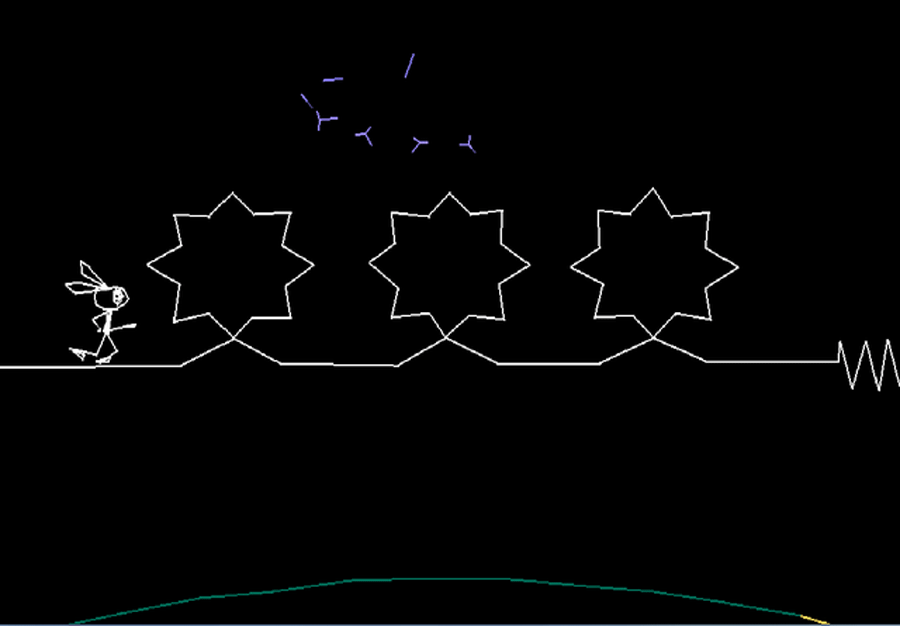
The gameplay has remained crucially simple and appealing: push the console buttons on time, and the rabbit heroine will jump, spin, and rotate, all to the rhythm of the incredibily well-fitting ultra-pop songs composed by the Japanese band Laugh and Peace. The soundtrack is heavily manipulated with morphing tempos and bass counterpoints in reaction to the player’s input: the result is exhilarating. The visual style, somewhat reminiscent of the famous animation La Linea, is extremely minimalistic, contributing to the remarkable originality of the game.

It’s a shame that the PS Vita version lacks one of the main features: using any kind of music CD to generate potentially infinite levels. Even so, one of the most creative titles to ever appear on the Sony console is back, ready to surprise a new generation of players. 

Author

More to Explore

Should Universities Cross-Pollinate Subjects in an Uncertain World?

Technology is seeping into research and academic writing, and the shift towards labour-market facilitation rather than academic curation is changing the knowledge and learning landscape. Such shifts, however, are set against cultural biases in subjects and traditional, outdated academic structures, even as universities try to evolve.

I Will Continue to Follow the Ship

Curated by Elyse Tonna with artist Dr Matthew Attard, ‘The Ship (Unseen)’ delivers the same brilliance and deep artistic intent which Attard, Tonna, and the rest of the team had been praised for during the 60th Venice Biennale. In 2025, the two sought to continue building on the themes of connection, identity, and memory established in ‘I Will Follow the Ship’, making use once again of that iconic, ever-moving, web-like linework.

AMBER: Stretching the Boundaries of Sustainable Rubber

Think about the rubber parts in your car, your shoes, or your household appliances. Traditionally, making rubber is an incredibly energy-intensive process that relies on ‘vulcanisation’ – a method that uses high temperatures and produces harmful emissions to make the material durable. But what if high-performance rubber could be eco-friendly and 3D-printed on demand?

Comments are closed for this article!