
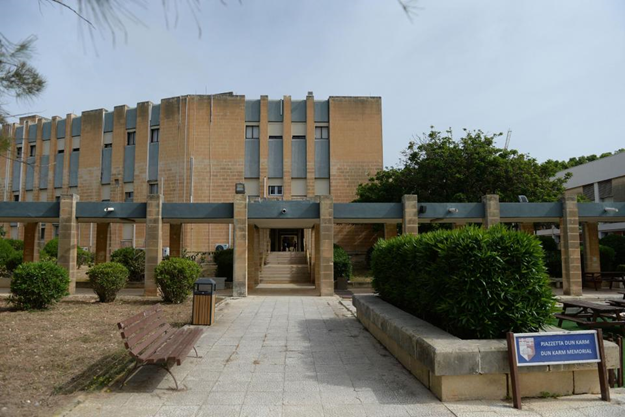
The Latin phrase alma mater, translated to ‘nourishing mother’, is frequently used to refer to a university. From that, we get the term alumnus, ‘one who is nourished’ when referring to graduates. But the nourishers and the nourished, the staff and the students, are in trouble.
University life can be incredibly stressful for staff and students alike. The staff have to cope with more people meeting the necessary standards to enter university and the different capabilities and needs they bring with them. Students are under constant pressure to get high marks, meet all their assignment deadlines, and attend extra-curricular activities — not to mention the daily struggle to find parking!
These are the typical and surface-level struggles of University of Malta (UM) staff and students. But the reality is that many of them also struggle with things they won’t mention out loud.
With the Covid-19 pandemic, the stresses of commute times and having to spend long hours at the university have decreased, but mental health struggles have seen a sharp rise.
In 2019 it was already reported that in a sample of 13,000 UM students, 36% met the criteria for a mental health disorder. The Covid-19 situation combined with the switch to online learning has no doubt exacerbated these challenges and created new ones. While many have adjusted to these changes, others are trying to come to grips with the new normal and consequently struggle in their mental health.
Anxiety has taken hold of many during the pandemic, making those already prone to worry even more anxious. Many fear contracting the virus and/or passing it on to loved ones, and so they are constantly vigilant and taking precautions. This hyper-alertness can cause exhaustion of the mind and body, as research indicates a strong correlation between mental wellbeing and bodily health. For example, negative mental wellbeing increases the risk of developing cardiovascular disease in particular.
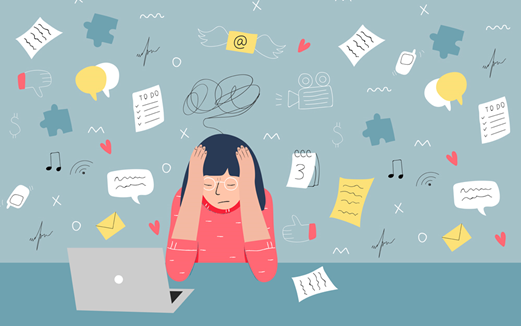
For many, the switch to online learning and telework is adding to the already stressful occupation of being a UM staff member or student. Online learning is a poor substitute for a real classroom. The SALT surveys reported that the majority of UM students (around 76%) were generally dissatisfied with the shift to online learning, and 66% experienced symptoms of anxiety related to their studies. This is due to many factors, including the perception of a lack of understanding and communication from staff as well as being burdened with a bigger workload. In addition, many students and staff struggle to work in unsuitable home environments with distractors like noise, construction work, pets, family members, and children shouting. This forces many staff and students to travel around to cafés or other people’s homes to work efficiently.
These combined stressors are making some students lose enthusiasm for their courses. And in return, lecturers also feel demotivated because of the lack of participation from students.
While UM staff go through their own stresses brought about by the pandemic, most of them are in secure employment. On the other hand, most university students are still young and unskilled, and so get odd jobs in the entertainment, commercial, and tourism industries. Many of these jobs have been slashed due to the pandemic. This, in turn, is causing much anxiety among the student population because they wonder if there will be jobs left for them in the coming summers, or even after they graduate.
The uncertainty of the future, coupled with these stressful and sudden changes, can contribute to depression. The loneliness and isolation caused by the near-complete absence of campus life and social events have no doubt exacerbated these depressive effects. In a local study, an alarming 35% of participants, most of them young, felt extremely lonely in 2020 compared to just 2% in 2019. Many new students have never even met their classmates in person.
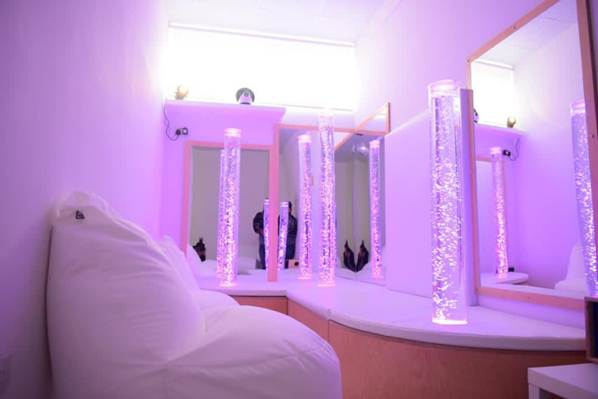
Fortunately, the University of Malta remains committed to the mental health and success of its staff and students. While many lectures are not being held physically, the university’s doors are still open to provide a quiet and structured work environment for those who need it. Once lockdown ends the Calm Room will be available from Monday to Friday between 9 am and 5 pm to provide a safe, calm space for students to gather their thoughts and relieve anxiety. And finally, the university offers Counselling Services, a dedicated team of psychologists, psychiatrists, and social workers who attend to mental health issues that require particular care.
Interested in the topic? Betapsi has focused their March episode of ‘.Virgola’ on the topic of ‘University Mental Health’ where we have interviewed Prof. Andrew Azzopardi, the Dean of the Faculty of Social Wellbeing, regarding this subject. Visit our Facebook page ‘Betapsi Malta’ for further information.
Further Reading
Definition of ALMA MATER. Merriam-webster.com. Retrieved 23 March 2021, from https://www.merriam-webster.com/dictionary/alma%20mater.
Raway, L. (2019). Attitudes towards Mental Health and Willingness to Seek Psychological Help: A Quantitative study among University Students. [Published Bachelor of Honours dissertation], University of Malta.
Laura D. Kubzansky, Jeff C. Huffman, Julia K. Boehm, Rosalba Hernandez et al. (2018). Positive Psychological Well-Being and Cardiovascular Disease: JACC Health Promotion Series. Journal of the American College of Cardiology. 72 (12), 1382-1396. doi: https://doi.org/10.1016/j.jacc.2018.07.042.
Cuschieri, Attard, Bartolo, Attard et al. (2020). Learning, teaching and assessment during the pandemic at the University of Malta. Findings of the SALT Surveys
Bonnici J., Clark M., Azzopardi A. (2020). Fear of COVID-19 and its Impact on Maltese University Students’ Wellbeing and Substance Use. Malta Journal of Health Sciences. doi: 10.14614/FEARCOVID19/7/20
Counselling Services. (n.d.). https://www.um.edu.mt/services/health-wellness/counselling
An oasis of calm for students with autism: KSU launches Calm Room. (2020, November 25). UM Newspoint. https://www.um.edu.mt/newspoint/news/2020/11/calm-room-launched



Comments are closed for this article!