
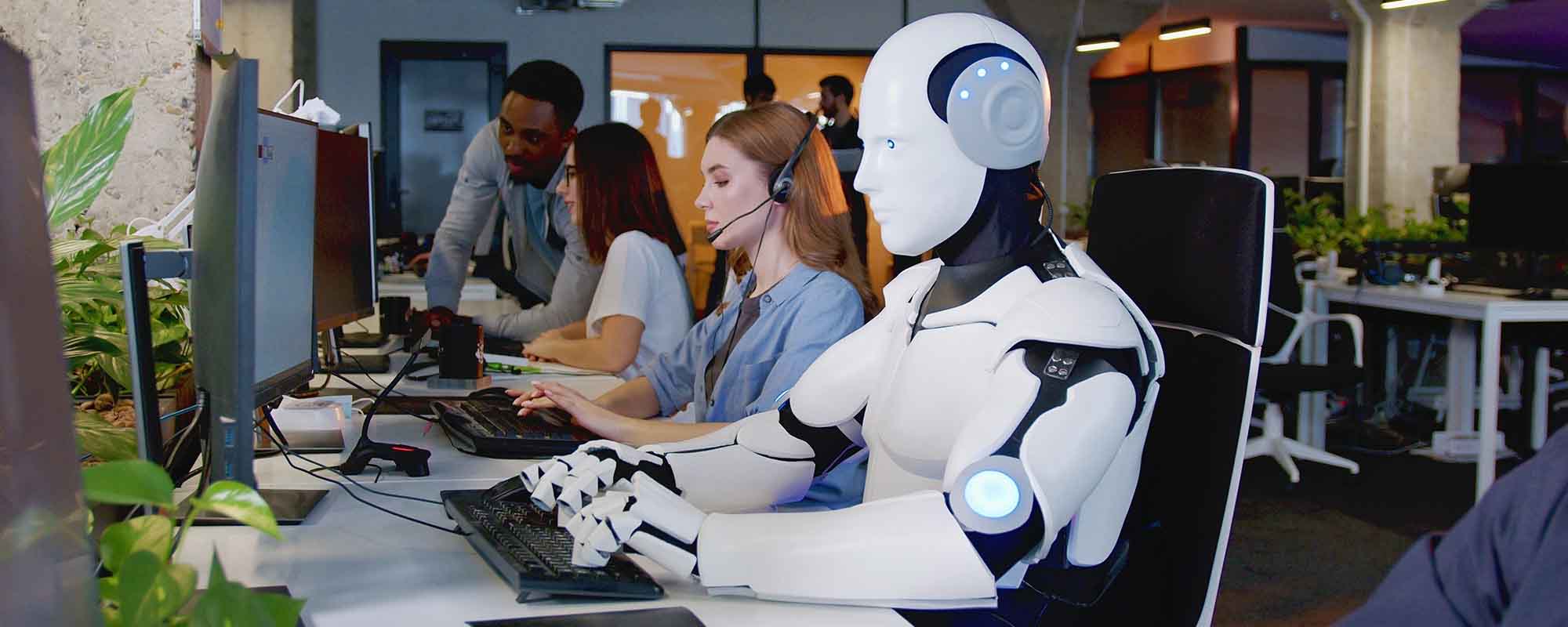
Automating mundane tasks, incredible problem solving, and the wonder of creating smarter and smarter technology. What’s not to love about robots and AI? (Besides the whole losing our jobs thing). Check out our favourite 11 real-life AI and Robots below!
Artificial Intelligence (AI) has made remarkable strides in recent years, transforming industries, enhancing our daily lives, and pushing the boundaries of what’s possible. From chatbots to humanoid robots and advanced machine learning algorithms, AI is being used in an ever-expanding array of applications. In this article, we will explore the top 11 AI innovations that are making a significant impact on our world right now.
1. EMO (Living AI)
Developed by a South Korean startup, EMO, also known as a super cute “Living AI,” designed to mimic human emotions and facial expressions. EMO is almost like a pet, it can react to conversations and adapt its responses accordingly, making it an ideal icebreaker or cute distraction, and a sweet buddy for interactive entertainment.
2. ChatGPT
Based on the GPT-3.5 architecture, ChatGPT is a powerful language model capable of understanding and generating human-like text. It has found applications in content generation, virtual assistants, and even medical diagnoses, providing valuable information and assistance to users across various domains.

Creator: Focal Foto
Copyright: Copyright 2022
https://www.flickr.com/photos/192902634@N05/52677597429
3. SOPHIA (Hanson Robotics)
SOPHIA is a humanoid robot created by Hanson Robotics that has gained worldwide attention for its remarkably lifelike appearance and advanced conversational abilities. It is designed to interact with humans, answer questions, and even hold philosophical conversations.
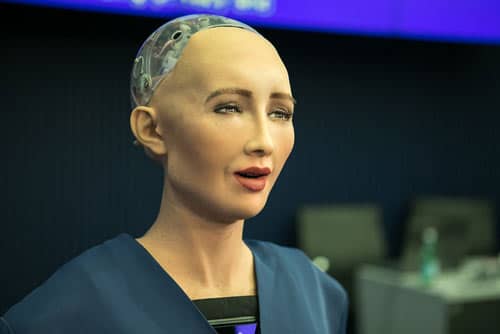
Creator: ITU Pictures
https://www.flickr.com/photos/itupictures/34328656564
4. SIRI (Apple)
SIRI, Apple’s virtual assistant, has become a household name and a pioneer in the field of voice-activated AI. It can perform tasks, answer questions, send messages, and control smart home devices, making it an integral part of many people’s daily routines.
5. ALEXA (Amazon)
Another ubiquitous virtual assistant, ALEXA, is at the heart of Amazon’s Echo devices. It can play music, provide weather updates, control smart devices, and even order groceries, making it a central hub for home automation.
6. PEPPER (Softbank Robotics)
PEPPER is a friendly humanoid robot created by Softbank Robotics, designed to engage with humans in various settings, including retail, hospitality, and healthcare. It can recognise emotions and adapt its behaviour accordingly, offering companionship and assistance.
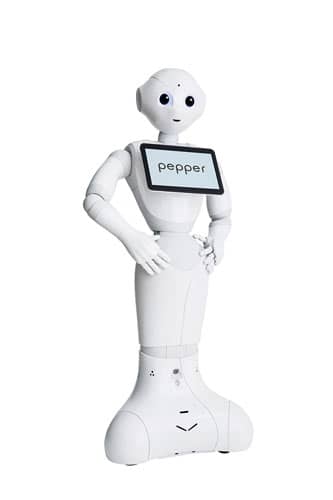
Softbank Robotics Europe, CC BY-SA 4.0 https://creativecommons.org/licenses/by-sa/4.0, via Wikimedia Commons
7. MARS Rovers (NASA)
AI plays a crucial role in NASA’s Mars exploration missions. Rovers like Curiosity and Perseverance utilise AI algorithms to autonomously navigate the Martian terrain, analyse soil samples, and send back valuable data to scientists on Earth.
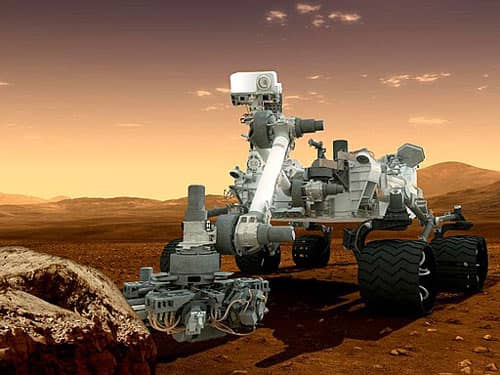
Intel Free Press, CC BY-SA 2.0 https://creativecommons.org/licenses/by-sa/2.0, via Wikimedia Commons
8. AMECA (Engineered Arts)
AMECA, a lifelike humanoid robot engineered by Engineered Arts, is designed for research and entertainment. With its human-like movements and facial expressions, it has found applications in robotics research, acting, and educational demonstrations.
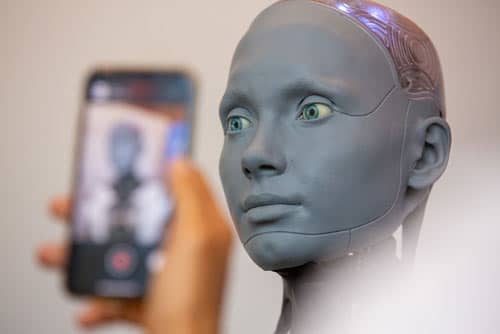
Creator: UN Geneva
Credit: UN Photo / Elma Okic
https://www.flickr.com/photos/unisgeneva/53027250926
9. Spot (Boston Dynamics)
Spot, created by Boston Dynamics, is a versatile quadruped robot equipped with advanced AI and sensors. It can navigate challenging environments, carry out inspections, and even perform tasks in industries such as construction, agriculture, and security.
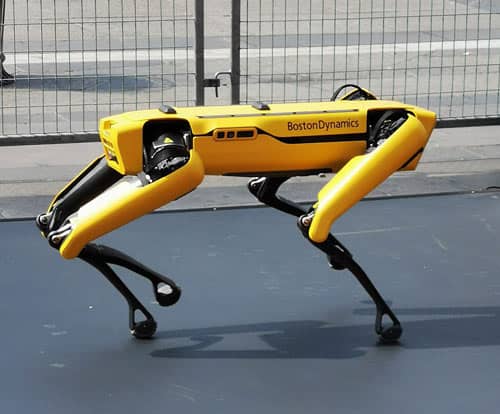
Saggittarius A, CC BY-SA 4.0 https://creativecommons.org/licenses/by-sa/4.0, via Wikimedia Commons
10. Struntronics (Disney Imagineering)
Disney Imagineering’s Struntronics project focuses on creating acrobatic robots capable of performing complex stunts and manoeuvres in theme parks and entertainment venues. These AI-powered robots can mimic the movements of characters in a dynamic and engaging way.
11. Atlas (Boston Dynamics)
Atlas, also from Boston Dynamics, is a humanoid robot designed for tasks in unstructured environments. It showcases remarkable agility and mobility, making it suitable for search and rescue missions, disaster response, and industrial applications.
AI has transcended the realm of science fiction and become an integral part of our lives, enhancing our daily experiences and pushing the boundaries of what technology can achieve. The top 11 AI innovations highlighted in this article represent just a fraction of the incredible advancements occurring in the field, and they offer a glimpse into a future where AI continues to revolutionise industries and shape the world in ways we can only imagine. However, if you prefer the fiction side of science fiction, we’ve got you covered too, with the Top 11 AI and Robots in sci-fi!
Still feeling that Cyberspace itch? Stay tuned for the March Edition of THINK where we look at the latest Cyberspace innovations at the University of Malta!



Comments are closed for this article!