
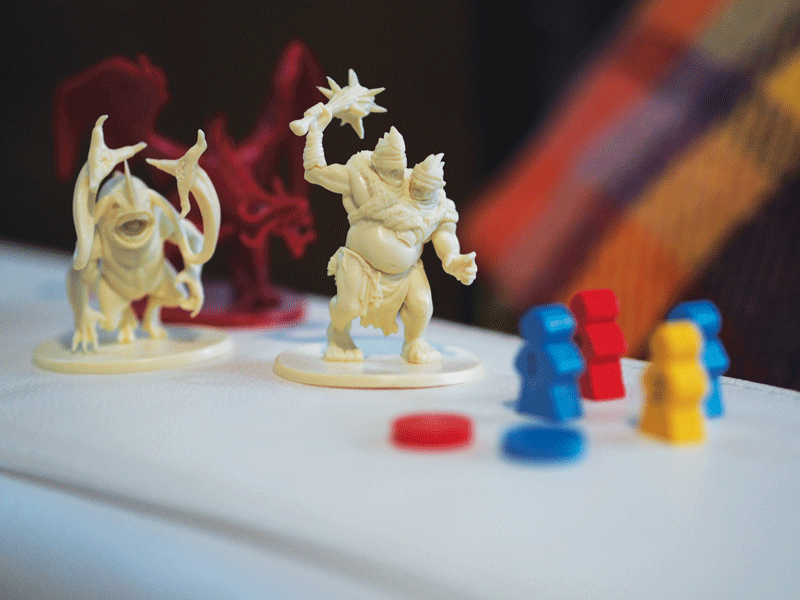
Over the last two decades a relatively new sort of board gaming has emerged which you might not have heard about. ‘Hobby’ or ‘modern’ board gaming is sweeping across the world.
In 1995 The Settlers of Catan by Klaus Teuber changed everything. This is the game that made many Americans realise that there is more to board games than Cluedo and Scrabble. It was family friendly, easy to get into, had a lovely trading mechanic and modular board which changed every time you played it.
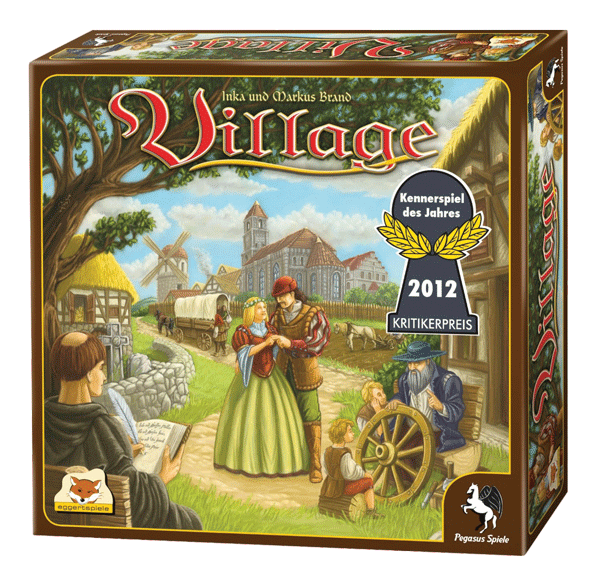
Isn’t 1995 late? The ‘Spiel des Jahres’ award (basically the Oscars of Board Games) was founded in 1978. In Germany this genre of board games had been popular long before Settlers of Catan broke the monopoly of Monopoly in the US. Board games go back much further. In 2200 bc, in China, Go had already been invented.
German-style games, or eurogames, are generally regarded as one half of the two over-arching mega-genres in modern board gaming. These sort of games generally feature less luck, a more direct strategy, and less direct player interaction. Winning conditions involve collecting victory points and the design favours symbols over text.
The other half is the American-style, sometimes referred to as ‘Ameritrash’. These are generally the opposite style. War, fighting, killing, rolling piles and piles of dice (therefore luck), and player elimination.
Common themes and styles in American-style games include dungeon crawling (Descent, Claustrophobia), the American Civil War (Battle Cry), and World War II (Memoir 44).
German-style games, on the other hand, tend to have more ‘European’ cultural influences. For example, colonisation of the Americas or medieval farming are common themes (Archipelago, Puerto Rico), as are diplomacy and intrigue at the time of the Inquisition or gaining the King’s favour (Il Vecchio, Caylus).
American-style games sound similar to miniature wargaming and tabletop role-playing games (RPGs), and are definitely inspired by these earlier games. However, board games are different. A board game generally comes in a box which contains everything you need to play with a number of players and most of the time is meant to be played in one sitting. RPGs and wargaming do not follow these rules.
Interestingly, American and German-style games developed in more or less the same period of time in two completely different cultures. This is comparable to the development of the Japanese RPG and the Western RPG in video games.
And today?
Board games are experiencing a golden age. If you had come into the hobby a mere five years ago, the picture was simple. But the worldwide Indie revolution and crowd-funding has also hit board games.
Until a few years ago a few recognisable, high profile game publishers dominated the market. Euro and American style games were easily separated. Now, board games are becoming less and less of a niche hobby. New designers are creating games that combine many different influences from past games. The lines are being blurred. More experimental games and publishers are starting to pop up thanks to crowd-funding, and virtually anyone can publish a game.
In Malta, one of the first locally developed modern boardgames will be published internationally next year — watch this magazine — and others are in development. Exciting times.
David Chircop (and Yannick Massa) topped the Board Game Geek Hotness List for a week and won Best Board Game award at Malta’s first Global Game Jam held on January 24–26, 2014 at the Institute of Digital Games, UoM. See http://maltagamejam.com for next year’s Game Jam or take a course at the Institute http://game.edu.mt to learn how to make your own game. This article forms part of The Gaming Issue.



Comments are closed for this article!