
Skip to content

PHONE STORY

Facebook
Twitter
LinkedIn

Game Review_Costantino


What is the story behind our smart phones? Phone Story retraces the production stages of our favorite products, showing us the dramatic working conditions behind their assembly. It seems like Apple didn’t like it: the game is now banned from the App Store.

Mass riots and frequent suicides shed a dark light on Foxconn, the company that assembles product for the likes of Apple, Microsoft, and Amazon. Afterwards, it became impossible to ignore the conditions of the workers that mass-produce contemporary tech gadgets.

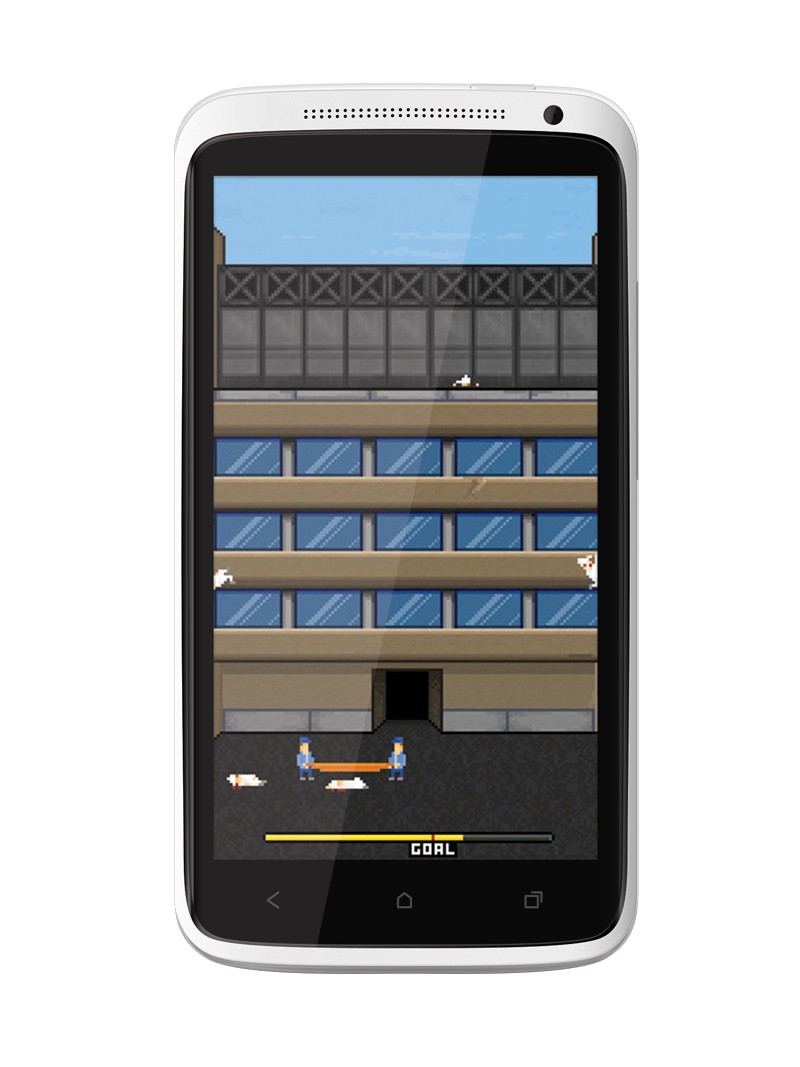
Enter Molleindustria, the software house funded by Paolo Pedercini, responsible for a remarkable series of ferociously satirical, “serious” games (check molleindustria.org for more — it’s worth it). Phone Story takes us through an uncomfortable ride of funny minigames with classic, familiar mechanics juxtaposed to harsh vignettes: underage miners extracting silicon, suicidal workers jumping from the roof of the factory, and an army of Apple — pardon, “Pear” — fans taking a flagship store by storm.

Don’t expect a radical new gaming experience with Phone Story, but pick it up if you’d like to reflect on the process that brought you your mobile, while you’re
actually holding it in the palm of your hand. 

https://www.youtube.com/watch?v=sSMSFLAsNzc


Author

More to Explore

A Blood Test That Could Follow Cancer in Real Time

A pioneering collaboration between Omnigene Medical Technologies Ltd and the University of Malta is developing a liquid biopsy platform that could transform how cancer is monitored. Called M3Profiler, the technology analyses tumour-derived exosomes – tiny vesicles released into the bloodstream by cancer cells – to generate detailed molecular profiles from just a small blood sample.

Can Your Genes Influence Addiction Risk?

Why do some people develop addiction while others do not, even when exposed to similar life experiences or substances? While environment, trauma, stress, and social circumstances are all major contributors, new research increasingly suggests that biology also plays an important role.

Malta and Uzbekistan: A Tale of Two Countries

A joint effort between UM’s Department of Translation, Terminology and Interpreting Studies and Prof. Gulnoza Odilova, who heads the Department of Theory and Practice of Translation at Kimyo International University of Tashkent, has led to the production of Rakkonti mill-Bogħod, Stejjer Qosra mill-Użbekistan, published by Kite Group in March 2025. Funded by the 2024 Malta Book Fund, Prof. Sergio Portelli and Dr Claudine Borg edited the translation of ten classic stories of Uzbek heritage and folklore into Maltese.

Comments are closed for this article!