

The annual HUMS Yuletide gathering has become a familiar fixture in the University of Malta’s calendar, but it remains distinctive in bringing together scholars who otherwise rarely share academic spaces, inviting them to think and reflect together. Last year’s event hosted a range of speakers who exemplified the interdisciplinary and playful ethos of the annual event, now linked to the catchphrase ‘erudite but light’.
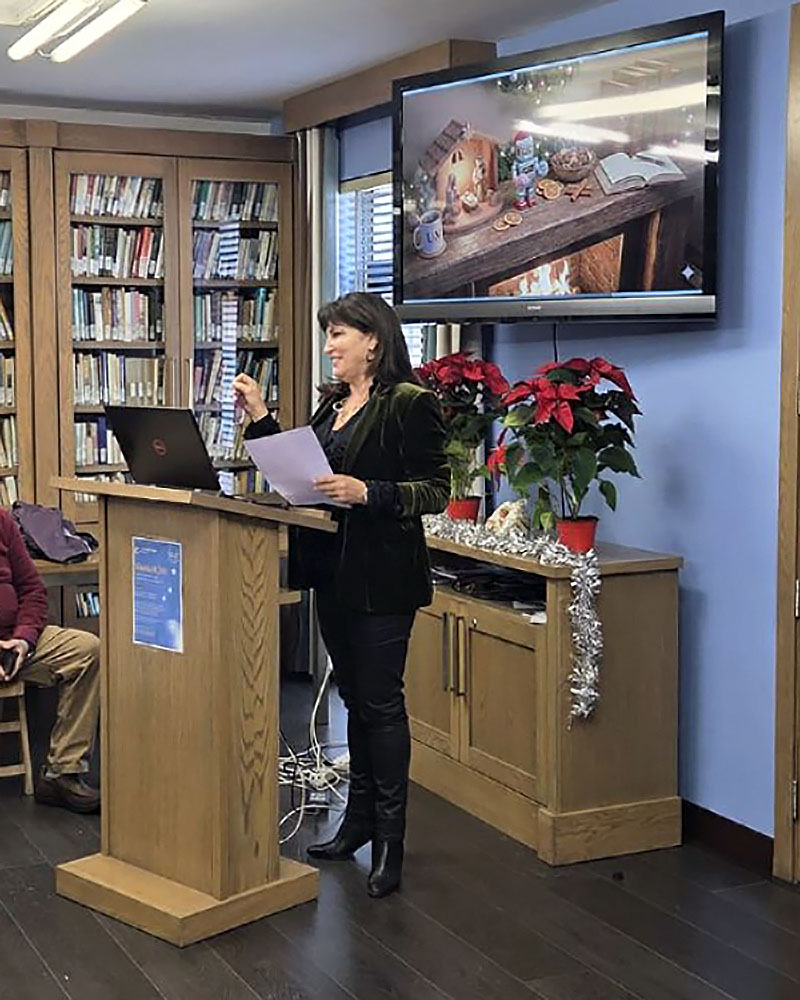
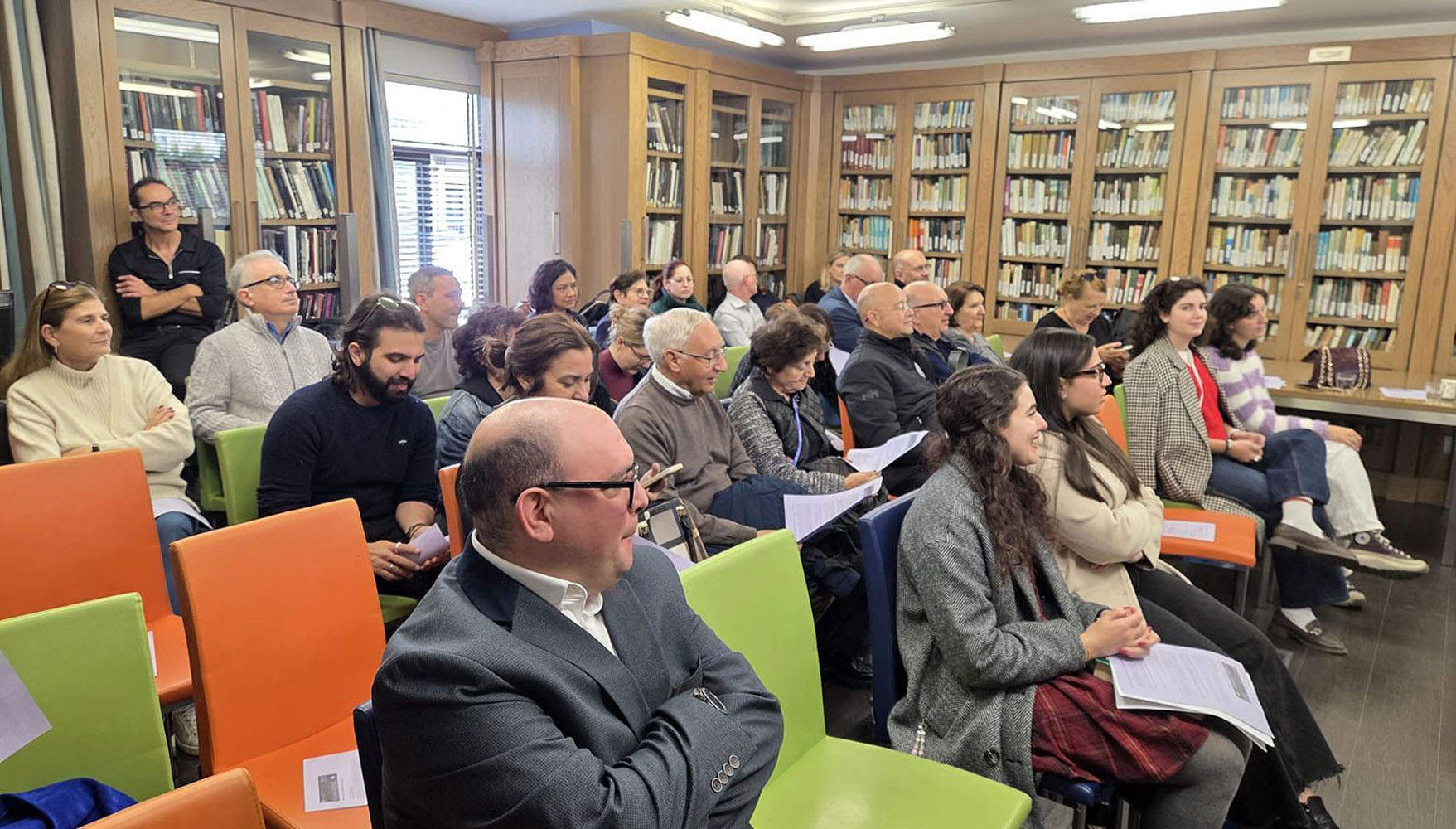
Every year, the HUMS platform (Humanities, Medicine and Science Platform) organises its Yuletide gathering. It serves as a heartwarming celebration of the festive season, bringing academic voices and perspectives together. The annual event fosters a sense of unity while filling the air with knowledge that will carry you into the season of giving and gratitude. Last year’s event was held on 5th December in the Old Humanities Building, and hosted a lineup of speakers covering academic perspectives related to Christmas.
Hosting last year’s event, Prof. Clare Vassallo (Faculty of Arts), who operates as the platform’s Coordinator, remarked that ‘The annual Yuletide event has proven a good formula over the years, as it has helped to forge new contacts, collaborations across Faculties and even friendships, all of which was the main intention behind the foundation of HUMS.’
The catchphrase behind the event has become ‘erudite but light’. It dawned on Vassallo that it reflects how each speaker presents from a place of knowledge, while maintaining a light and enjoyable tone. As a result of HUMS and the annual Yuletide event, the Arts building hosts visiting medics and IT specialists, engineers and dentists, while in turn, the platform sometimes holds events in the Sciences building too for the reverse effect.
What is HUMS?
Formally recognised by the Senate of the University of Malta and inaugurated in January 2012, HUMS was established to address a problem that is both modern and historic in the fragmentation of knowledge. While specialisation has driven extraordinary advances, it has also widened the distance between disciplines that ultimately study the same subject – the human being.
This separation of knowledge and its antidote is grounded in tradition. HUMS itself points to the tradition which precedes it with reference to medieval educational models, such as those codified in Frederick II’s Liber Augustalis of 1231, which required physicians to undertake years of philosophical study before turning to medicine. The twelfth-century physician and philosopher Moses Maimonides famously insisted that a doctor must treat not the disease, but the person suffering from it. It is an idea that presupposes cultural, ethical, and social understanding alongside biological knowledge.
HUMS positions itself as a corrective to modern academic rifts, proposing at least a return to dialogue. The platform proposes to explore and encourage interfaces among the humanities, medicine, and the sciences, to facilitate and disseminate cross-disciplinary research.
Christmas as a Meeting Point
The talks delivered during the Yuletide event reflected this ethos. Rather than offering narrowly technical presentations, speakers approached Christmas from diverse disciplinary perspectives, using the season as a shared cultural reference point, allowing them to address a common theme from distinct and sometimes unexpected angles.
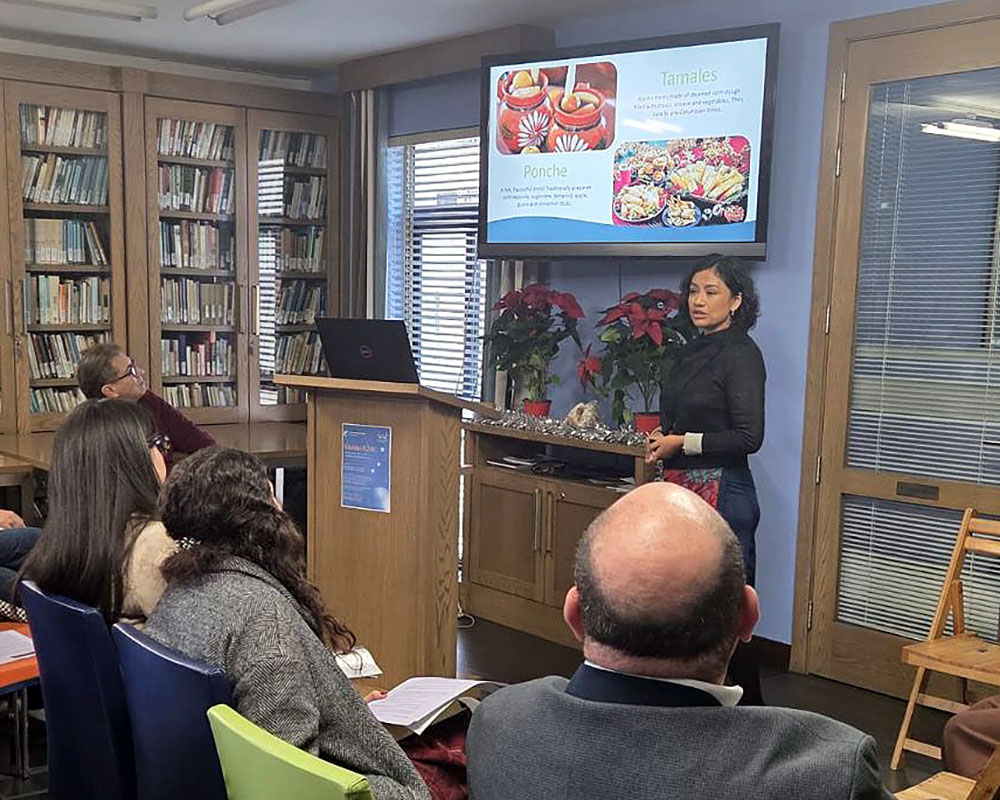
Dr Beatriz Zamora Aviles (Faculty of Science) opened by situating Christmas within lived ritual, drawing on the Mexican tradition of Las Posadas and comparing the Holy Family’s search for shelter with the migratory journey of the monarch butterfly.
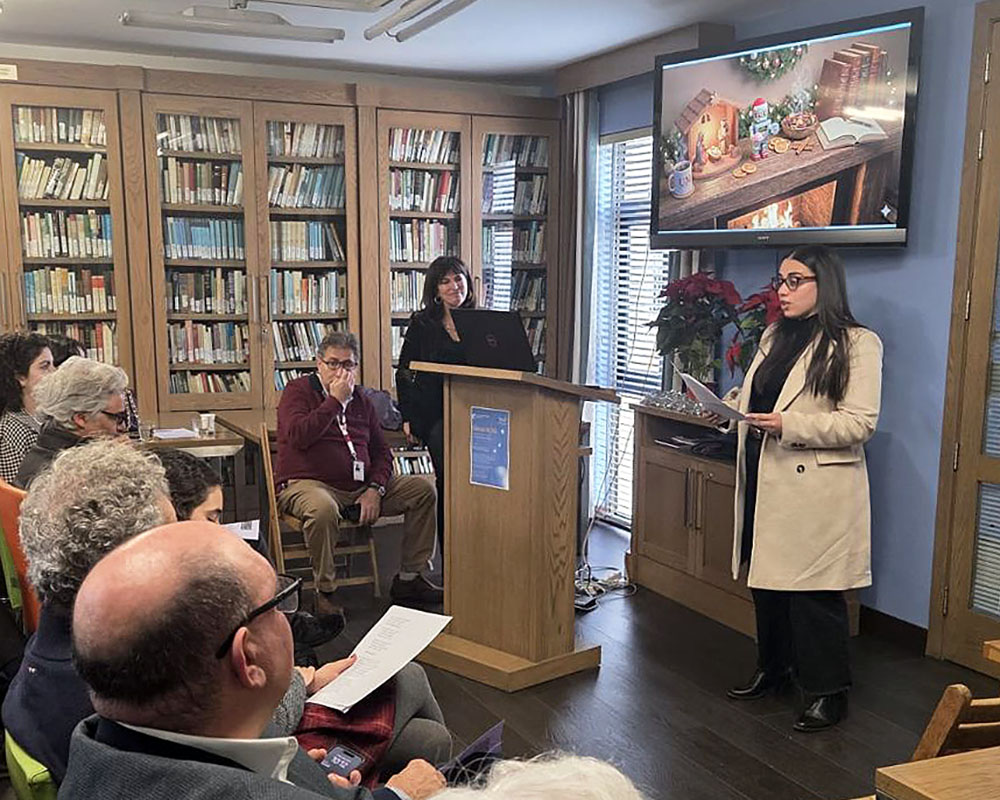
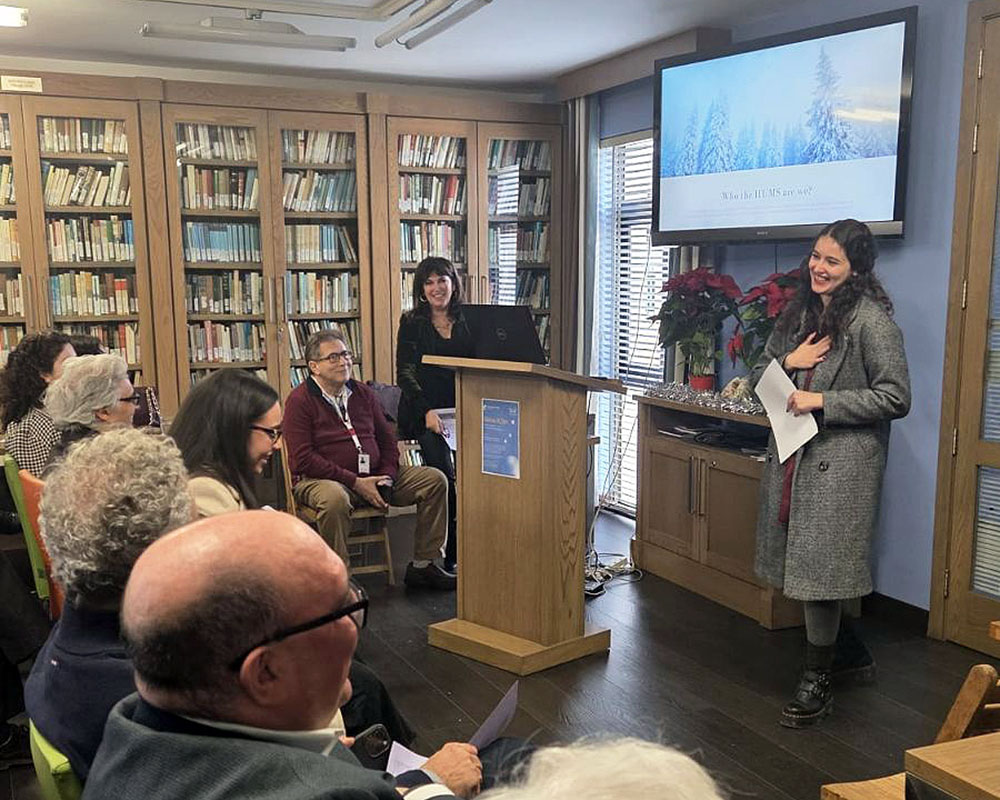
The focus then shifted closer to home with a commemoration of Prof. Oliver Friggieri by students Ilona Sciberras and Beverly Agius. Through a poetry reading and a talk, their tribute invited all those in attendance to recall their own anecdotes and memories of Friggieri as their cherished colleague at the University of Malta.
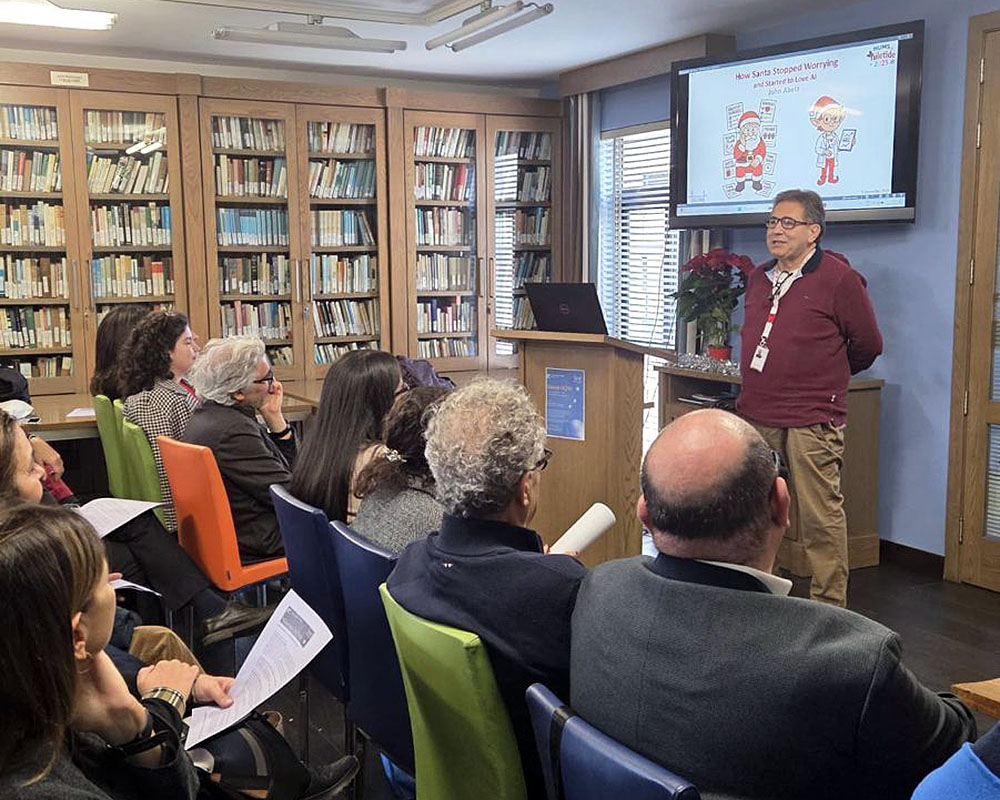
Prof. John Abela (Faculty of IT) offered a playful exploration of artificial intelligence by imagining Santa Claus as a stand-in for modern anxieties around optimisation, overload, and delegation to machines. Technology here was neither demonised nor idealised, but woven into the festive narrative as another tool humans use to manage complexity.
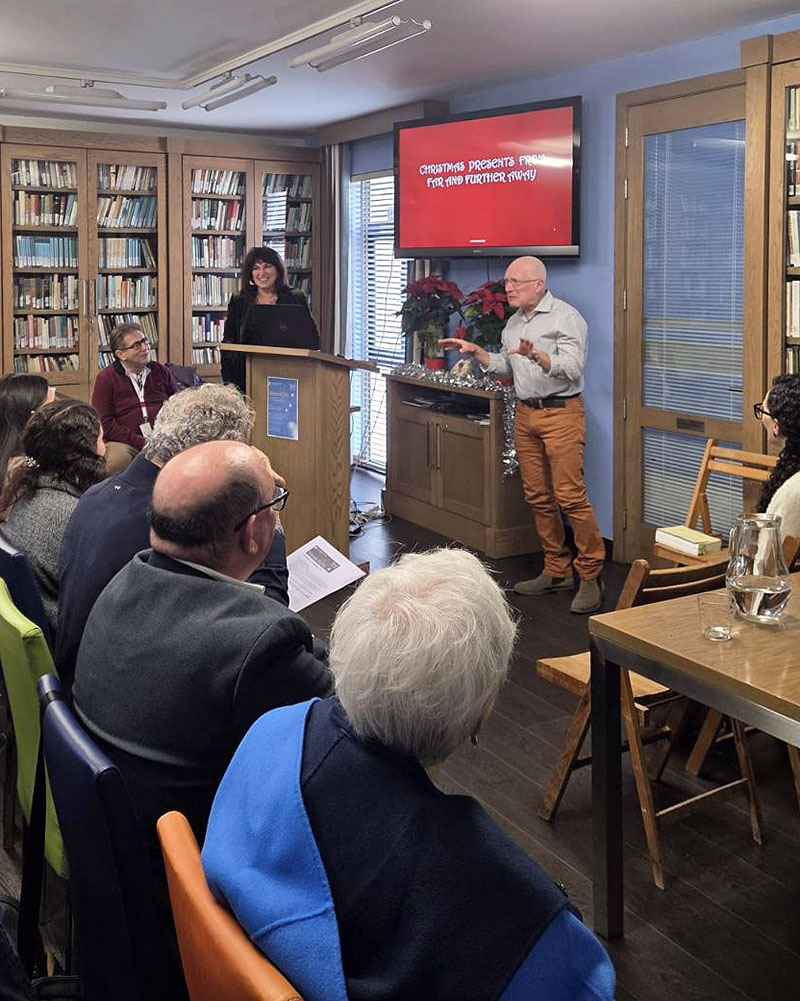
This was followed by Dr John Rendle’s (Faculty of Medicine) reflections in a presentation titled Christmas Presents from Far and Very Far Away. The talk took the form of a journey, drawing on passages from the Bible to examine the chemical composition of the famous gifts brought by the Magi.
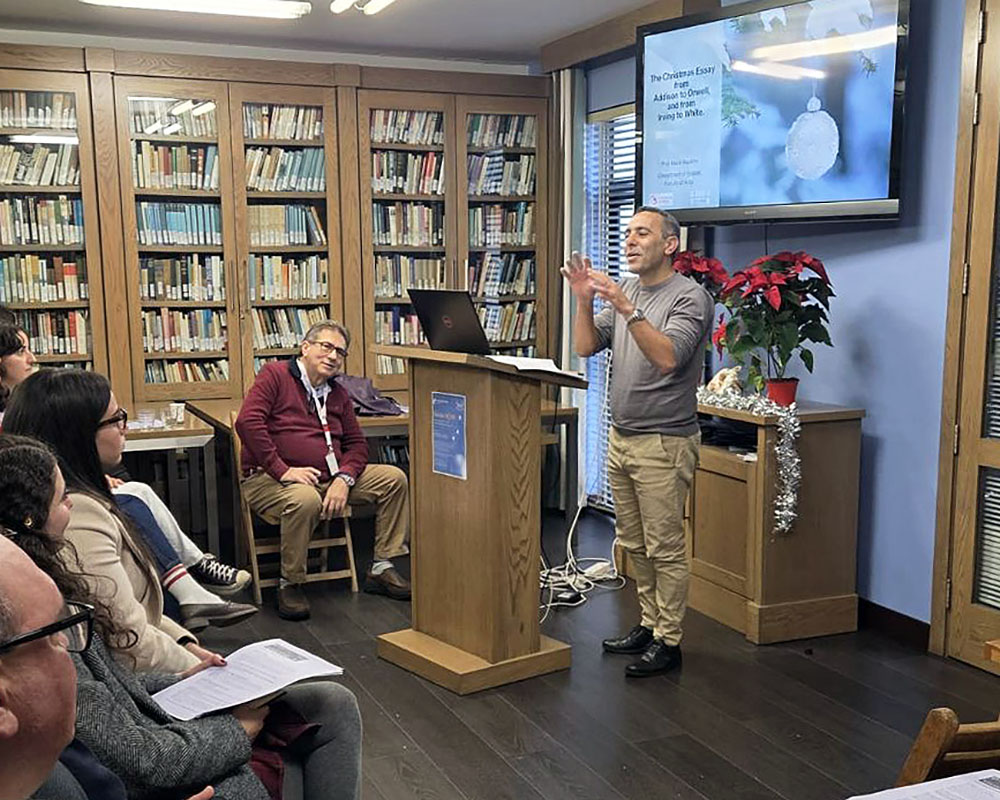
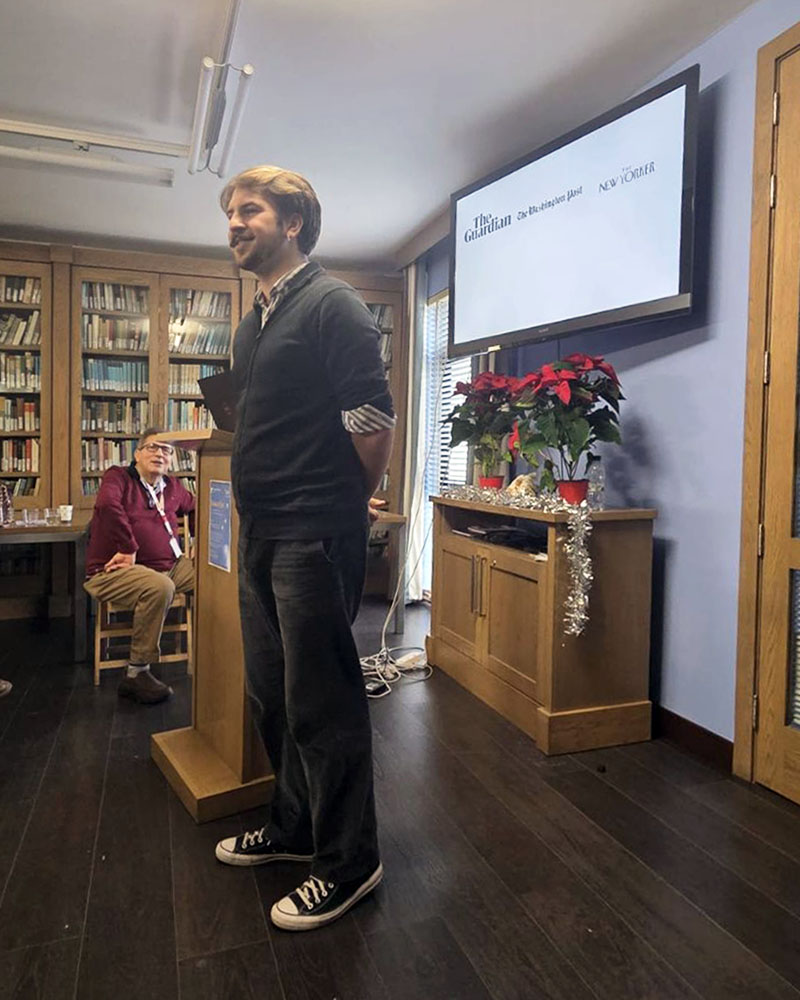
Lastly, Prof. Mario Aquilina (Faculty of Arts) turned to the essay tradition, suggesting that Christmas itself invites reflection rather than resolution. From Addison to Orwell, the season has long prompted writers to pause, assess, and question. This impulse found its final expression in student Mark Anthony Kuflewicz’s reading of Yes, Virginia, there is a Santa Claus, returning the morning to narrative and belief, not as naive sentiment, but as a conscious act of cultural inheritance.
HUMSing around the Christmas Tree
The Yuletide gathering offered a concentrated example of how HUMS operates in practice. The event did not aim to reconcile disciplinary perspectives or extract a unifying message from them; rather, it created a space where the University of Malta’s students and academics alike could share knowledge and deepen their human connection.
At the beginning of the event, Vassallo emphasised the importance of not merely sitting and listening, but also of posing questions to the speakers, sharing anecdotes and offering opinions. It was within that atmosphere and context that the memory of Oliver Friggieri came to life, that anxieties surrounding AI could be addressed by academics operating in that field, and that a romantic admiration for the migration of the monarch butterfly to Mexico could coexist. It was in that unique ambience that HUMS exemplified and showcased itself at its most human and practical – setting the stage for conversations to continue throughout 2026.
The next HUMS event, titled Life: Balance and Conflict, will take place at 6 pm on Wednesday, 4th February. More information forthcoming on Newspoint and UM Digital Screens.
Comments are closed for this article!