
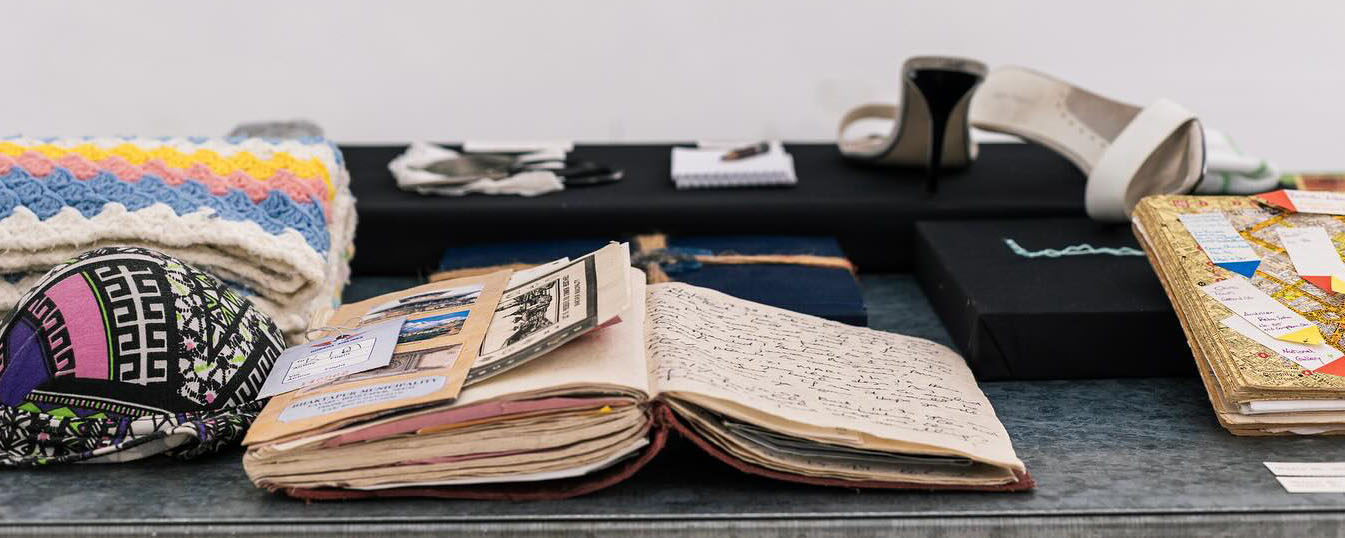
Dear Woman gathers letters, objects, and voices into an intimate, intergenerational archive that traces the transition from girlhood to womanhood through care and collective listening.
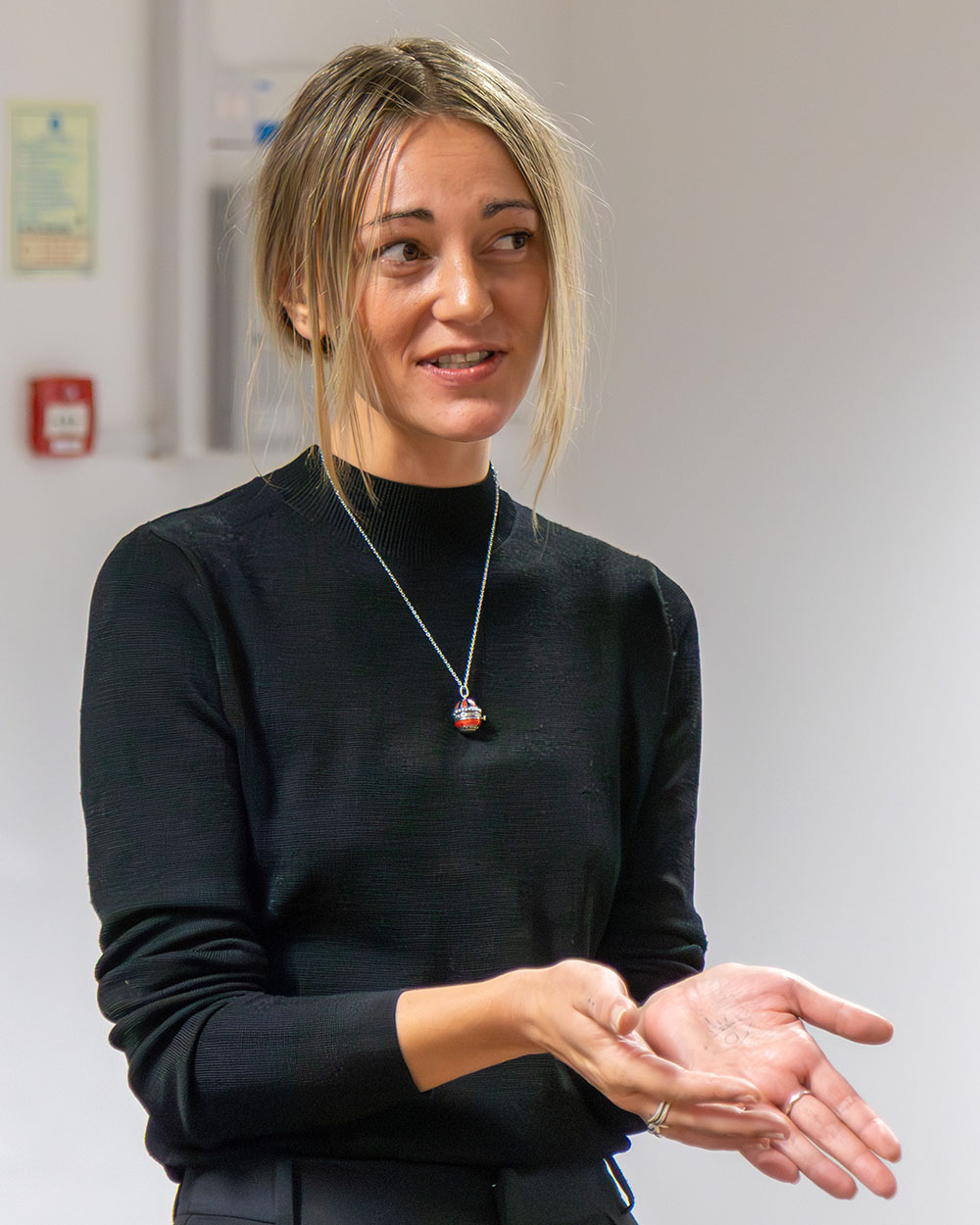
What does it mean to truly listen to the moment a girl becomes a woman? Dear Woman unfolds as a collective response to this question – one built from memories, objects, and voices that are usually kept private. Rooted in a simple yet radical act of listening, Dear Woman began as part of Kathrine Maj’s BA (Hons.) in Fine Arts at the University of Malta, under the mentorship of Dr Gilbert Calleja. Over time, it grew into a deeply human, collective archive of womanhood, memory, and transition.
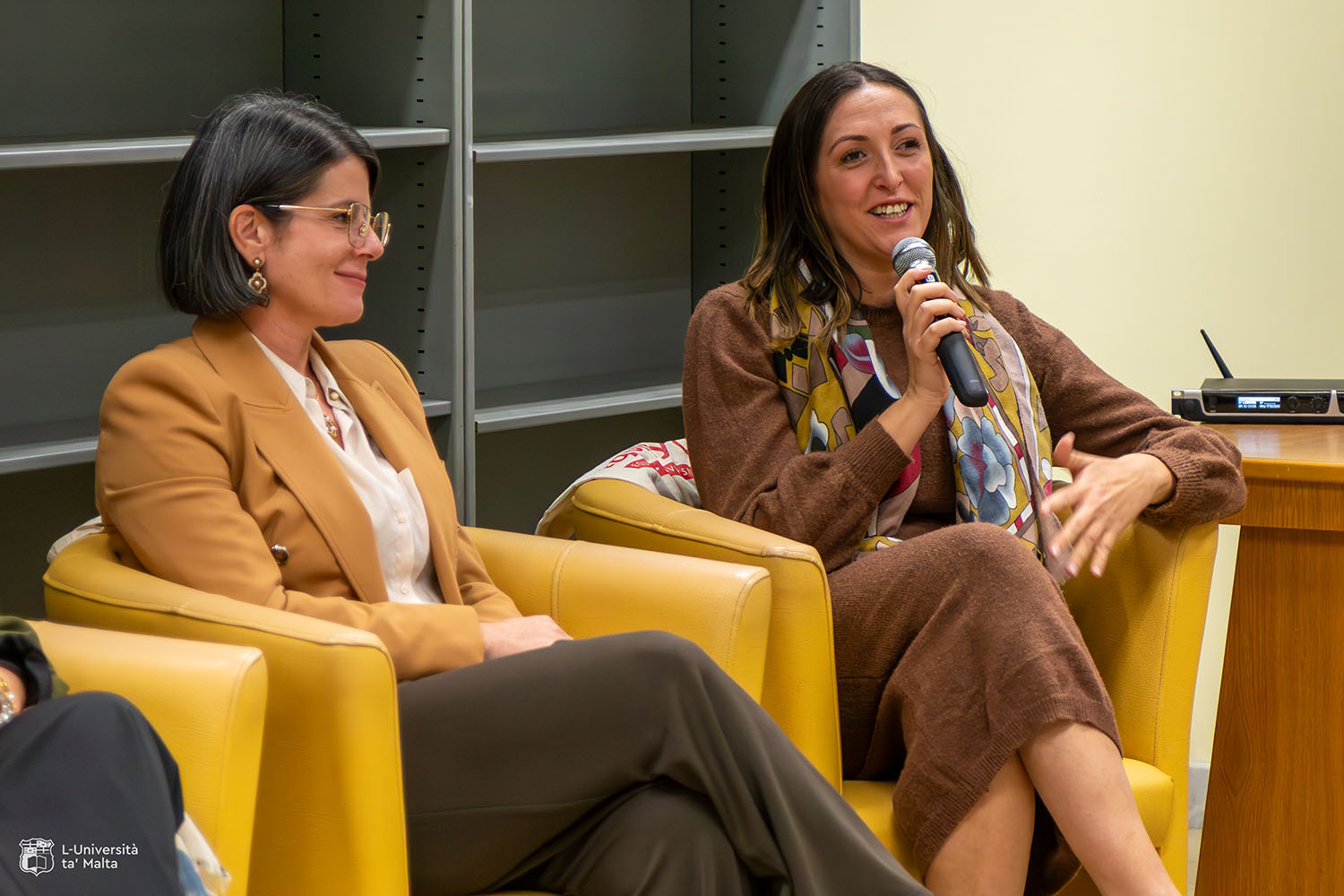
Maj, a Danish artist currently based in Malta, co-founded R Gallery in Sliema in 2022 and, following her graduation from UM in 2024, has since joined the curatorial team for the Maltese National Pavilion at the Venice Biennale 2026. Alongside her curatorial work, Dear Woman marks a significant moment in her own artistic practice, one that foregrounds care and participation.
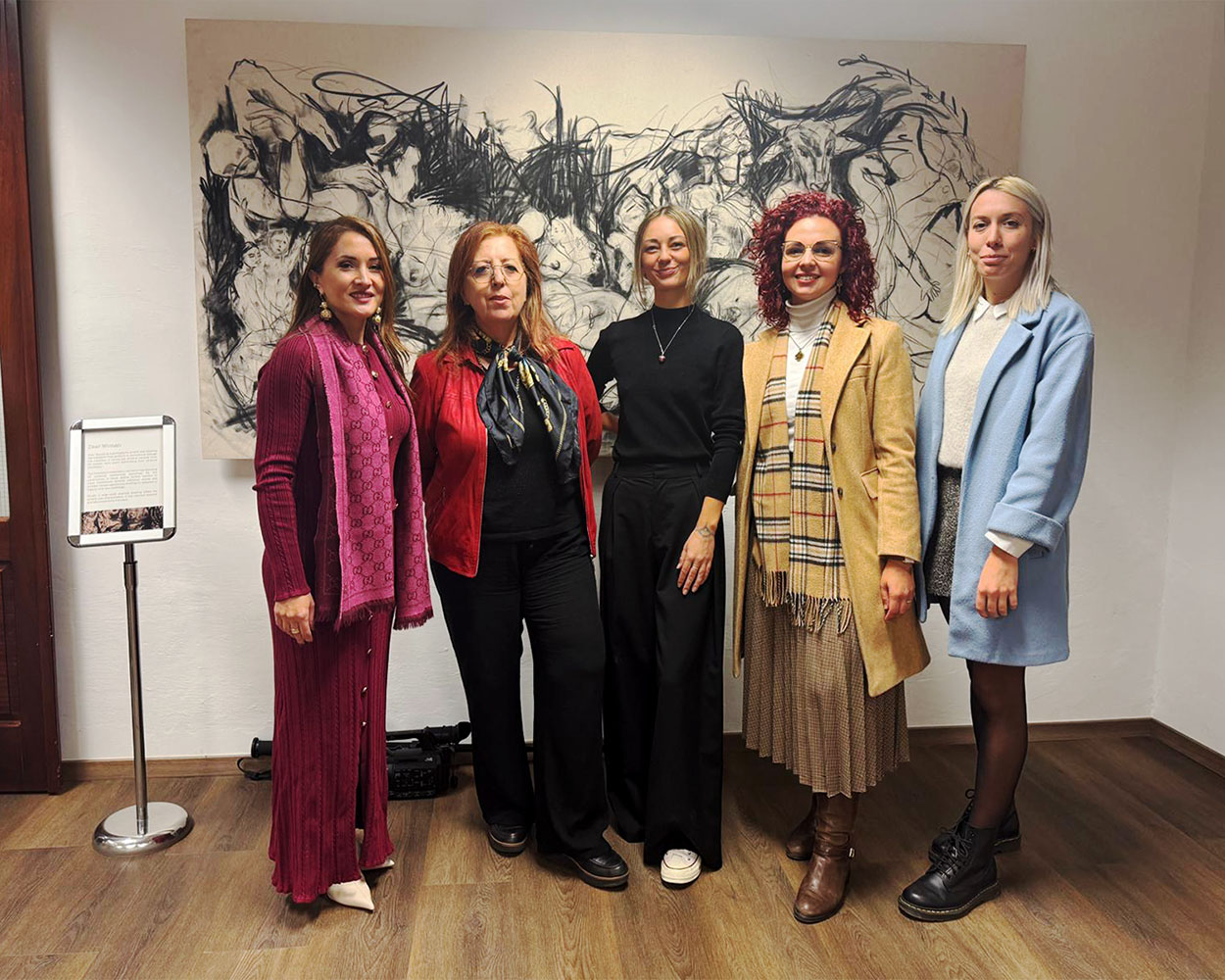
Part of the project was exhibited at the UM Library as part of the 16 Days of Activism Against Gender-Based Violence 2025, organised by the University’s Equity Office, situating the work within a broader framework of advocacy, reflection, and public engagement.
From Girlhood to Womanhood
The conceptual seed of Dear Woman began during Maj’s dissertation phase, when she was encouraged to focus on something she genuinely cared about. Rather than centring her own narrative, she chose to create space for others. Maj explains that it is rooted in ‘listening with care and intention, something that has become a rarity in our fast-paced lives.’ She invited women to write a letter reflecting on their personal transition from girlhood to womanhood, and to contribute an object connected to that experience. Each contribution was accompanied by a written testimony.
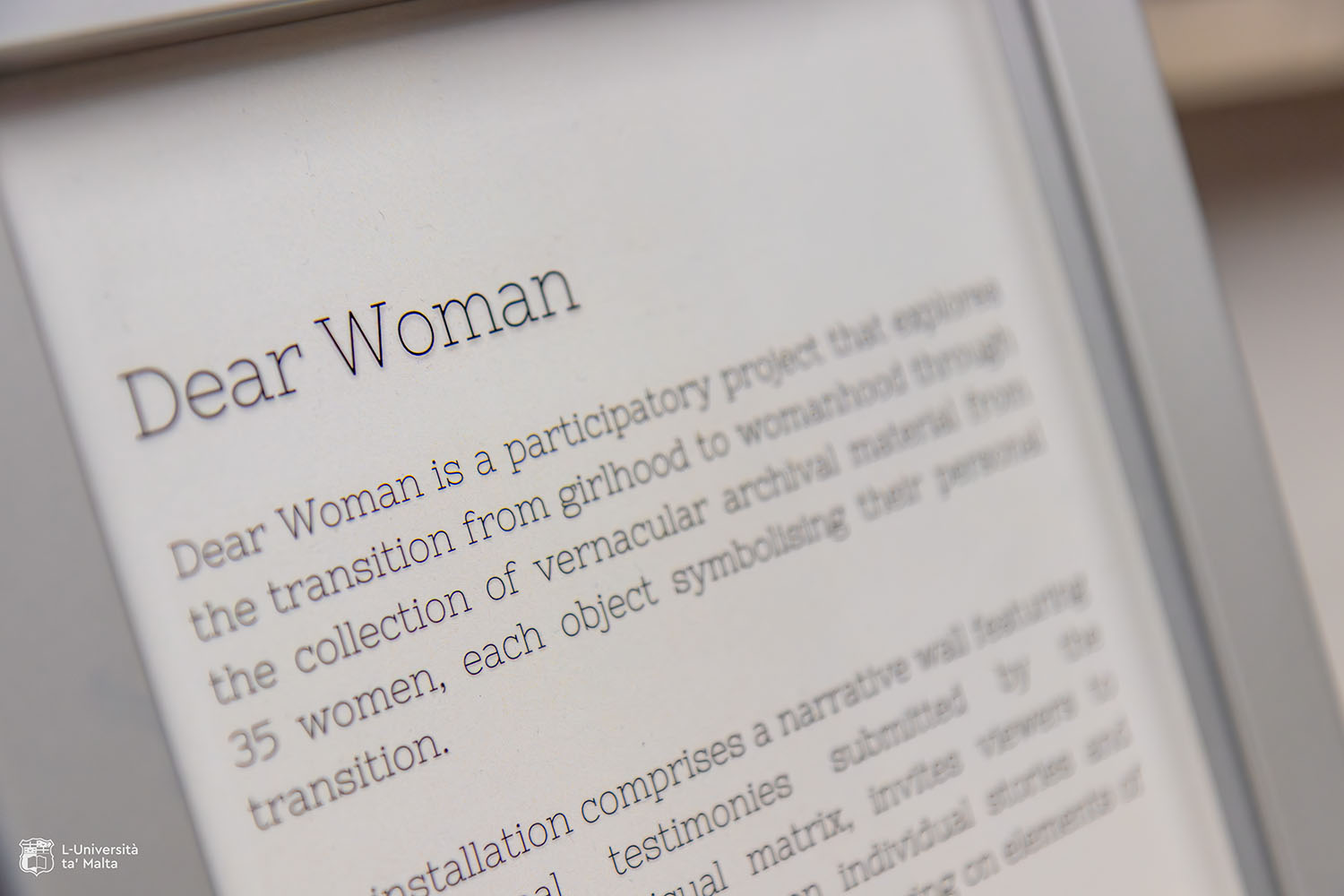
For Maj, objects act as emotional anchors – carriers of memory, history, and feeling. ‘Jewellery inherited from mothers, fragments of diaries written at 14, modest everyday items; these artefacts become vessels for deeply personal experiences,’ explains Maj.
Over time, the collection grew to include women ranging from their 20s to their 70s. Despite intended differences in age, background, and circumstance, striking common denominators began to emerge. ‘The stories varied, yet they resonated within a shared emotional register.’
This discovery led Maj to expand the project beyond the present moment. She began situating these contemporary testimonies within broader historical and cultural continuities by connecting women’s transitions not only across generations but across centuries, touching on ancestral knowledge, religious roots, and early civilisations such as Mesopotamia. Through the project, it became evident that womanhood is not confined to a single generation, but forms part of a long, shared continuum.
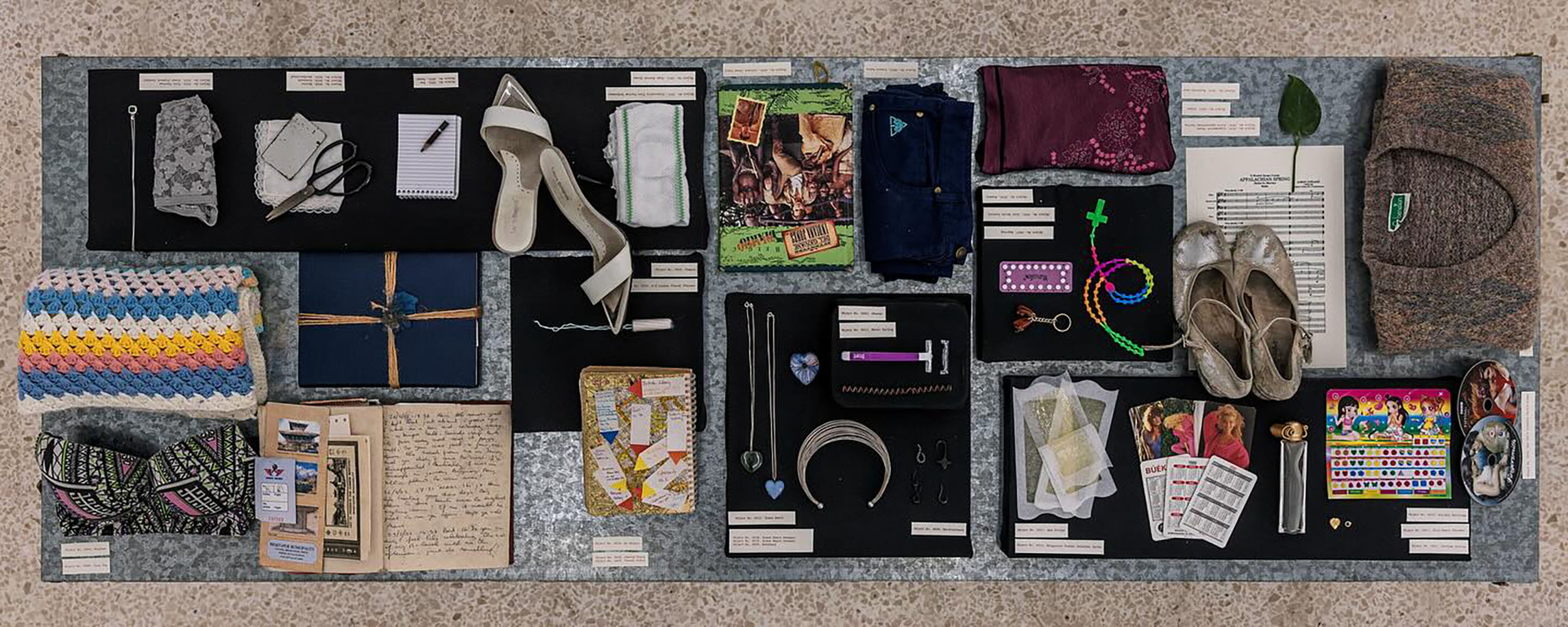
(Photo by Lisa Attard)
Collective Voices as Counter-Archives
Rather than presenting a singular autobiographical narrative, Dear Woman deliberately relies on collective voices. Maj describes the project as ‘an archival exercise but one that challenges traditional institutional archives, which often privilege grand narratives while overlooking intimate, everyday experiences.’
Central to this approach is diversity. The project intentionally gathers testimonies from women across different social backgrounds, religions, nationalities, and generations, positioning the archive as a cross-section of lived experience rather than a mythologised or institutionalised narrative.
Maj draws parallels with archaeological artefacts such as those found in the grave of a Roman girl, where seemingly insignificant items such as pleats on a dress and fragments of a toy offer profound insight into lived realities. Similarly, Dear Woman foregrounds objects and stories that might otherwise be dismissed as trivial, especially when they relate to intimate or gendered experiences.
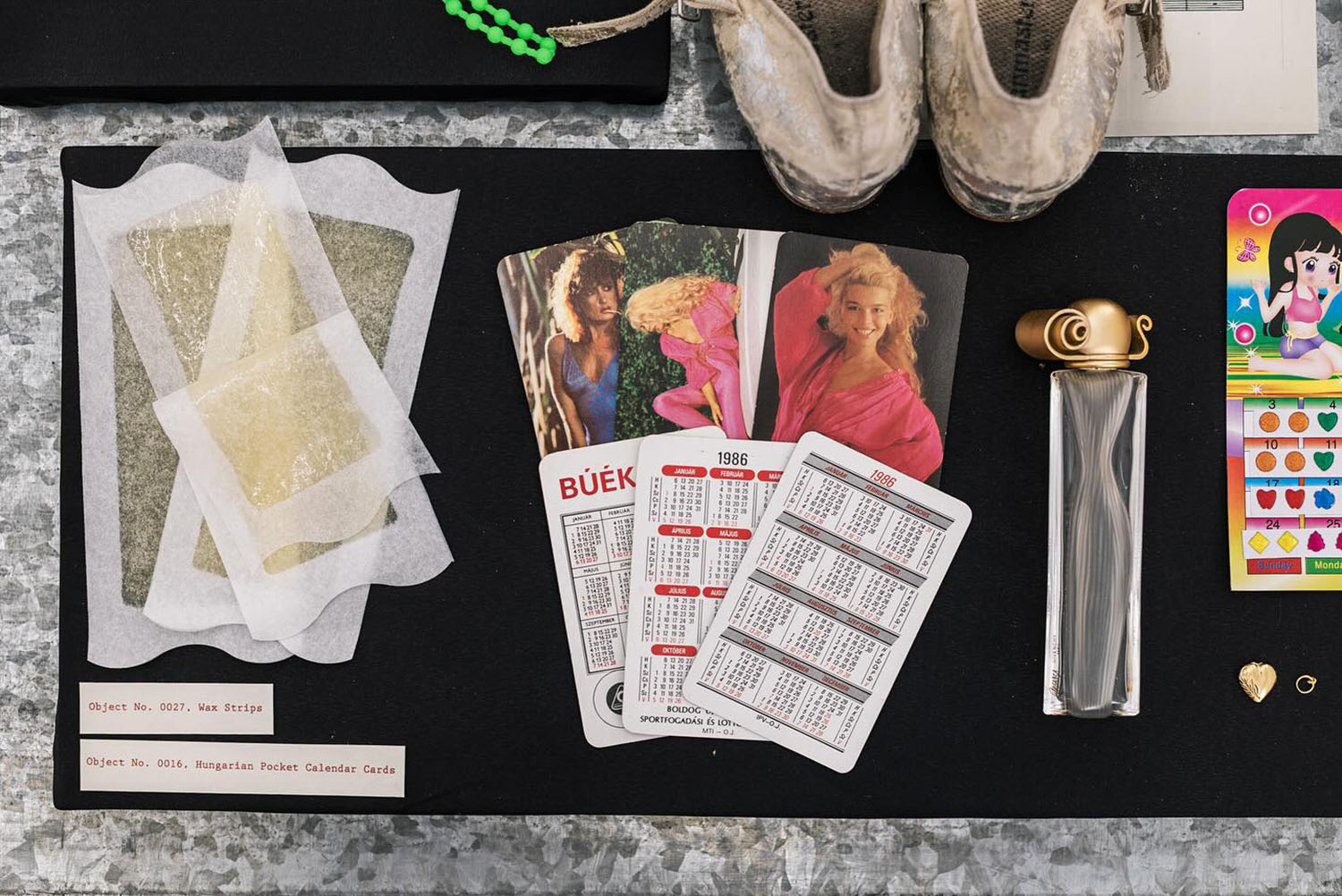
By gathering testimonies from women across different social classes, religions, nationalities, and generations, Maj constructs a counter-archive, one that resists erasure and acknowledges the value of lived, emotional knowledge.
The ethical dimension of Dear Woman is central to its execution. Maj spent a substantial portion of the project navigating questions of trust, consent, and vulnerability. Many of the objects entrusted to her were deeply sentimental and irreplaceable. Every item was carefully catalogued, numbered, and tracked to ensure accountability at all times.
Anonymity was rigorously maintained. In a small context like Malta, even minimal identifying details could reveal a contributor’s identity. Maj therefore removed all markers that could compromise privacy, positioning herself not as an owner of these stories, but as a facilitator and caretaker. Contributors were given the opportunity to review transcriptions, reinforcing the understanding that the narratives remained theirs.
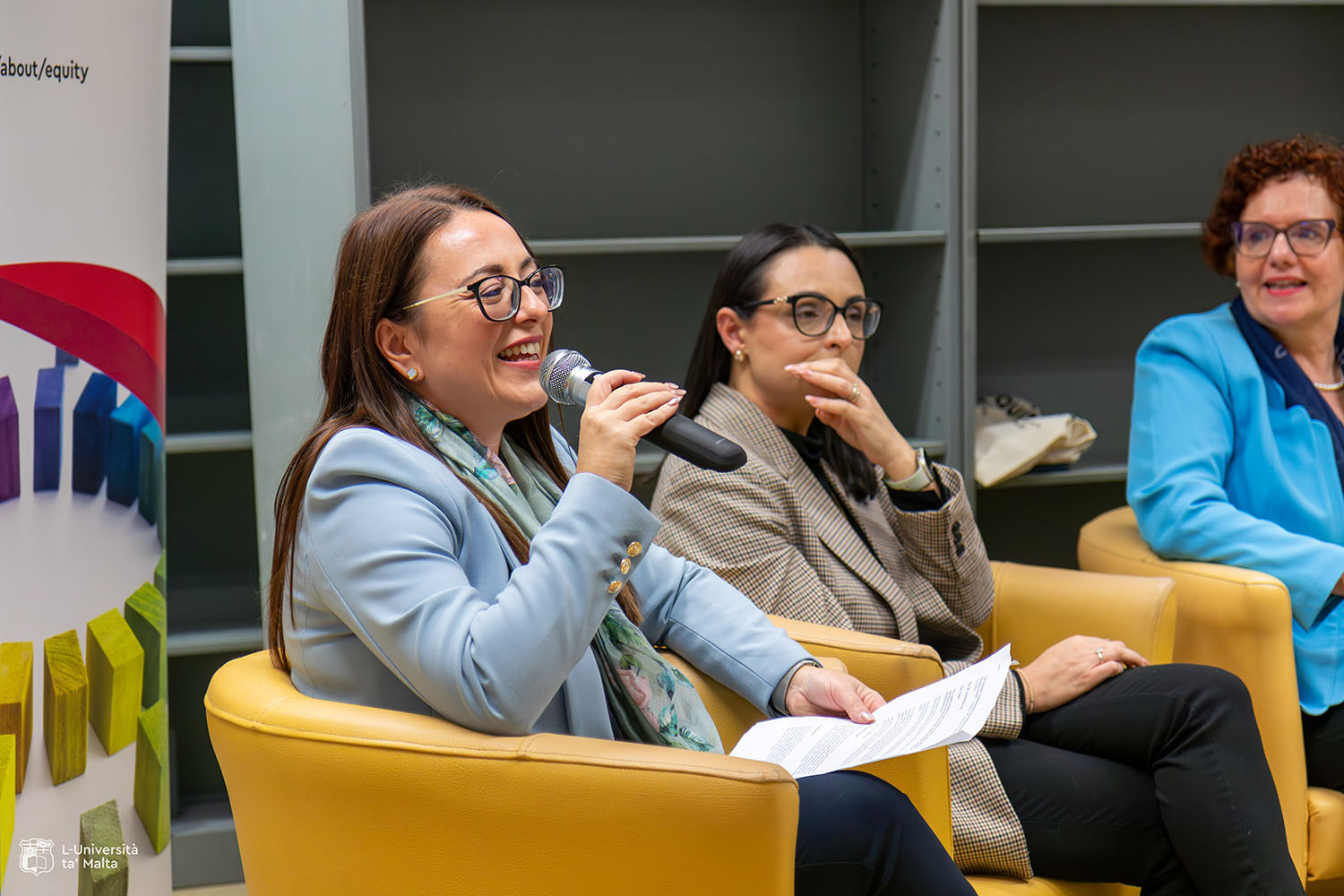
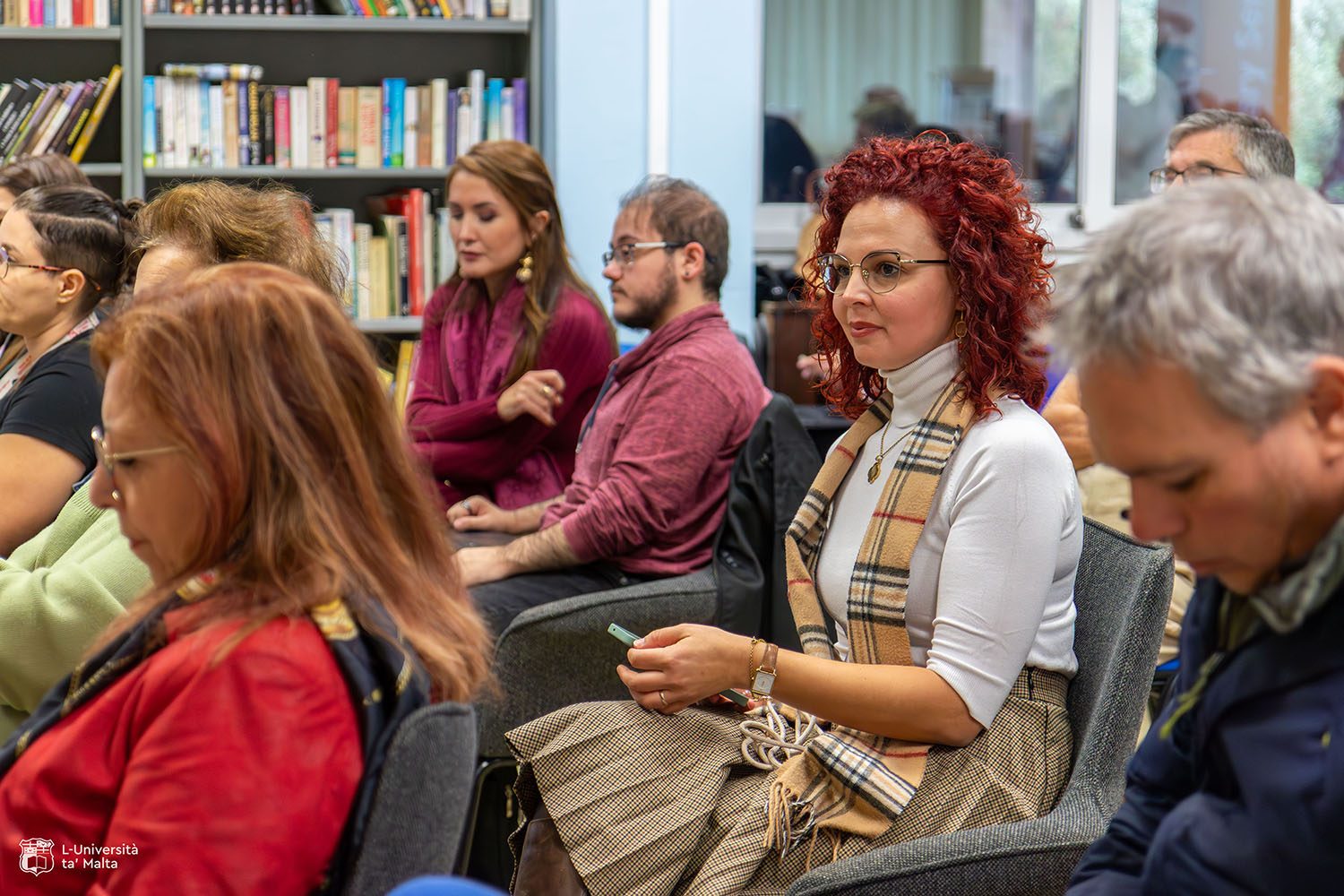
(Photos by Kristov Scicluna)
Material, Language, and Emotional Response
Maj frames the exhibition as a collective exercise in listening – an act that is both political and deeply human.
‘Women are often accustomed to sharing intimate stories with one another, creating spaces of empathy and understanding,’ observes Maj. ‘This installation opens that space to a wider audience, including men, who may rarely encounter such narratives firsthand.’ In doing so, the installation encourages respectful attention to experiences that are too often dismissed, minimised, or unheard, particularly in discussions around domestic and gender-based violence.
Listening, in this context, becomes a form of action.
(Photo by Lisa Attard)
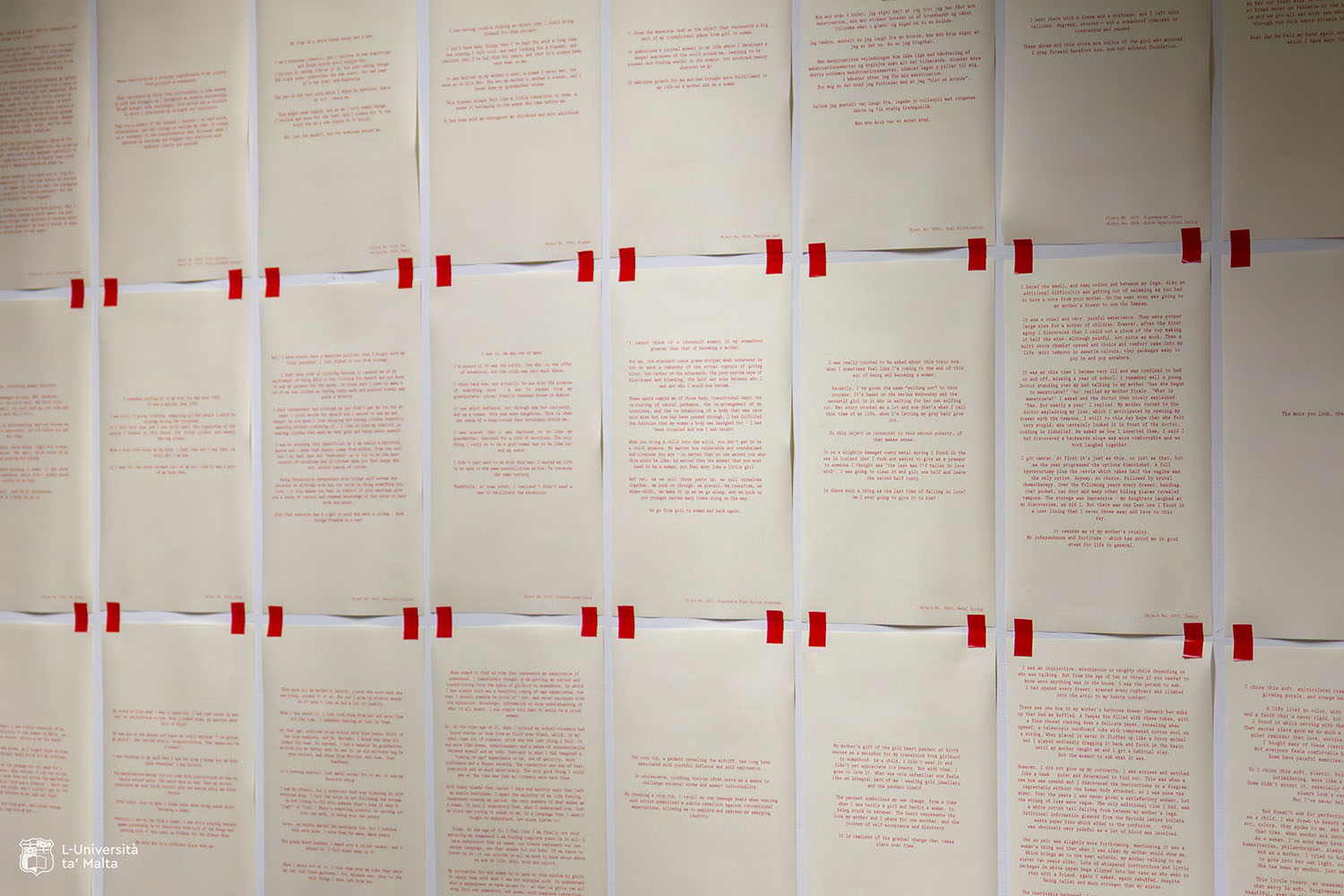
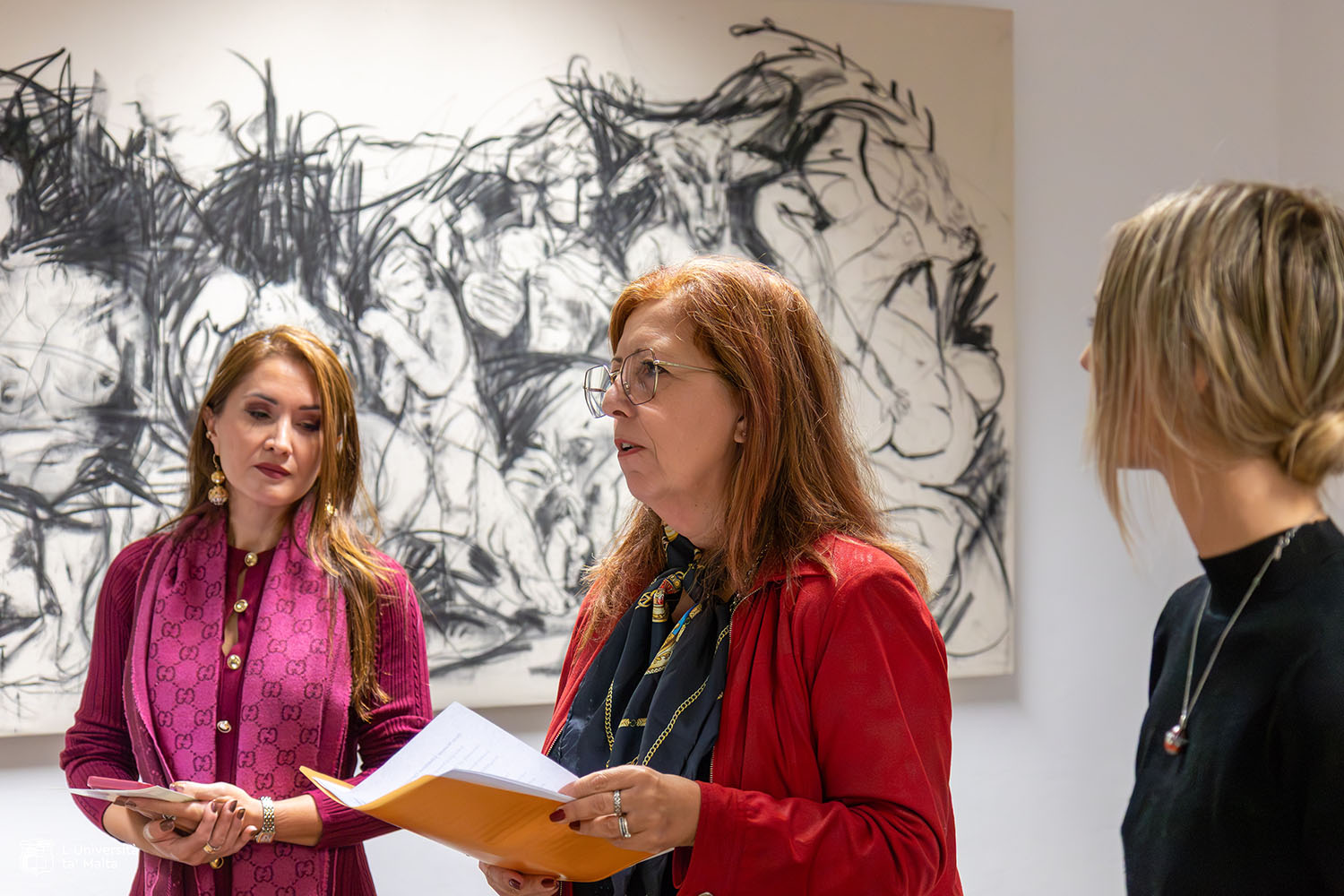
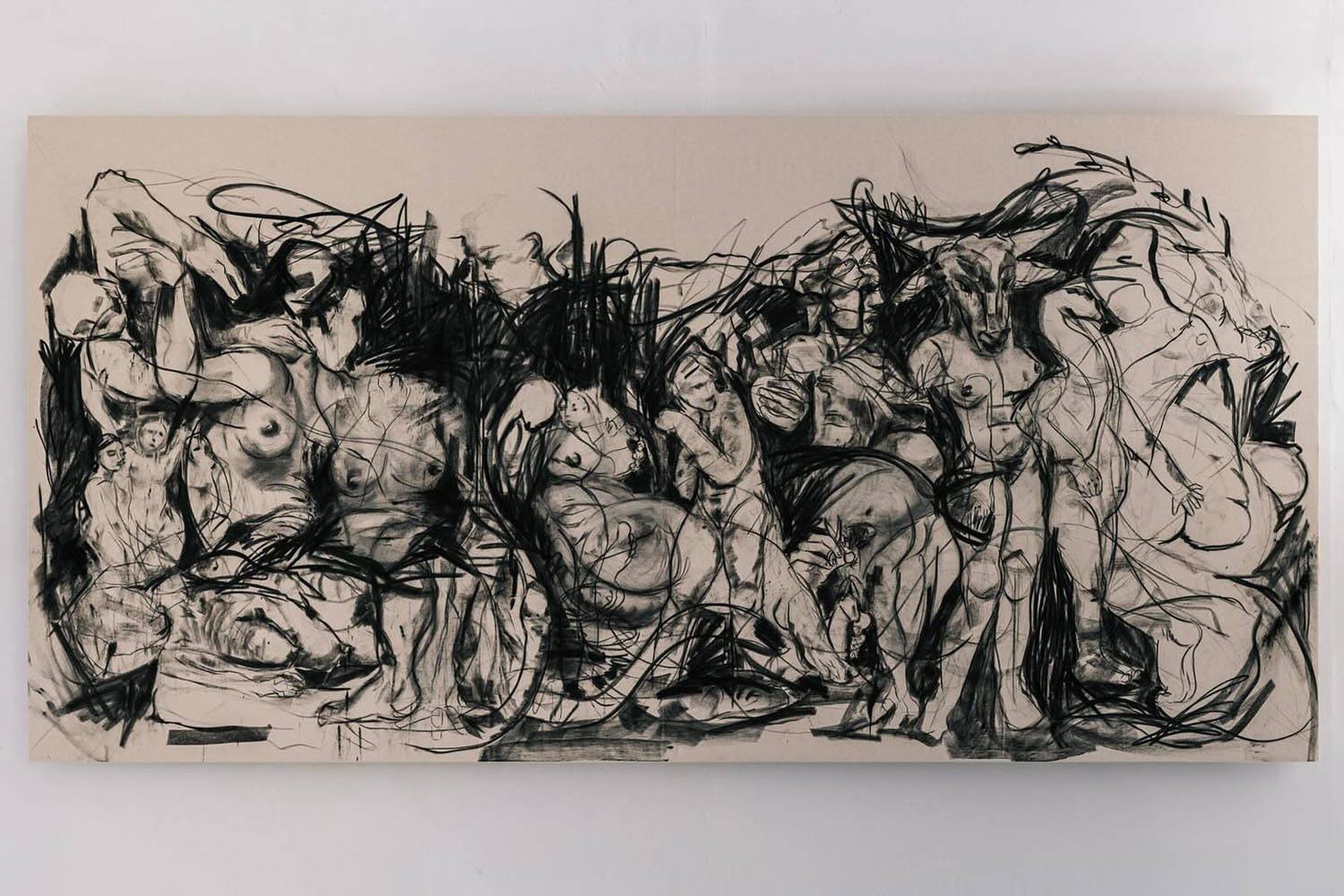
The installation’s aesthetic is intentionally raw and archival. Tables of written testimonies are presented with clarity and restraint, allowing the material to speak without artistic embellishment. In this role, Maj consciously steps back as an artist, acting instead as a collector and organiser. Her emotional response emerged only after this extensive period of listening and collection, and is articulated through a single drawing.
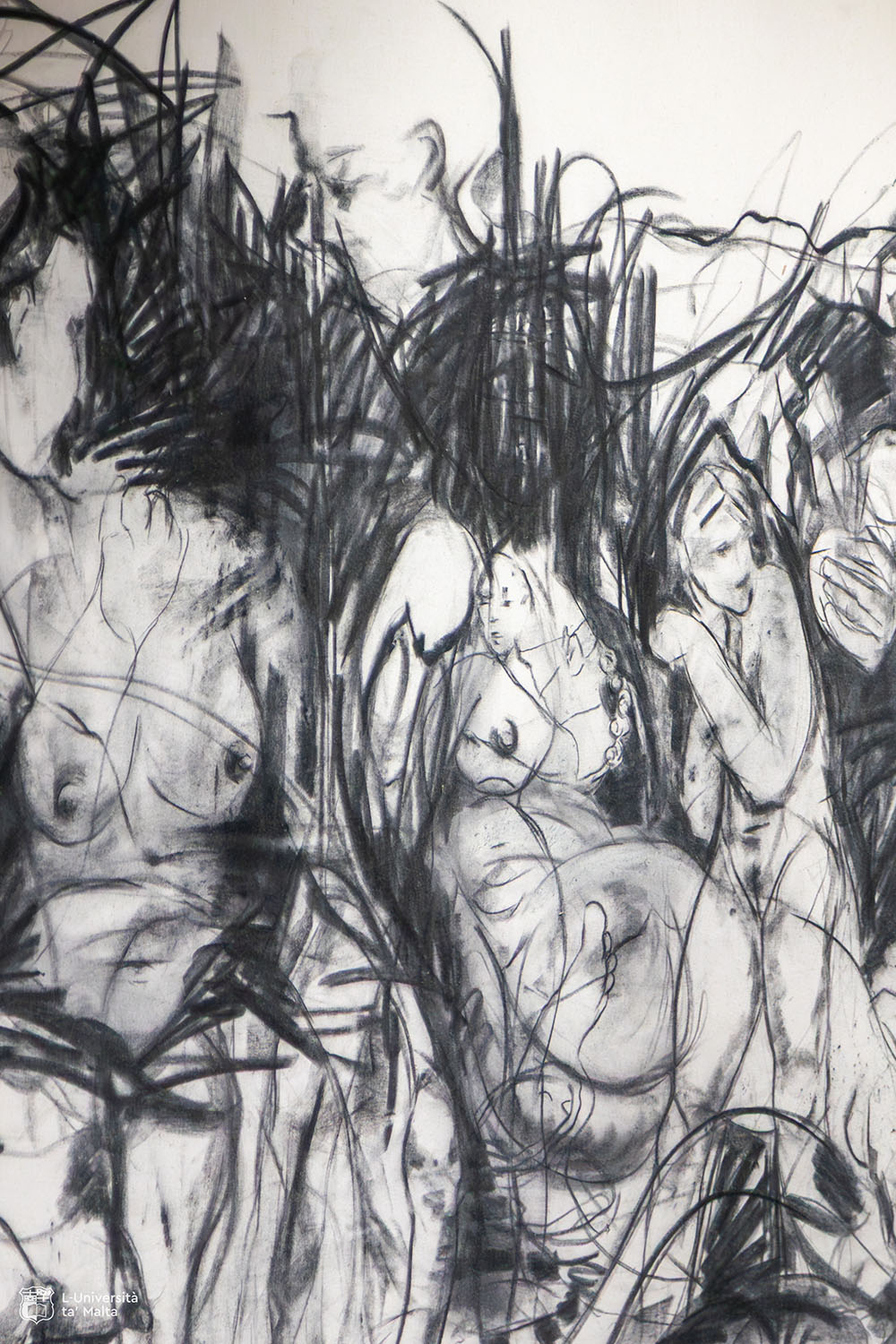
(Photo by Kristov Scicluna)
The work is executed in charcoal, a recurring medium in her practice, valued for its fast, intuitive, and open-ended nature. In contrast to the calculated and structured nature of the archive, this drawing functions as a closing statement – a visceral, personal response to months of research, emotional exposure, and shared testimony.
As viewers move through Dear Woman, they become witnesses. Maj hopes audiences leave with a sense of learning, particularly younger women encountering reflections from older generations. She notes that the process itself was equally instructive for her.
Humour surfaces alongside tenderness, such as through advice on shaving legs, wearing high heels, and navigating awkward rites of passage. ‘There is love for younger selves, an acknowledgement of innocence, fear, excitement, anxiety, and failure,’ remarks Maj.
While Dear Woman, as an invitation-based project, has reached its conclusion, Maj does not see this as an end. Rather, it marks the beginning of an artistic methodology she intends to continue exploring, one rooted in community engagement before visual production.
For an artist accustomed to working in solitude, this process proved transformative. The collective dimension enriched the work in ways that a closed studio practice could not. As Maj looks ahead, the format may evolve, but the core principle remains: art as a space for listening, holding, and honouring shared human experience.


Comments are closed for this article!