
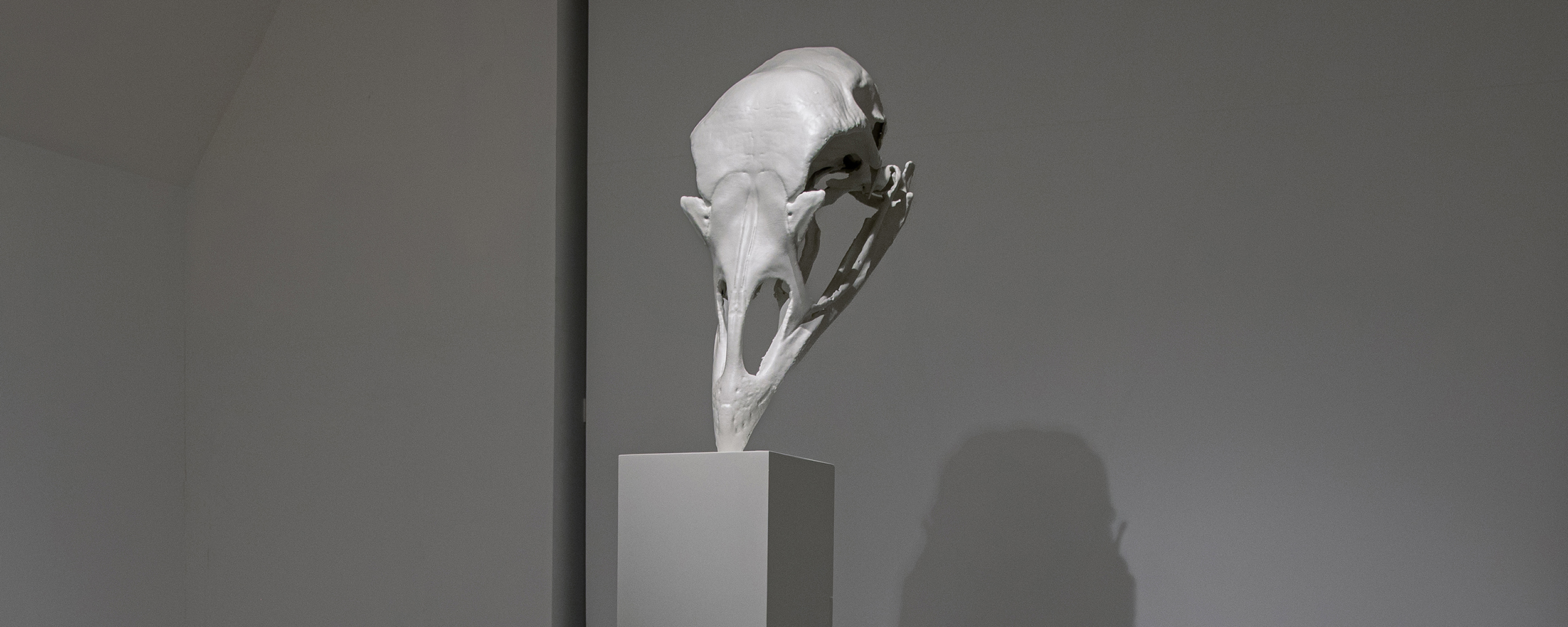
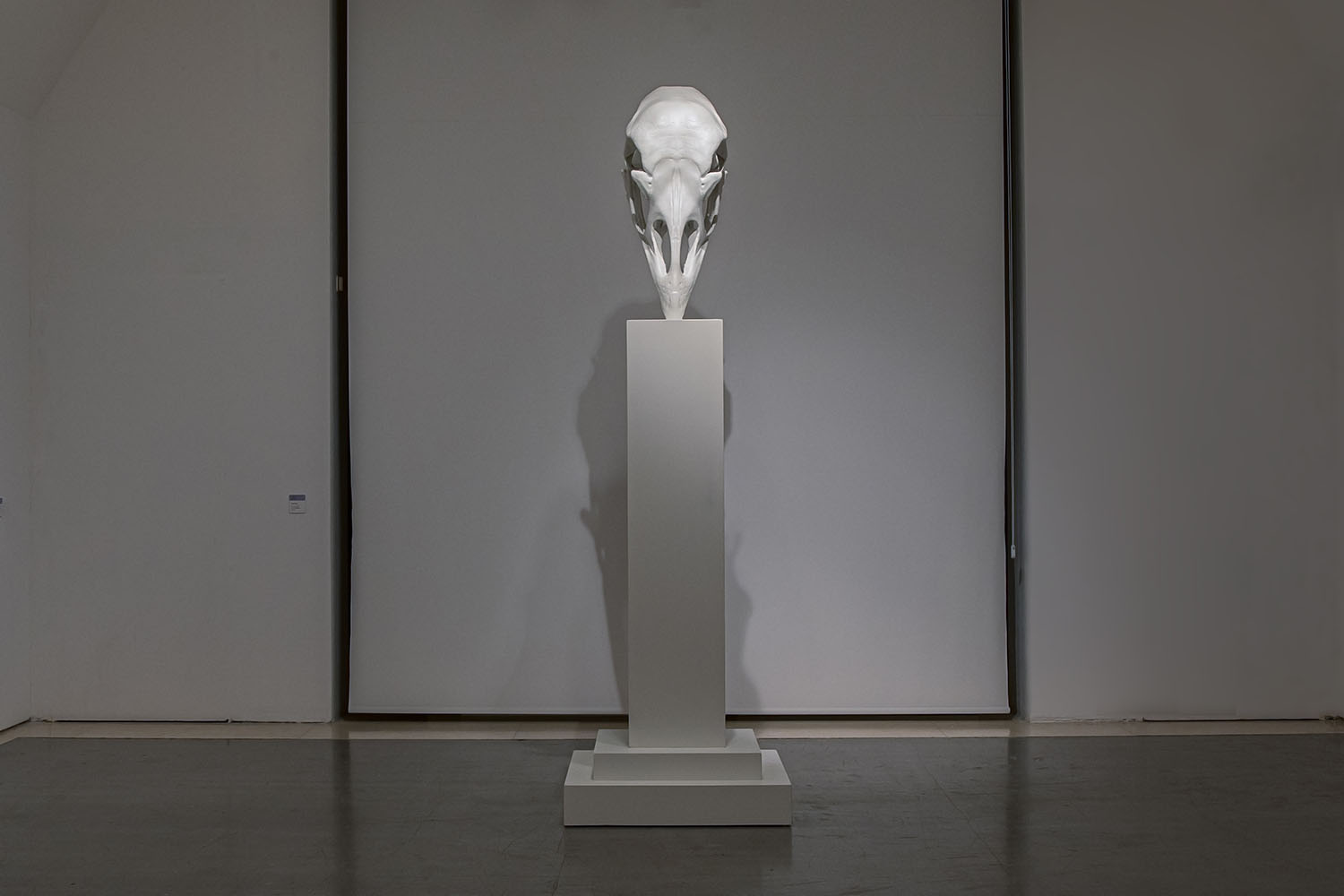
At the entrance to For Want of (not) Measuring, a contemporary art exhibition, visitors gape at a skull. It is of a bird, but its scale suggests something other. The sculpture rises 2.8 metres above the floor of Spazju Kreattiv in Valletta and balances improbably on its beak atop a column. From some angles, it resembles a fossil; from others, a warning. The work is by Maltese artist Prof. Trevor Borg, titled In the Balance.
Prof. Trevor Borg’s In the Balance is part of a group exhibition called For Want of (not) Measuring, which examines humanity’s growing reliance on metrics. Today, almost everything is quantified: wealth, health, productivity, reputation, and even the credibility of opinions online. Curated by Prof. Vince Briffa, with Alexander Zammit, and bringing together artists from around the world, the exhibition asks what may be lost when life is filtered through maths.
Borg obliquely approaches the theme. Rather than measuring, his sculpture depicts a system that appears poised on the verge of collapse.
‘My artistic practice frequently engages with place and the environment and the diverse layers that constitute them. The biosphere thrives through entanglement; its systems and beings cannot be meaningfully separated,’ Borg tells THINK.
Animals have long appeared in his work, though rarely with such blunt physical presence. Earlier pieces used them symbolically or indirectly. Recently, they have become central to his practice. Last year, he unveiled a compelling series of sculptures in concrete and steel, their forms echoing the primal curvature of animal horns, in a collective exhibition at the prestigious Archaeological Museum in Bari, Italy.
‘Humans inhabit the planet alongside other species whose lives intersect with our own. Acknowledging these interdependencies is essential, and artistic practice is one way of promoting these symbiotic conditions,’ Borg says.
We Are Here by Prof. Trevor Borg, featured at
the Museo Archeologico, Bari (Photo courtesy of Trevor Borg)
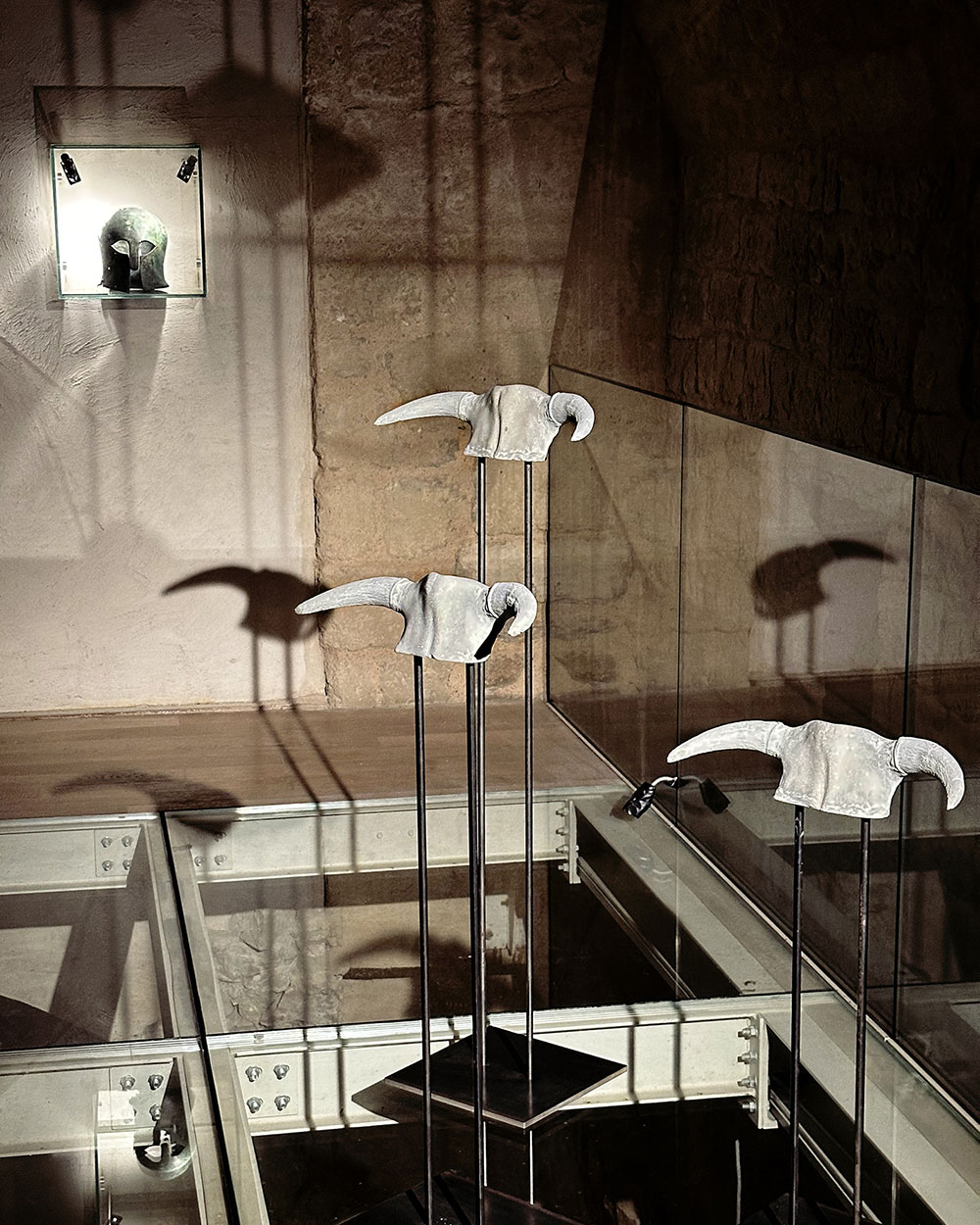
Animals have long appeared in his work, though rarely with such blunt physical presence. Earlier pieces used them symbolically or indirectly. Recently, they have become central to his practice. Last year, he unveiled a compelling series of sculptures in concrete and steel, their forms echoing the primal curvature of animal horns, in a collective exhibition at the prestigious Archaeological Museum in Bari, Italy.
‘Humans inhabit the planet alongside other species whose lives intersect with our own. Acknowledging these interdependencies is essential, and artistic practice is one way of promoting these symbiotic conditions,’ Borg says.
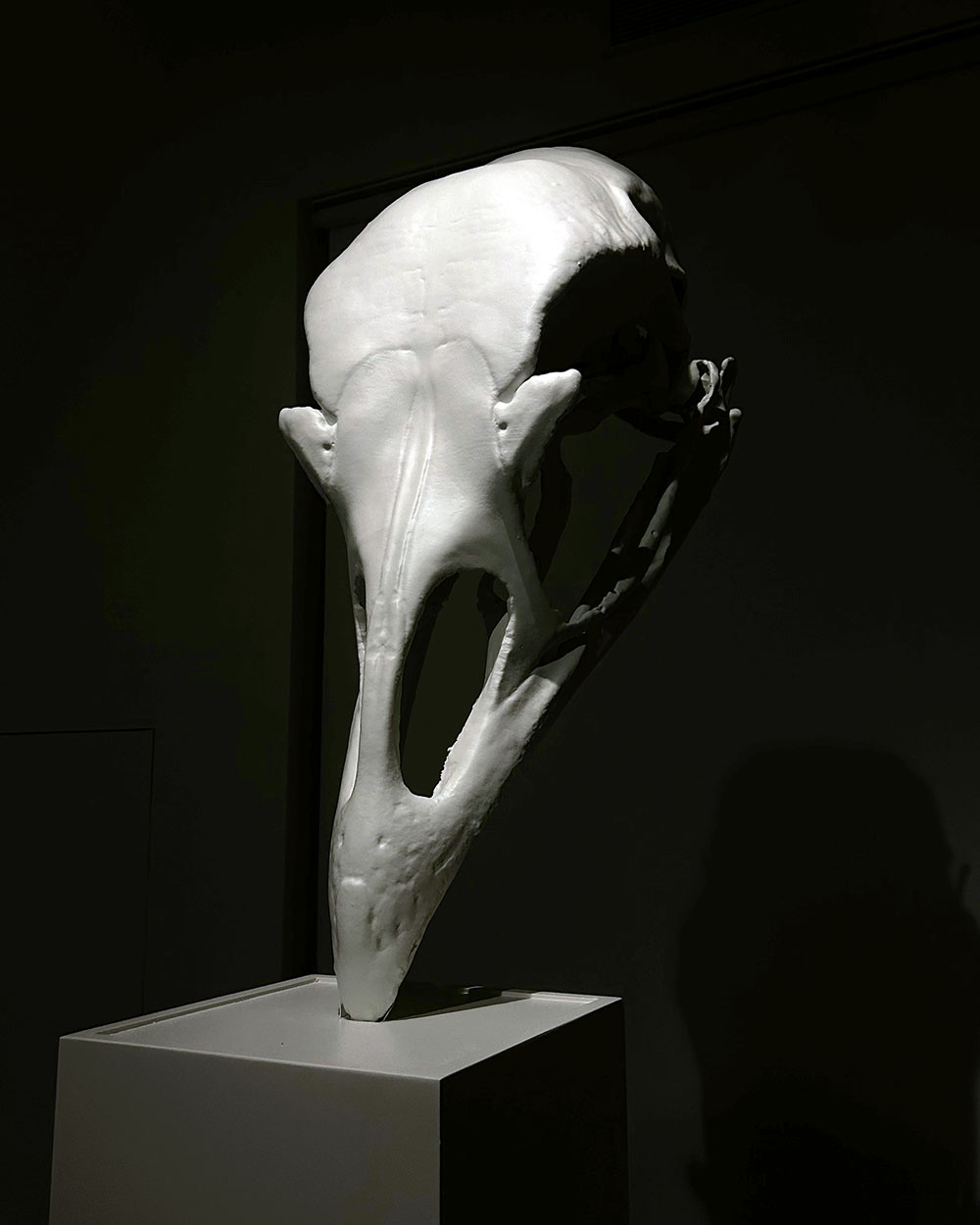
The bird skull was chosen for both aesthetic and symbolic reasons. ‘I have long been fascinated by the anatomy of birds and their extraordinary capacity and resilience to traverse vast distances despite the apparent fragility of their small bodies,’ he says.
Yet the sculpture is less about movement than about aftermath (a poignant constant in every life).
Balanced delicately on its beak, the skull appears ready to topple. The tension is intentional. Borg’s work reflects on the Anthropocene, the geological epoch defined by humanity’s planetary impact. Climate systems shift, landscapes are reshaped, and species disappear. Scientific instruments now measure these transformations with extraordinary precision.
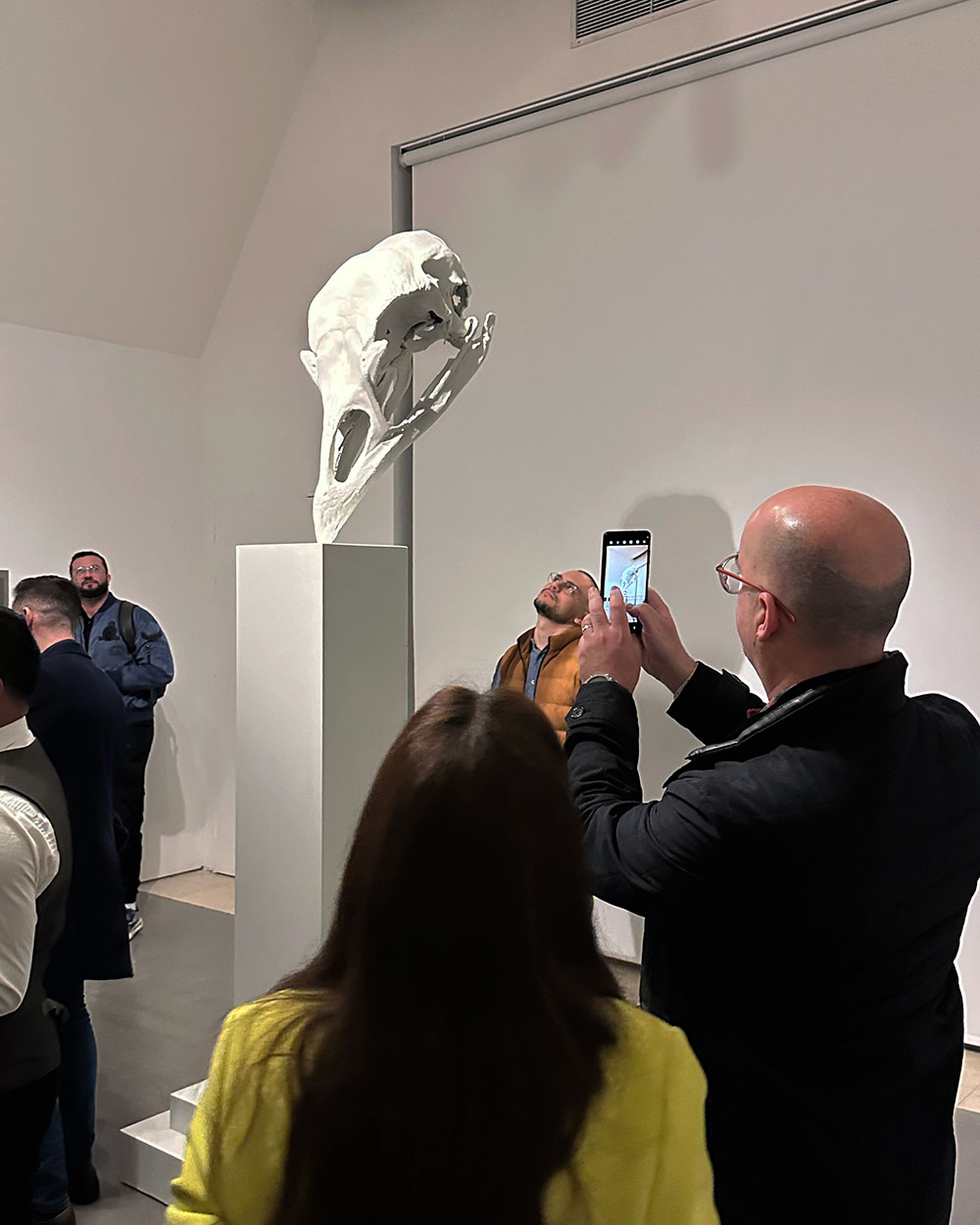
Visitors at Spazju Kreattiv capturing In the Balance
(Photo by Trevor Borg)
Nature vs Numbers
Yet, the more precisely science gauges the planet, the less stable it seems. ‘As science produces ever more precise measurements of environmental change, many ecological conditions appear seriously in the balance,’ Borg says.
Instead of graphs, the sculpture turns that sentiment into physical form. The structure stands upright only because opposing forces exactly cancel each other out. It is precariously poised between stability and fragility, mirroring the planet’s own delicate condition.
Scale sharpens the metaphor. At nearly three metres tall, the skull dwarfs the viewer, flipping the table and transforming something delicate into something monumental. ‘The scale of the sculpture is conceptually significant. It evokes the expansive aerial perspective of a bird’s-eye view of the planet,’ Borg says.
The enlargement also alters the viewer’s sense of time. At this scale, the skull resembles an archaeological relic rather than a newly made object. ‘The enlarged form transforms the skull into a prehistoric relic, invoking deep time and highlighting the long processes of evolution that we are unmaking,’ Borg says.
This reference to geological time sits uneasily beside the exhibition’s contemporary concerns. For Want of (not) Measuring questions the modern impulse to quantify experience. Metrics promise clarity but often flatten complexity. Love, memory and care, after all, resist translation into numbers.
Ecological systems may belong in the same category. Science can measure atmospheric carbon, ocean temperatures, or species loss with increasing accuracy. Reckoning, however, does not stabilise the systems being tallied.
The skull’s precarious equilibrium becomes a metaphor for those fragile interdependencies. ‘Because the biosphere is structured through intricate interdependencies, disruptions in one part of an ecological system inevitably reverberate through others,’ Borg says.
The sculpture embodies this idea physically. Its balance depends on weight, angle and centre of gravity. Alter one variable, and the entire structure implodes.
Placed near the entrance of the exhibition, In the Balance functions as a quiet prologue. Before viewers encounter anything else, the skull introduces the show’s central paradox: The world may be measurable, but that does not mean it is secure.
Birds add another symbolic dimension. For centuries, they have represented perspective; creatures capable of canvassing landscapes from above. ‘Birds occupy elevated vantage points and are often associated with the ability to see from above,’ Borg says. The sculpture invokes a bird’s-eye view of the planetary condition.
Planetal Perspective
From that vantage point, the Anthropocene begins to look less like a scientific abstraction and more like a visible transformation of the planet. And it carries an uneasy suggestion. What looks ancient may in fact be ubiquitous. Borg hints at this shift when describing the object’s strange familiarity. ‘Due to the damage to our planet, nature is starting to look unfamiliar again,’ he says. Standing beneath the skull, viewers may struggle to place it in time. It looks like something excavated from the distant past. It may be a memento from the future.
This project is supported by the Department of Digital Arts (University of Malta). The For Want of (not) Measuring group exhibition is on display at Spazju Kreattiv till 3 May 2026. For more details about the exhibition, read more here.


Comments are closed for this article!