
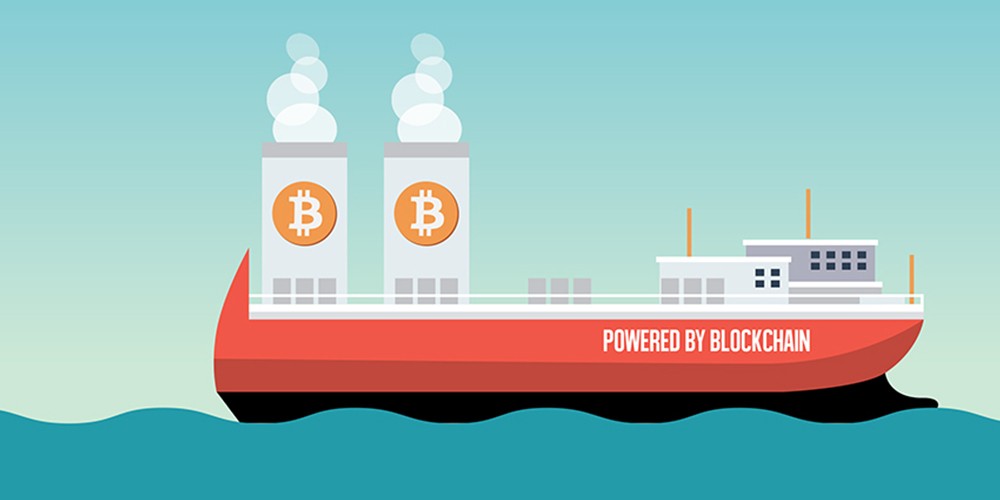
Blockchain is still a big unknown, even for some professionals. Blockchain and the Distributed Ledger Technology (DLT) have been made infamous by Bitcoin, a digital payment and peer-to-peer monetary transaction system that bypasses banks and third party endorsements. But DLT and the Blockchain protocol can be used for other purposes. Blockchain’s greatest strength lies in its decentralised architecture. It allows transactions to be shared openly across independent nodes, verified by encrypted checksums that give each closed block a distinct, indelible signature. All these connected transactions, chained within a common system, make tampering practically impossible. Blockchain is irrevocable, affordable, flexible, and secure.
But what about other applications of these concepts. What if we were to apply such technology to every data exchange? Data and information in the digital age is spearheading the evolution of services and product development, serving a continuum of user demands at all levels and scales, boosting research and innovation applications. Indeed, data is nowadays considered a key ingredient for competitiveness, and this is not about to change anytime soon.

The greatest bottleneck is data sharing. Data production is growing and covering many realms but unfortunately most of it remains locked up in closed databases, enterprises, and institutions. Unofficially it is estimated that the world generates 16 zettabytes of data annually (that’s 16 billion terabyte laptops), but only 1% is analysed. The problem is that data is withheld by data collectors who consider data hoarding to be a right. Where data is released it does not usually flow to users. As a result, we now have institutions running massive centralised databases, often conducting data archaeology, compiling it at local, regional, and global scales. They address the needs of different user groups, but they also impose licensing procedures that ultimately restrain the power of free data flows, establishing unnecessary monopolies.
Blockchain can unleash the full power of data by providing a system for seamless, efficient and secure data transactions. It can lead to so many applications, such as eliminating the need for shipping documents in the transportation of goods, and making the freight and logistics industry more time and cost efficient. Data could be funnelled into artificial intelligence systems to create high performance human-machine interfaces, self-automated robots, cars, and ships. These devices, with information from big data, would be able to learn from their mistakes and autonomously adapt to changing environments. In medicine, large data sets would prove priceless in drug and treatment design, doing away with the constraints of limited sample sizes. The application of such technologies is limited only by our own imagination.
A new digital revolution is looming ahead. Are we ready to be amongst the first to take this leap into the future?




Comments are closed for this article!