
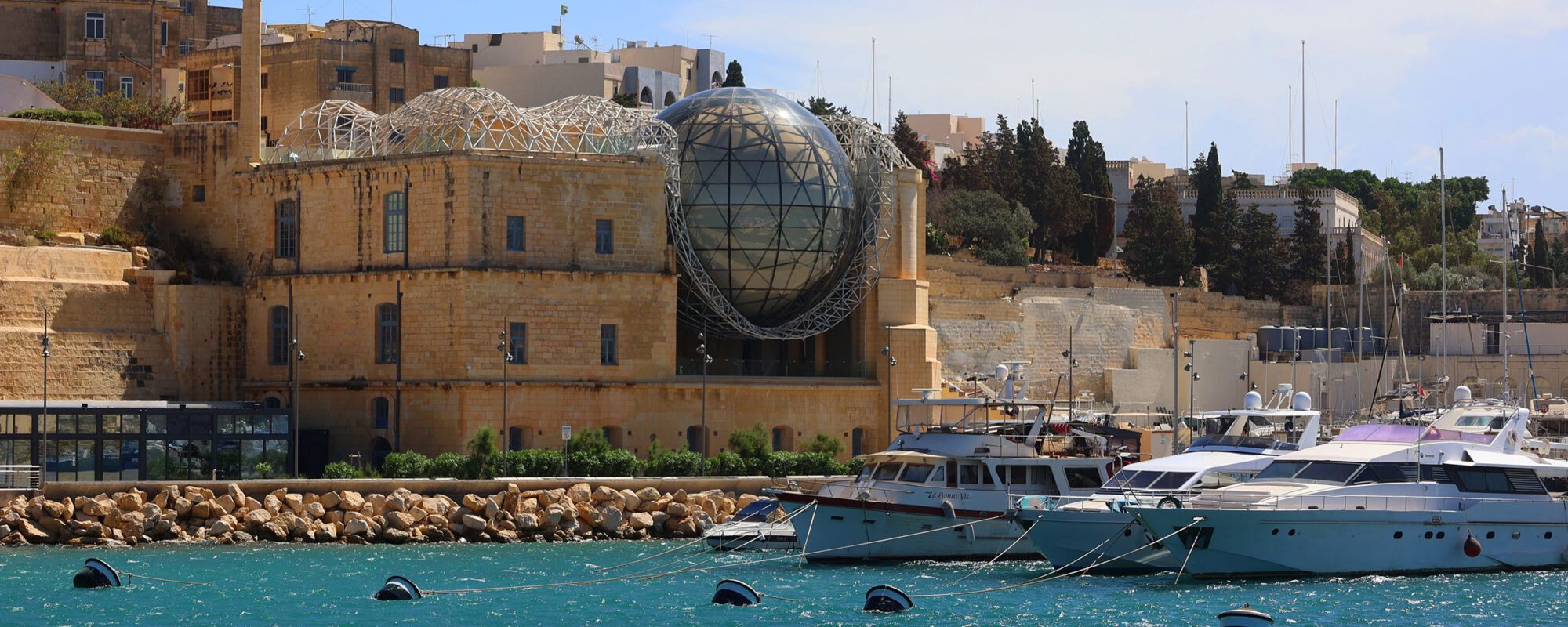
Relationships are based on trust, communication, and mutual respect. The same can be said of Responsible Research and Innovation (RRI). Behind all the new ideas, it all boils down to a group of people, hailing from different walks of life, coming together to try and create a better future for everyone. At the fourth annual NUCLEUS conference, researchers, academics, science communicators, creatives, and business people flocked to the tiny isle of Malta to share their stories and attempts to embed RRI into their institutions and communities. As everyone settled in, dialogue flowed among delegates and the room was abuzz. University of Malta pro-rector Prof. Godfrey Baldacchino opened the conference with a question: How similar are universities and Valletta, the fortified capital that was hosting the conference? Having been constructed following Malta’s infamous Great Siege, the Knights encased Valletta in massive bastions, allowing only four small entry points. ‘Valletta is an island on an island,’ Baldacchino said. ‘Are universities the same? Are we trying to protect our own?’ The question had many heads nodding in response.
Most people in the room expressed a feeling of obligation to render knowledge more accessible, more relevant, and more digestible to a wider audience. But they encounter a myriad of challenges. Engaging with publics or policy makers isn’t easy. It means addressing different needs in different ways, sometimes even pandering to whims and flights of fancy. Most people noted issues with time, funding, and resources, calling for processes to be formalised. Others pointed to a lack of creative skills and, sometimes, general interest across the board. What also quickly emerged was frustration with the term RRI itself, creating confusion where there needn’t be any.
With all of these difficulties, however, came solutions. Dr Penny Haworth from the South African Institute for Aquatic Biodiversity, said that in her experience ‘we need to look at what universities are already doing and work smart. Win hearts and minds.’ University of Malta’s Nika Levikov also pointed out that ‘there are a lot of people practicing RRI who are not conscious of it.’ And for those who do not believe it to be a priority, for those who do not want to engage? ‘You have to set them aside and show them it is possible in a way they understand,’ says Zoran Marković from MISANU, Serbia.
Picking up Baldacchino’s thread on bringing down the walls of universities and research institutions, Dr Annette Klinkert from Rhine-Waal University of Applied Sciences in Germany summed up her main takeaway from all the discussions. ‘What we can learn here is that it’s time to burst the bubble in which we work. Especially this field of RRI. It is time to leave our cosy little community with our results.’ The results are the various projects that NUCLEUS has been championing over the past years, bringing research to its audiences. ‘All the projects are useless if they can’t merge and get out [into society and communities],’ she emphasises. ‘If they don’t merge, they’re pointless. It is time to burst the bubble.’
Author: Cassi Camilleri



Comments are closed for this article!