

After an argument with her fiancé, Vi vanishes without a trace. In the years that follow, suspicion hollows out the man who loved her, leaving him haunted by one agonising question: was she truly gone, or simply lost?
Vi was a young woman carved from promise – bright, sharp, and tender-hearted in a way that made people trust her instantly. Maybe that was her only flaw: she trusted back. She believed in broken people, believed they could be stitched together again with patience and compassion. As a caregiver for recovering drug addicts, she made a habit of walking straight into other people’s darkness with nothing but her smile as a lantern.
And what a smile it was. Warm. Disarming. The kind that could turn a room into a safer place.
Perhaps that’s why Sergio fell in love with her.
Perhaps that’s why he lay now in a dark, airless room years later – crying, suffocating in memories he could not escape.
‘It was her smile,’ he would whisper, voice cracking against the walls. ‘It was always her smile…’
They were like any other couple – fights sparked and faded over small, stupid things, yet somehow they always found each other again. Five years passed this way, and then Sergio proposed. For a moment, everything bloomed beautifully.
But beauty can rot quietly.

One last argument – nothing worse than the others – flared and fizzled. Sergio thought nothing of it; by morning they would be fine. They always were.
Except this time, Vi didn’t come back.
She didn’t answer his calls.
She didn’t walk through the door.
She didn’t breathe in her parents’ doorway, or anywhere the police searched.
Suspicion clung to him like smoke. Her DNA was on him, but that meant nothing – they lived together. Still, the police circled him for years, dragging him back for questioning, poking at his grief until it bled.
‘I told you,’ he would choke, over and over.
‘I never laid a finger on her…’
But the question hollowed him out:
Was she gone? Or simply lost?
***
In 2019, rain hammered Valletta as I sprinted toward the Barrakka Lift, desperate to catch the ferry. That’s when I saw him – a man hunched beneath the stone arch, muttering to himself as he fed stray cats. Something about him left a cold weight in my stomach. I swallowed it down and kept moving, careful not to meet his eyes.
I forgot him within hours.
But four months later, his face was everywhere. The man I’d passed in the rain had been arrested for armed robbery. And during questioning, he said something that froze the entire investigation:
‘If I tell you where I hid the body… will you let me go?’
Ignazio, 35. A diagnosis of schizophrenia. A violent outburst. And now – suspected of murder.
At first, police didn’t believe him. They had heard madmen confess to sins they never committed. But then he began to speak… and the details were too sharp, too intimate to be imagined.
‘I heard she had another argument with her boyfriend,’ he began, voice trembling with something unhinged. ‘So I called her. I told her I needed help… that I wasn’t okay. She always came when I wasn’t okay.’
She had been his caregiver. His comfort. His anchor.
‘I wanted her to choose me,’ he continued. ‘To understand that I loved her. But she wouldn’t. She refused me.’
His eyes reportedly emptied as he spoke the next line.
‘So I made sure she couldn’t refuse anything ever again.’
He lured her to his flat under the guise of a breakdown. And when she tried to help – just as she had done with all her patients – he confessed his feelings, begged her to forget Sergio. When she drew back, startled and gentle, he snapped.
He stabbed her. Again. Again. Again.
Wrath blurred into frenzy.
Frenzy blurred into desecration.
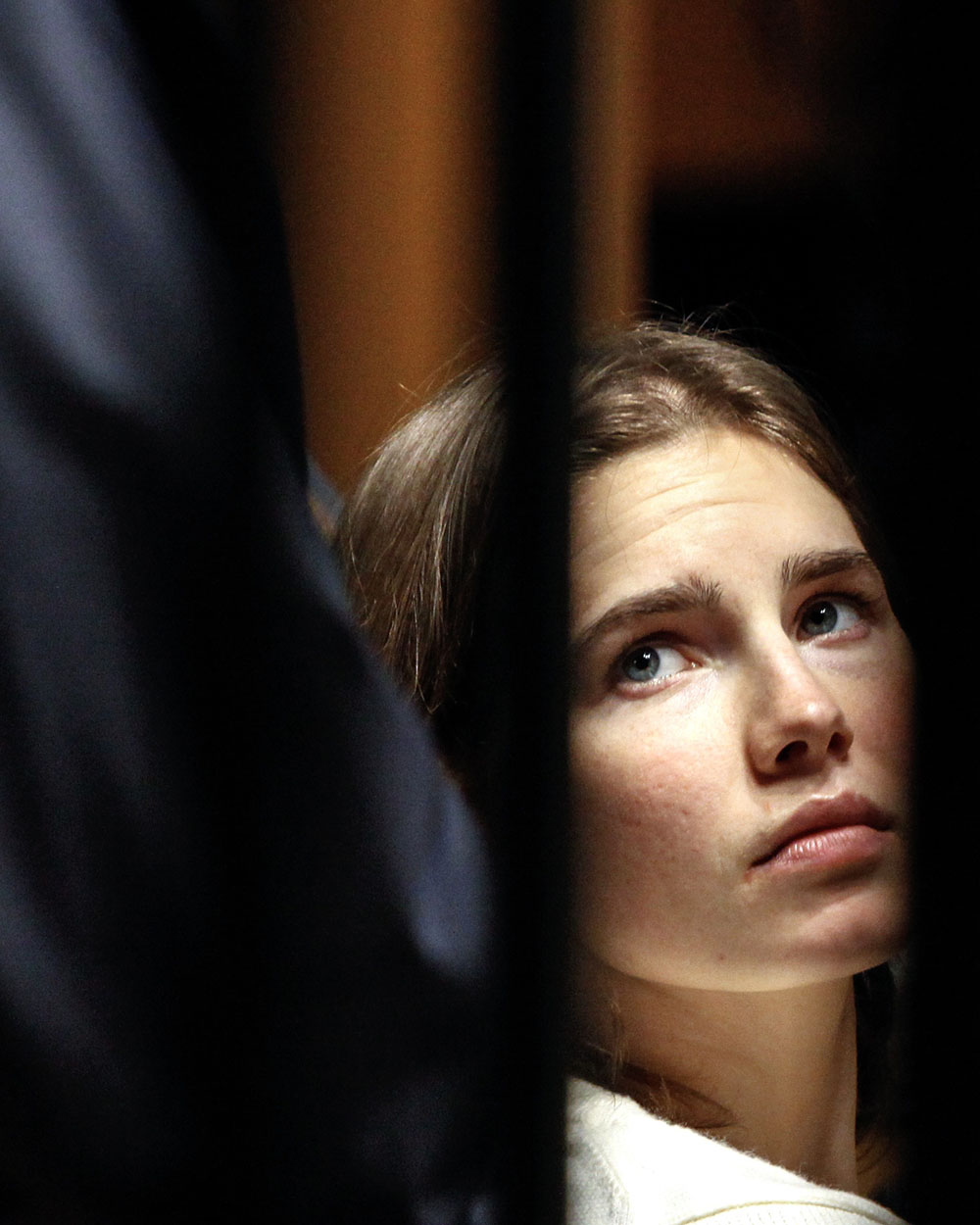
And when it was done, he hid what was left of her inside the walls of his apartment – buried her where only he could hear her silence. Ignazio had been one of Vi’s patients. A man whose dependence she mistook for progress. A man who had overheard her arguing on the phone. A man who believed her smile meant she belonged to him.
The same smile that had blessed her with love… cursed her with a monster who mistook kindness for an invitation.
In the end, the tale of Vi was not written by fate, nor by love, nor by the arguments of ordinary people.
It was written in the crumbling walls of a madman’s flat – where compassion met obsession, and a healer met the darkness she’d spent her life trying to save others from.

In this story, Montebello explores a particular kind of horror – one that resonates as a universal fear. ‘The themes centre around feminicide and the terrifying reality of what it means to be a woman in a world that can be unforgiving. This narrative is not just fiction,’ she emphasises, ‘it reflects a fear that many live with daily. I hope it evokes thought, emotion, and awareness.’
‘The Tale of Vi’ by Marouska Montebello is a runner-up in the flash fiction creative writing competition judged by renowned Maltese horror writer Mr Anton Grasso.




Comments are closed for this article!