
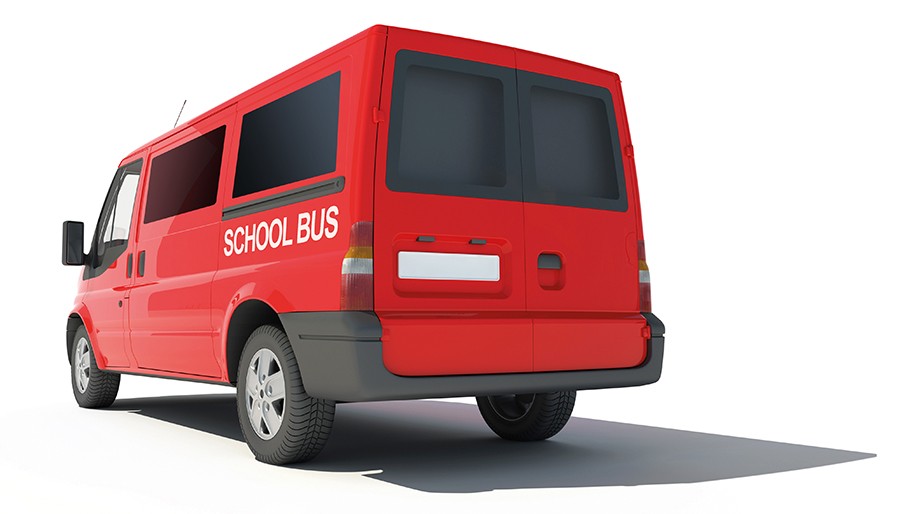

The start of a new scholastic year can bring about feelings of excitement to some and dread to others. After the relatively quiet summer months, children need to start making their way to school in the mornings. The result is traffic, an ugly monster that brings Malta to a standstill every morning. One solution could be the grouping of school trips to and from homes.
Kristina Mifsud (supervised by Ms Amanda Borg) decided to investigate the issue of traffic congestion caused by school transport by studying a hypothetical scenario in which the free school transport policy for government-run schools was extended to church and independent schools. First she conducted a survey: parents who have children at church and independent schools answered a questionnaire. These parents drove their children to school using their private vehicles. The results were very promising with more than 70% of mothers indicating that they would switch to the government-provided school transport if it was implemented. Those who said they would not take up the service gave three main reasons for this: mistrust of minivan drivers, their children being too young, and that the drive to school was a distraction-free time with their children.
Then Mifsud estimated the benefits and costs for the service using the take-up percentage from the questionnaire. The list of benefits was plentiful; time and fuel would be saved, while air pollution and environmental costs would be reduced. The costs included the initial investment (minivans), fuel, maintenance, and staff payment. When compared, the total estimated benefits far exceeded these costs! For every €1 invested by the government into this school transportation system, society would reap €2.66 in benefits. Additionally, the direct cost (time and fuel) of individual school runs per child per year amounts to €993.22, based on the average time taken per child of 48.8 minutes per school day. Given that the average fee by minivan drivers for a year worth of school runs is around €600, the minivan school transport option is much more sensible, economically speaking, and all the more so with regards to protecting our environment and solving the traffic headache.



Comments are closed for this article!