
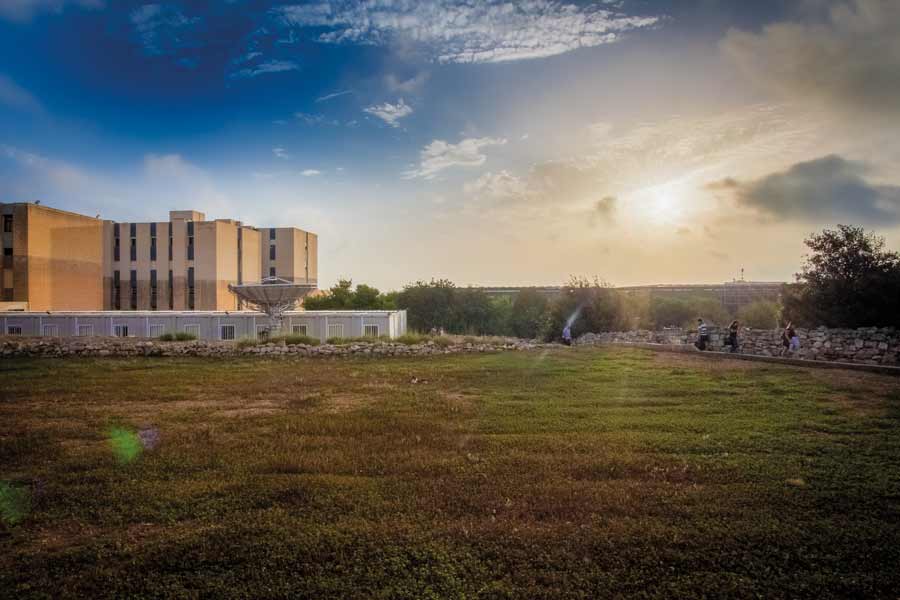
Malta now has a radio telescope. This is a great step forward for the University of Malta as it helps speed up research.
The Department of Physics, Faculty of Science and the Institute of Space Sciences & Astronomy (ISSA; both at the University of Malta) have just acquired a 5.3m dual-reflector parabolic dish, as part of a European Regional Development Fund (ERDF) project to extend postgraduate research lab facilities. The radio telescope will now allow students and researchers to study celestial objects such as the sun or the centre of the galaxy through the radio waves they emit.
| Quick Specs |
| Dish diameter: 5.3m
Feed horns: L-Band and K-band Gain: 44 dBi @ 4GHz Observing modes: Continuum and line observation Total weight (including pedestal): 1900 kg Surface accuracy: 0.5mm PC-based automated control unit |
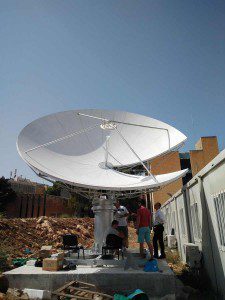
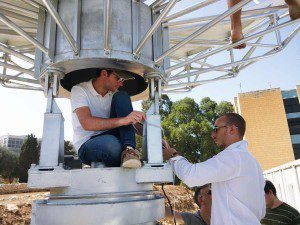 When pointed to a radio-loud celestial object (an object which emits large amounts of radio waves, such as the sun), the telescope will receive radio waves from these sources and convert them to voltage readings in the feed. The converted signal is then transmitted to a digitiser that converts these signals into bits and bytes.
The digitised signals are then processed and broken down into the different frequency counterparts (similar to what a car radio does with the radio waves it receives from its antenna), which allows for continuum observation of the skies above. The telescope provides a test-bed for several research initiatives being undertaken at ISSA.
Some of its specialisations include improving the hardware and software processing back-ends for radio telescopes. The on-site telescope can speed up this sort of research immensely. ISSA is part of the largest radio telescope project in the world: the SKA (Square Kilometre Array).




Comments are closed for this article!