
By Sean Galea
Gaming has changed. Tablets and phones do much more than help you stay in touch with friends or read books. These two are examples of low-end devices being targeted by the gaming industry. However, their limited hardware makes them unable to cater for today’s gaming experience expectations.
 In 2006, The Games@Large project aimed to reduce the pressure on the user’s device. It introduced remote execution of gaming applications. This method offloads the workload from low-end devices to a remote computer server. The server carries out the dirty work and simply transmits back the display for the player. Graphical instructions are sent directly to the device where the video rendering takes place. To keep a game responsive and prevent lagging, communication between device and server must be fast and efficient, the focus of Sean Galea’s research (supervised by Dr Ing. Saviour Zammit).
Galea designed a framework to process a gaming application remotely on a server with graphical instructions transmitted to the mobile device. This device reconstructed the video. A video is made up of a series of frames (pictures) rapidly shown one after the other, which makes consecutive frames similar. A video’s next frame can be constructed by slightly altering the previous image. Videos can be compressed by correctly predicting how the frame changes allowing mobiles and tablets to quickly process high-end videos or games.
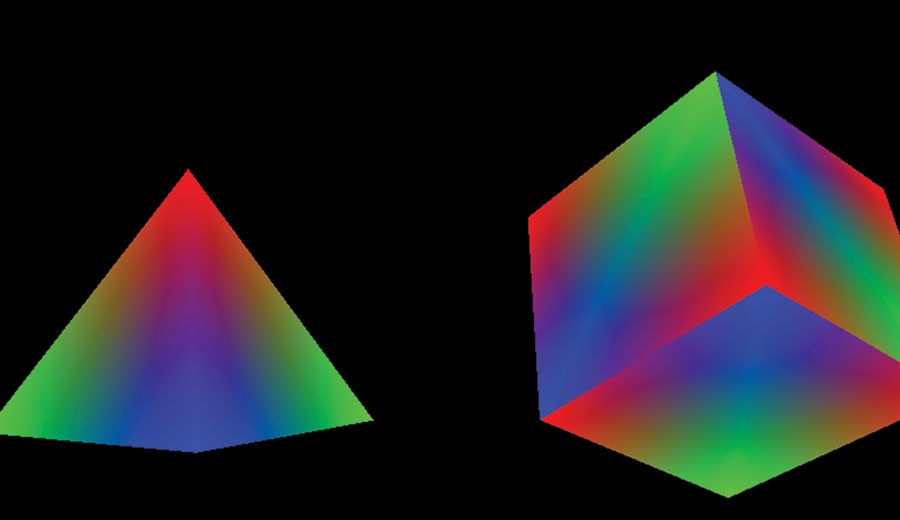
In Galea’s case, to test this framework he imitated a gaming environment using a simple graphical application. When compared to the widely used H.264 video transmission method, the new approach was faster, performing up to 600% better. Because the video is rendered on the user’s device, the output could be scaled to any resolution without any of the limitations associated with video streaming.
These systems can allow advanced games to run on low-end devices like older smartphones. Very soon, anyone could be a gamer.
This research was carried out as part of a B.Sc. (Hons.) in Computer Engineering at the Faculty of ICT of the University of Malta.




Comments are closed for this article!