

Carmen Sanchez Garcia
Soil sustains wildlife, landscapes, crops, forests, and air and water quality. Our survival and development depends on soil. However, a large amount of metals is being released daily into the environment through household waste, agricultural practices, and industrial activity.
Soil acts as a ‘sink’ for pollution, and depending on the soil’s chemical conditions, metals may persist there for long periods of time, posing a risk for humans and ecosystems. Maltese soils have a high concentration of lead, zinc, and copper. At high concentrations, these metals are harmful to many forms of life and can lead to a host of diseases including cancer. Carmen Sanchez Garcia (supervised by Dr Anthony Sacco) studied how to reduce the level of these metals in Maltese soils using plants instead of conventional methods.
Conventional soil remediation techniques (like capping or removing the polluted soil) are expensive and alter the site even more. Plants are now being used as a better alternative. Some plants, known as phytoaccumulators, have the ability to adsorb and accumulate large amounts of metals in their tissues and can be used to clean contaminated soils. This technique is known as phytoextraction and offers a sustainable alternative to the conventional approaches being used. Phytoextraction is an environmentally friendly technique which does not compromise the future use of the site. Increasing the greenery also brings other benefits that will help reducing further threats to Maltese soils such as soil erosion or decreasing organic matter.
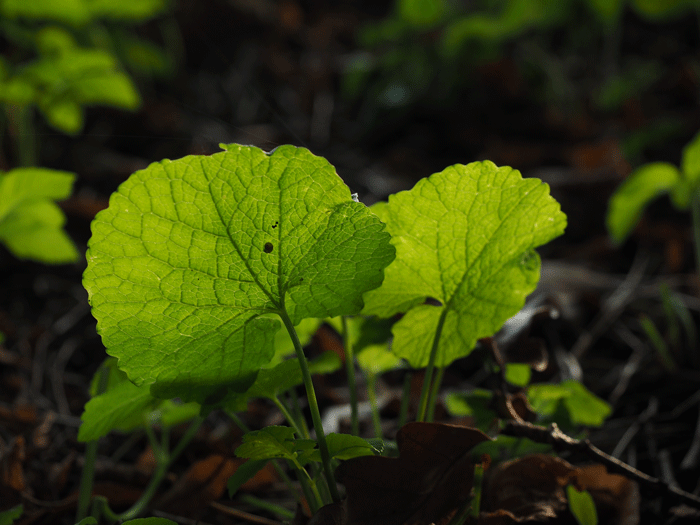
Carmen Sanchez Garcia used the mustard plant (Brassica juncea) to reduce lead, copper, and zinc levels in Maltese soils. The plant is well known for its ability to accumulate metals. She tested the plant on two of the most common agricultural soils in Malta: a clay loam, sampled from the Government Farm in Għammieri and a silty loam taken from the Ta’ Qali area. The plant was efficient at uptaking metals from the soil, which opens the door for future sustainable remediation of Maltese soils for a cleaner environment.




Comments are closed for this article!