
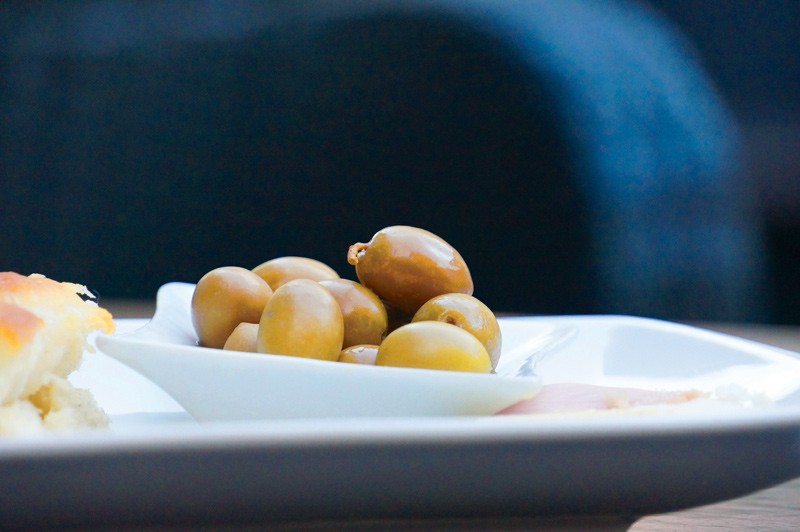
The olive tree (Olea europaea L.) is one of the oldest species of domesticated trees and the second most important oil fruit crop cultivated worldwide. 97% of the global olive cultivation is concentrated in the Mediterranean Basin. The olive thrives in Maltese soils. Economically, olives are not important for local agriculture, but its cultivation is becoming popular since the Maltese agribusiness has a lot of room for growth to make high quality oil and secondary products.
 In the Mediterranean region there are two subspecies of Olive tree. These are the wild olive (O. europaea L. subsp. Oleaster) and the cultivated olive (O. europaea L. subsp. Sativa). Each subspecies has several cultivars selected for taste, size, disease resistance or other desirable qualities. There are 1,300 cultivars worldwide and Malta is no exception. The Maltija cultivar is probably the most popular Maltese cultivar and can give a high productivity. The Bidnija cultivar, which is believed to be the oldest Maltese olive cultivar (it is thought to date back to Roman times), produces oil of excellent quality rich in polyphenols (these have many health benefits), exhibits high tolerance to environmental stress such as salinity and drought, and demonstrates resistance to pathogens and pests such as the olive fruit fly. The Bajda variety produces a characteristic white drupe. Besides the native cultivars, there are a number of Maltese wild olives.
Renowned foreign varieties associated with high productivity tend to have a higher productivity than local cultivars. For this reason, local farmers find foreign varieties more convenient, leaving Malta at risk of forever losing its unique olives.
Till now revival efforts focus on artificial propagation and re-plantation. These trees are identified by their appearance. This is an inaccurate method since olive growth is influenced by environmental conditions.
To develop a better way to identify local cultivars, Oriana Mazzitelli (supervised by Dr Marion Zammit Mangion) has focused on adopting a genetic approach. She also wanted to examine the genetic diversity of Maltese olive varieties. Mazzitelli compared the genetic patterns of local varieties to those generated by two commercial Italian (Carolea) and Tunisian varieties (Chemlali). The genetic analysis produced unique DNA profiles that can provide a more accurate means of identification than just looking at the plant.
The genetic variability between varieties was high. The Bidnija and Maltija stood out for their genetic uniqueness. The differences between local varieties suggest that, despite being allegedly native, the origins of the two are not directly linked. A number of DNA marker regions detected in the foreign cultivars and in the Maltese wild olive were undetected in the Maltese cultivars, suggesting that not all DNA markers are present and amplifiable in foreign varieties have been conserved in the Maltese cultivars. Mazzitelli’s work is an important first step to show that local varieties can be identified cheaply through DNA analysis. Without genetic identification, maintaining and cultivating local varieties would be near impossible—a case of genes for good olive oil.
This research is part of a Master of Science in Biochemistry at the Faculty of Medicine and Surgery, University of Malta. The research was funded by STEPS (Strategic Educational Pathways) scholarship which is part-financed by the EU’s European Social Fund (ESF) under Operational Programme II—Cohesion Policy 2007-2013, ‘Empowering People for More Jobs and a Better Quality of Life’.




Comments are closed for this article!