
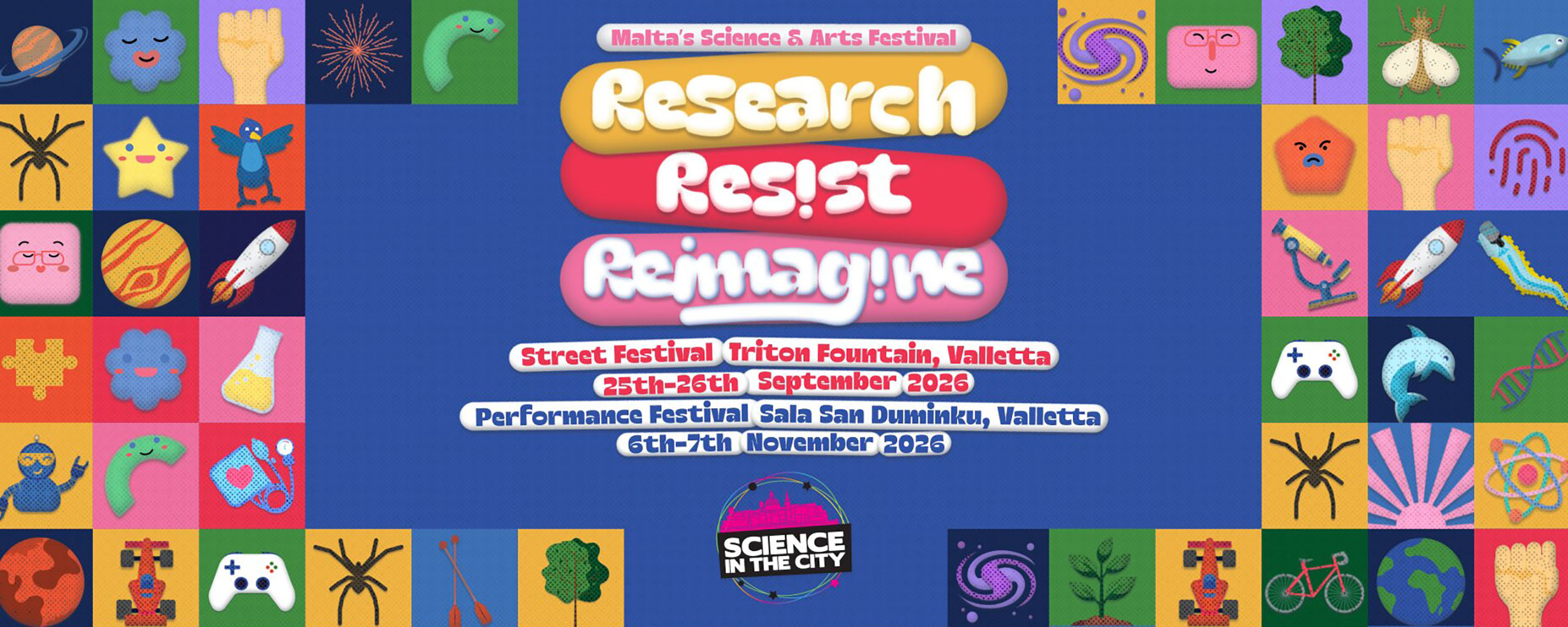
This September, Malta’s Science in the City festival brings research out of laboratories and into the streets, using arts, performance and experimentation to make science part of public life. Curious about what you might find? Read on!
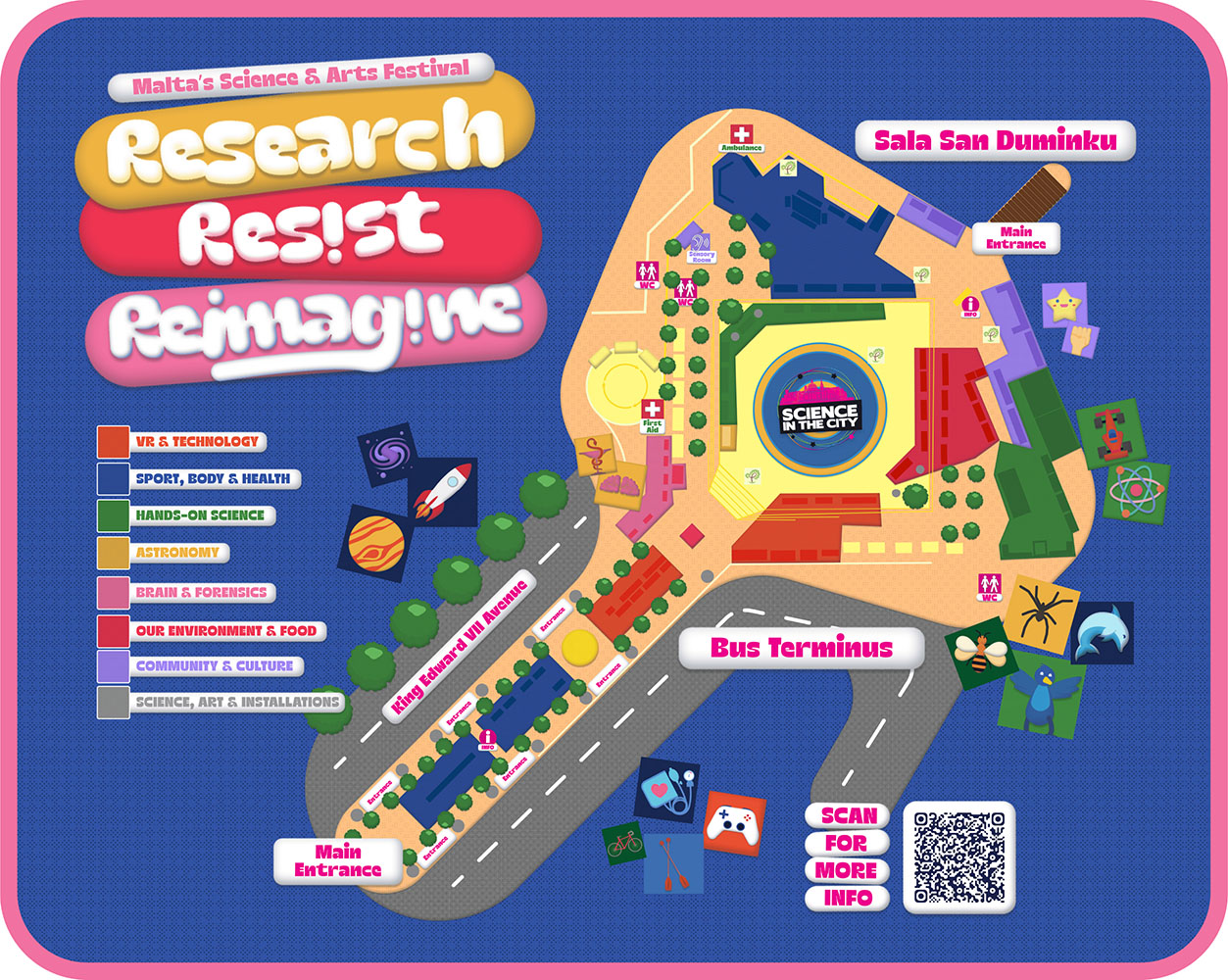
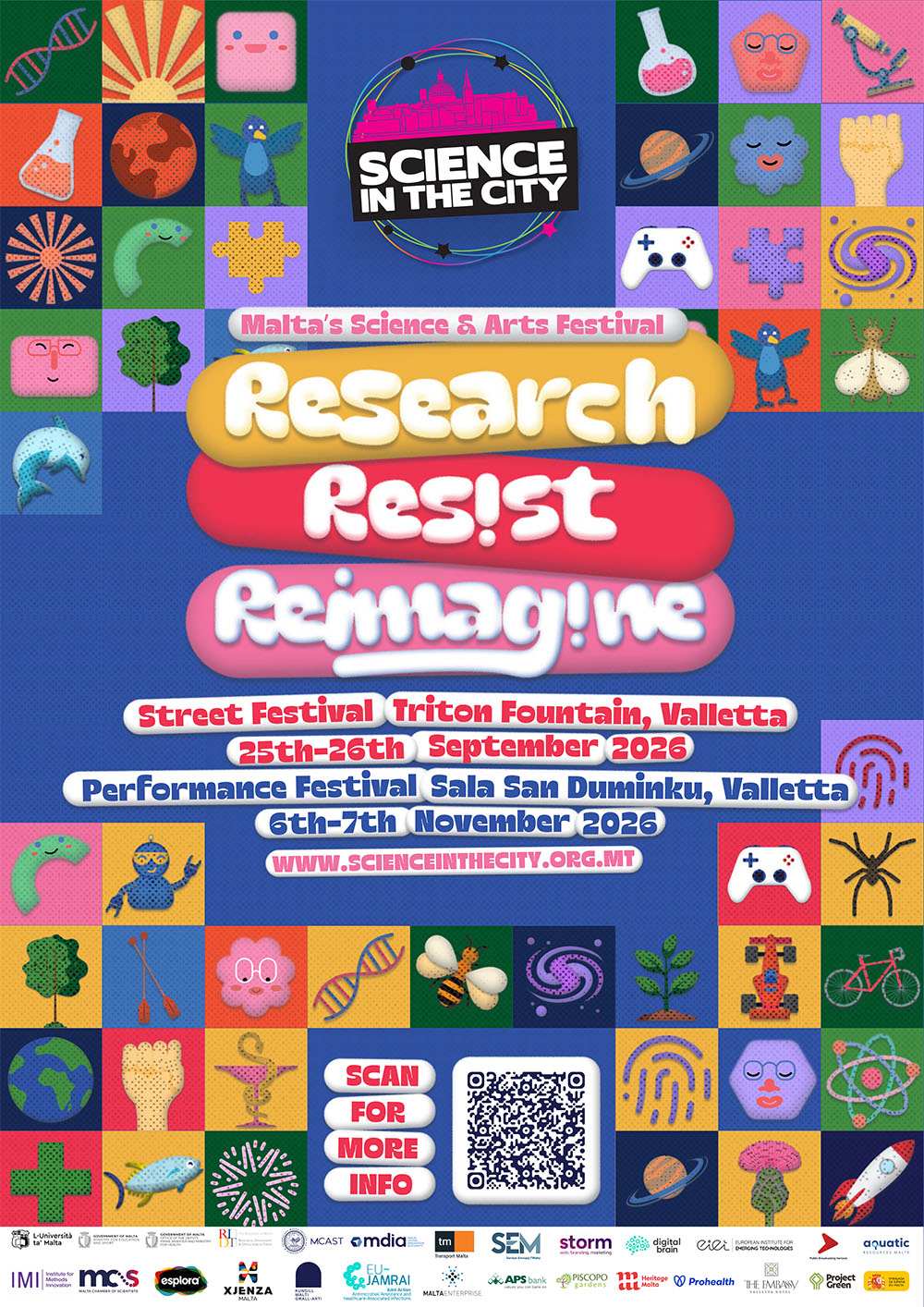
On 25 and 26 September 2026, from 18:00–23:00, Triton Square in Valletta will become an open-air laboratory for the Science in the City Street Festival. Celebrating its 15th edition, Malta’s national science and arts festival will bring together researchers, artists, organisations and the public through more than 90 stands, experiments, games and installations.
Founded in 2012, Science in the City has grown from around 12,000 participants in its first edition to more than 33,000. This year’s theme, ‘Research, Resist, Reimagine’, reflects the festival’s ambition to use research to understand the challenges facing society, encourage critical thinking and imagine more sustainable and inclusive futures.
In 2026, the event is also expanding its focus on the relationship between research and creativity. While the Street Festival takes place in September, a separate Performance Festival will follow on 6 and 7 November, using theatre, music, comedy, technology and other forms of artistic expression to communicate research.
Where Science Meets Art
Science and art are sometimes presented as opposites: science seeks measurable evidence, while art explores subjective experience. In reality, both depend on observation, curiosity and experimentation. Both often begin with a question about the world and an attempt to see something differently.
Festivals such as Science in the City believe that science is not something that happens behind laboratory doors, but something people can see, touch, question and discuss. As artist Pep Walls, a participating artist in Science in the City since 2023, says, ‘visual installations may provoke curiosity in someone who would never attend an astronomy talk; theatre can turn an abstract ethical question into a human story; music or interactive experiences can encourage audiences to spend time with ideas they might otherwise pass by’.
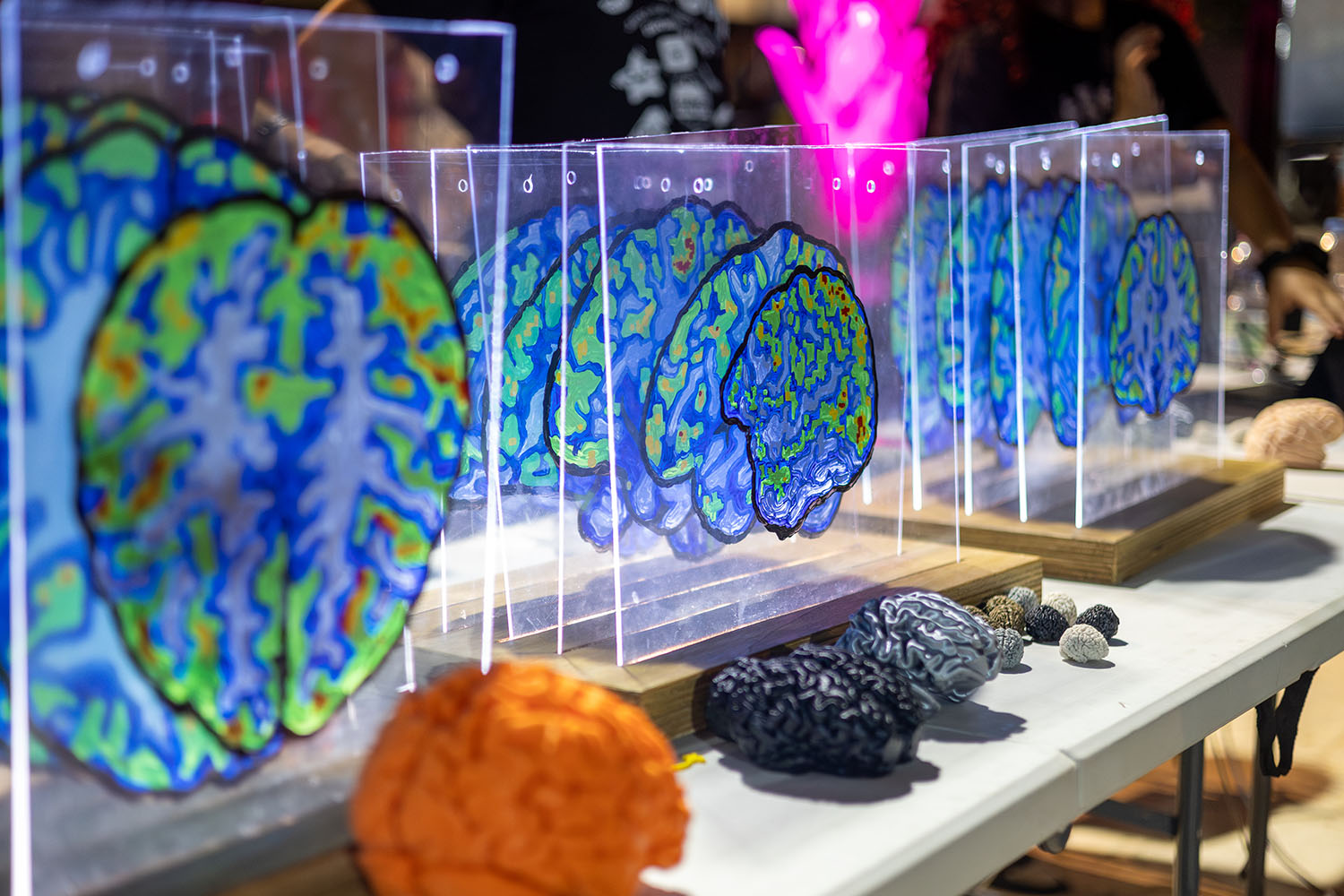
Among the subjects explored this year is one that becomes visible precisely when the lights go out: light pollution, and the gradual disappearance of the naturally dark night sky.
Turn Off the Lights, Turn On the Sky
‘Turn Off the Lights. Turn On the Sky’, developed by artist Pep Walls in collaboration with astrophysicist Prof. Joseph Caruana, explores the effects of artificial lighting through an immersive installation. The work itself takes the shape of the Maltese Islands and plays with a simple contrast between light and darkness. Under normal lighting conditions, visitors see the installation but not everything it contains. Hidden across its surface are constellations painted with a special glow-in-the-dark material. Their shapes incorporate the names of the constellations themselves.
The effect strikingly conveys the central idea behind the installation: the stars have not disappeared from the night sky – artificial light is preventing us from seeing them.
Rather than simply being told what light pollution does, visitors can see the effect reproduced in front of them: when there is light, the stars disappear; when darkness returns, so does the sky. This is an especially relevant subject for Malta.
Research mapping night-sky brightness across the Maltese archipelago has found widespread light pollution. One photometric study – which quantitatively measured the brightness of the night sky across different locations – estimated that only around 12.8% of the surveyed territory had conditions dark enough for the Milky Way to remain visible.
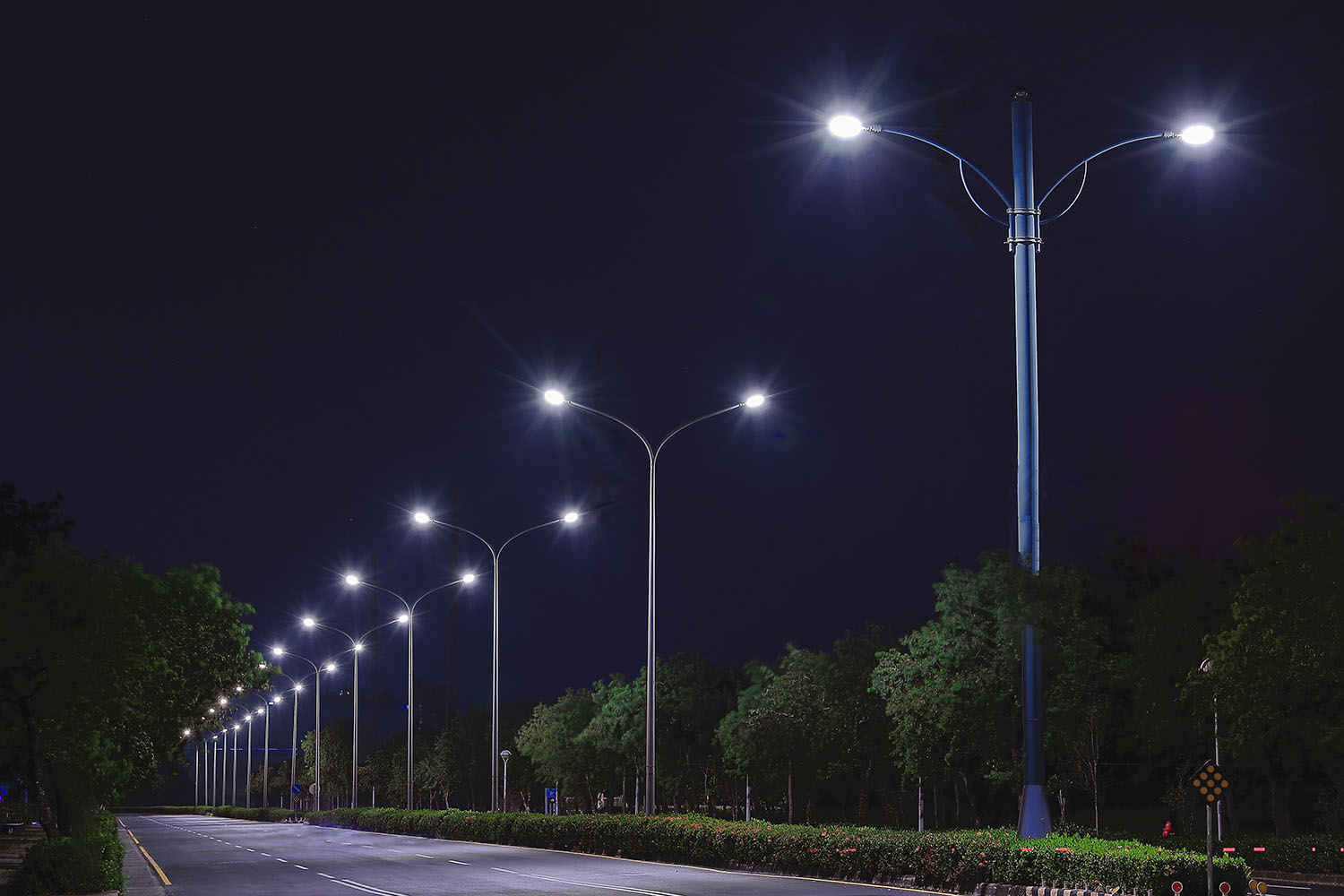
But what exactly is light pollution? Light pollution is caused by the excessive, unnecessary or poorly designed use of artificial light at night. Streetlights, buildings, monuments, advertising, sports facilities and private properties can all contribute. The problem is not artificial lighting itself. Modern societies need outdoor lighting. ‘What matters is where the light goes, how bright it is, when it is used and whether it is actually necessary,’ explains Caruana from UM’s Department of Physics, Faculty of Science.
The night sky over the Maltese Islands (Photo by Prof. Joseph Caruana)
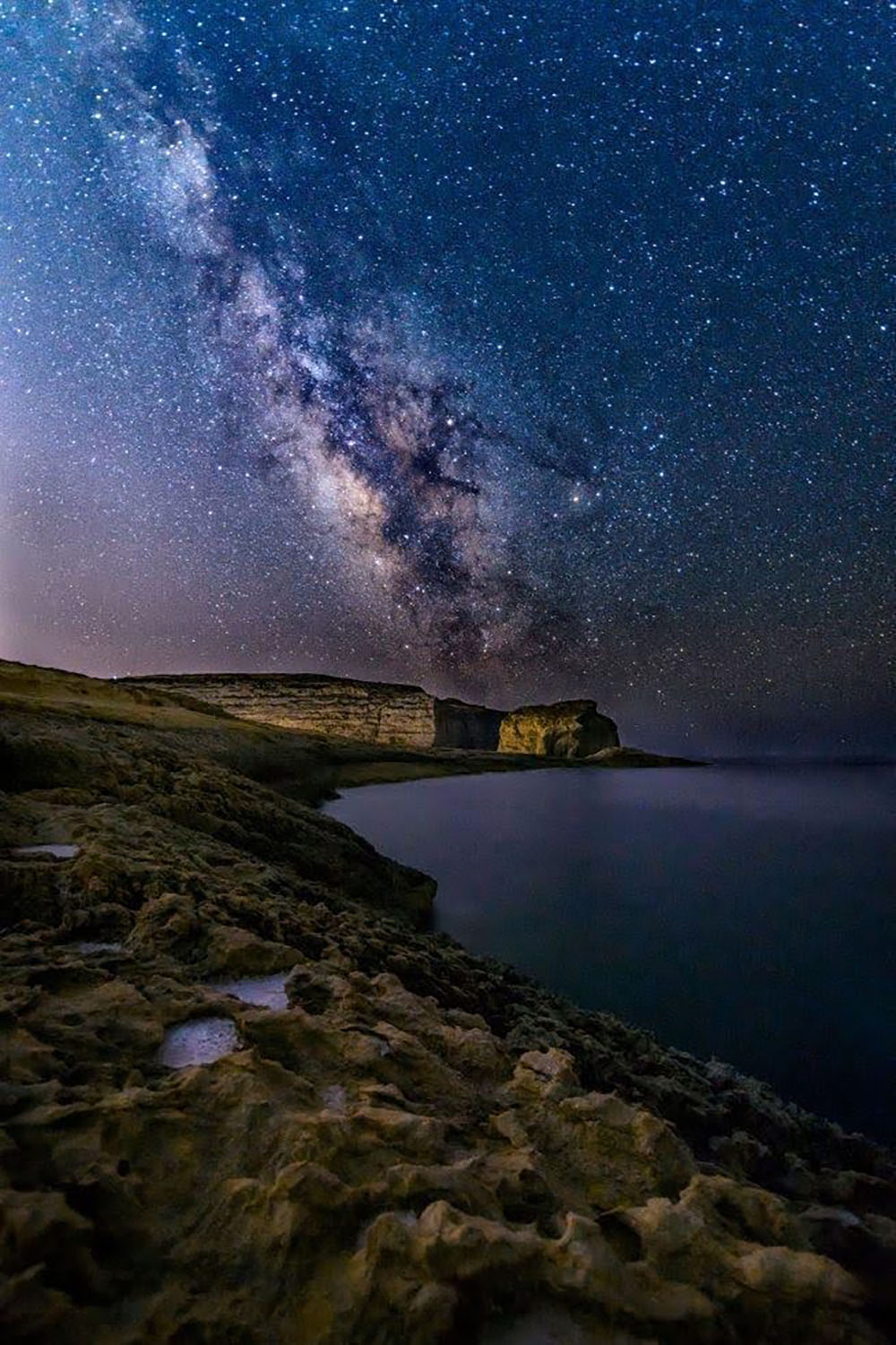
‘Light directed upwards or sideways is scattered by molecules and particles in the atmosphere, producing the luminous dome visible above towns and cities known as skyglow. As the background sky becomes brighter, fainter stars disappear,’ he explains.
Why Darkness Matters
The disappearance of the stars represents more than an inconvenience for astronomers. For most of human history, the night sky was part of everyday life. Stars helped people navigate, construct calendars and understand seasonal changes. They inspired mythology, religion, literature and art, and eventually helped humans develop astronomy.
But darkness is also an ecological resource. Life on Earth evolved according to a predictable alternation between daylight and darkness. Artificial light at night changes those conditions and can affect animals that depend on darkness to navigate, feed, reproduce or avoid predators.
Migrating birds, for example, can become disoriented by artificial lighting. Coastal lighting can affect seabirds, drawing them away from the sea. Insects gather around lamps, where they may become exhausted or vulnerable to predators. Artificial lighting can also alter the behaviour of bats and amphibians, while changes in nocturnal insect populations can have consequences for pollination and food webs.
Light pollution therefore changes habitats even though it leaves behind no obvious physical waste. Unlike plastic on a beach or smoke in the air, it can be difficult to recognise as pollution because light is normally associated with safety, development and human activity.
Studying it allows researchers to understand how profoundly humans are transforming the night environment – and how those changes might be reduced.
Humans Need Darkness Too
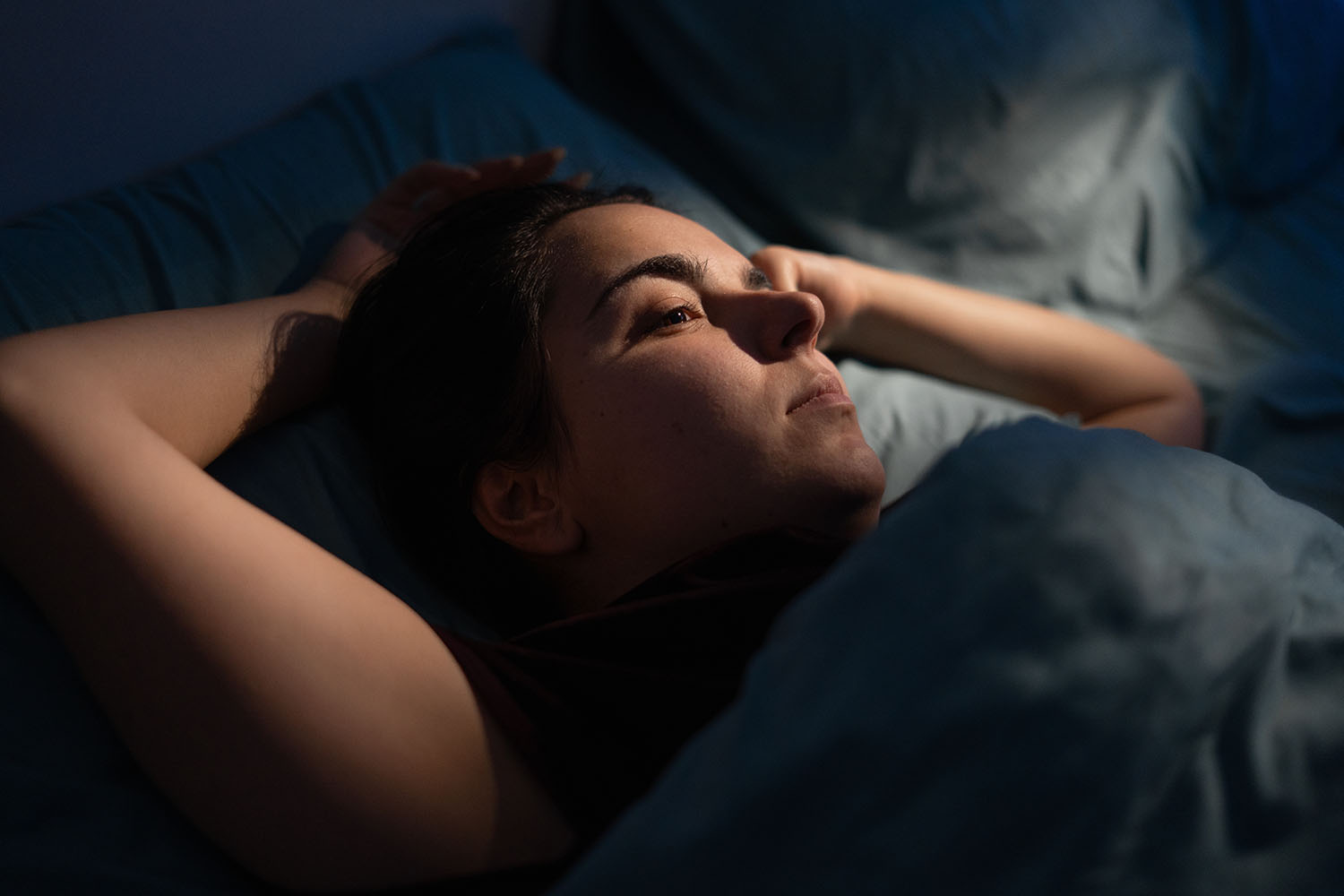
But make no mistake, humans also evolved under cycles of light and darkness. Light is one of the main environmental signals regulating our circadian rhythm, the internal biological clock involved in sleep, wakefulness and other physiological processes – all vital in regulating our body’s daily cycle. Exposure to light at night can suppress melatonin and disrupt normal sleep-wake cycles.
There is also a simpler reason to reduce unnecessary lighting: energy. Light projected into the sky or illuminating empty places is energy being consumed without serving its intended purpose. Saving this energy could help alleviate annual power cuts and ease the strain on our national power grid.
Yet while research on the relationship between outdoor light pollution and long-term human health is ongoing, ‘light pollution is still way down the list of important environmental issues needing study’. Fortunately, light pollution differs from many other forms of pollution in one important respect. Its effects can be reduced almost immediately. A better-shielded lamp, lower intensity or switching off unnecessary lighting instantly prevents some light from entering the environment.
A Sky Many People Have Never Seen
‘Perhaps the most striking consequence of light pollution is something that cannot easily be understood until one experiences its absence,’ reflects Caruana. ‘A naturally dark sky does not simply contain “more stars” – it can look like an entirely different world’.
As the eyes adapt to darkness, thousands of stars can become visible under excellent conditions. Familiar constellations are surrounded by countless fainter points of light. The Milky Way stretches across the sky as a broad, irregular band, with brighter regions and dark lanes created by clouds of interstellar dust.
Bright planets stand out dramatically. Away from artificial skyglow, the horizon is dark rather than orange or white. Even clouds look different: instead of reflecting city lights and appearing bright, they can become dark silhouettes against the stars.
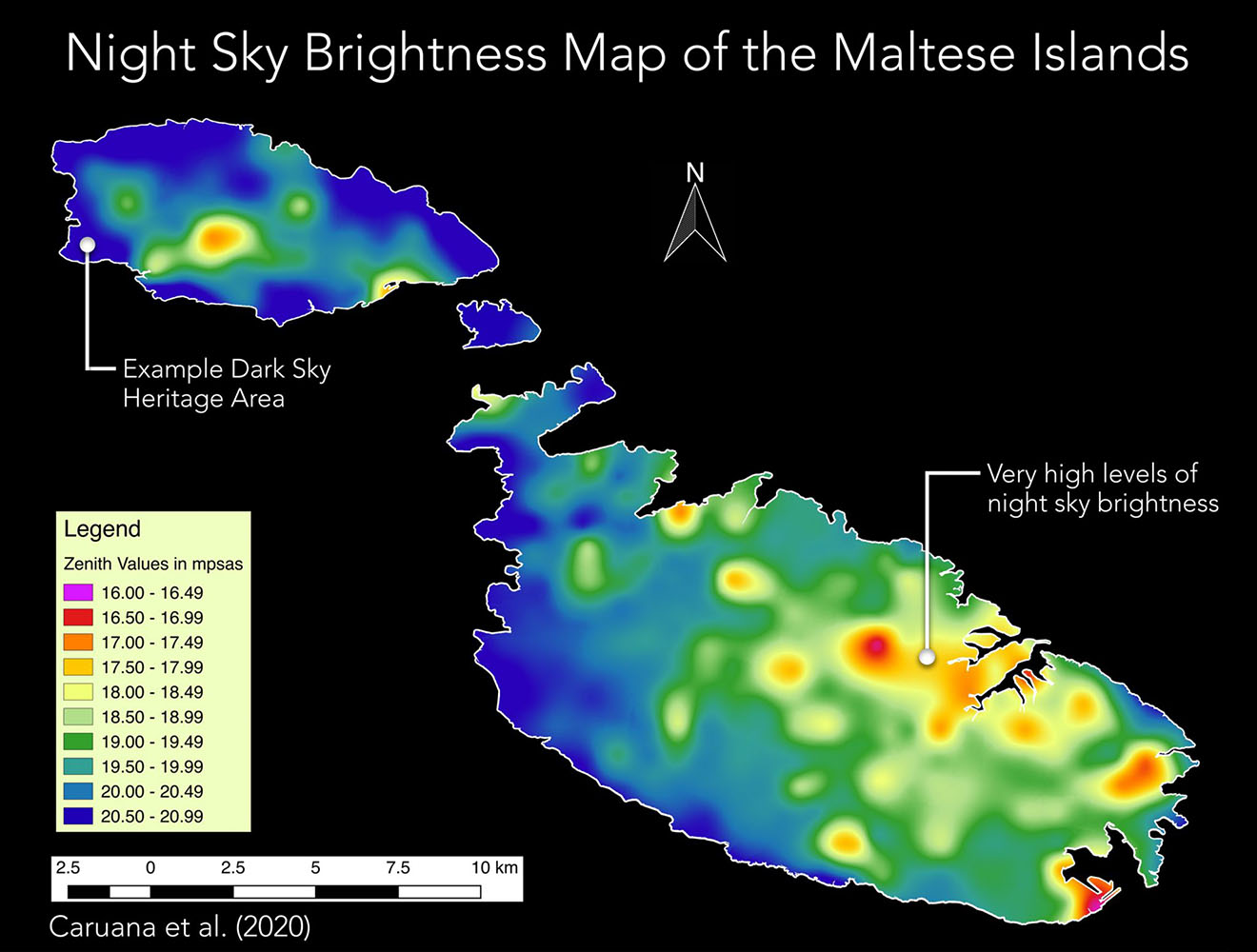
For thousands of generations, this was the sky humans knew. Yet today many people living in densely populated areas have never seen the Milky Way. For Caruana, this loss is also a deeply personal one. ‘That is what saddens me. We are depriving people of this experience,’ he reflects. Some of his fondest memories from his youth, he recalls, are simply of stepping outside his home and looking up at a beautiful, star-filled sky – an experience that is becoming increasingly difficult for younger generations to share.
In this sense, losing the night sky is not only an environmental or scientific issue. It’s a lifelong experience.
Recovering the Night
‘Reducing light pollution does not require cities to become unsafe or completely dark,’ Caruana states. It means using light more intelligently: directing it downwards, avoiding excessive brightness, illuminating only where and when necessary and considering the environmental effects of different types of lighting.
So, maybe it’s time to do something simple: turn off a light, look up and see what was there all along.
The Pep Walls installation in collaboration with Prof. Joseph Caruana is one of the many incredible events happening at Science in the City 2026. Don’t miss out on the fun! Book your free tickets and head to Valletta between 6–11 pm on 25–26 September and explore the stands for yourself. Pssttt, THINK will be there too!


Comments are closed for this article!