
Natalie Formosa shares her findings on private artists’ archives in Malta and the nation’s role in preserving such collections. This research was carried out under the supervision of Dr Valeria Vanesio as part of the Master of Arts in Archives and Records Management at the Faculty of Media and Knowledge Sciences, University of Malta.
Private archives are records created outside of governments by people and organisations which build on a nation’s background. Having artist archives—a branch of private archives—accessible would allow for tracing the source of artistic processes that hold potential for monetary value and historical significance.
Malta still lacks a national census of private archives, especially those of artists, despite the best efforts of Malta’s National Archives to address this through initiatives like MEMORJA and by reaching agreements with private individuals. Presently, there are no artists’ archives preserved in private hands that are officially recognised by the state as cultural patrimony unless they are donated or acquired. Having no private artists’ archives officially recognised means that there are also no methodological guidelines that can be applied to rearrange and preserve local private archives in Malta with all their peculiarities, especially for their role in preserving the national collective memory of a postcolonial nation. This disquieting fact emphasises the need to safeguard artists’ archives in Malta. Something must be done to prevent the loss of such immeasurable treasures.
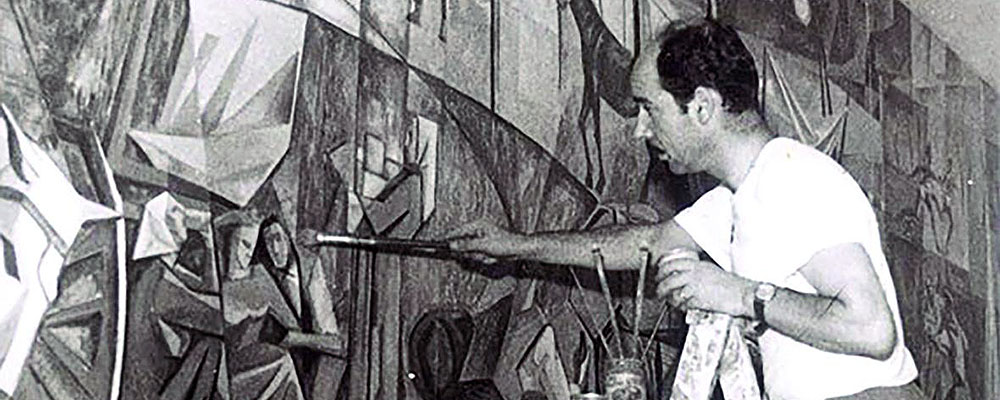
Supervised by Dr Valeria Vanesio, I analysed how private artists’ archives can be organised locally and how owners of private archives can collaborate with archivists, art historians and professionals. As an example, I collaborated with participants working and volunteering in international private artists’ archives, as well as an art historian regarding Portelli’s work. Their input guided my approach to organising a section of Frank Portelli’s archive (1922–2004), a modernist Maltese artist. Archival material was examined, sorted and given a reference code following the way Portelli had originally ordered them. Codes and titles given to the archival material are compiled in one of the appendices of my dissertation called levels of arrangement, which could potentially be developed into a finding aid that would help researchers access the archive. Questions on organising private artists’ archives and preserving artefacts were sent to professionals in Europe, whose answers were thematically analysed and compared. Since Maltese archives are hybrids influenced by English and Mediterranean record-keeping cultures, three other private artists’ archives in Europe were also examined as case studies.
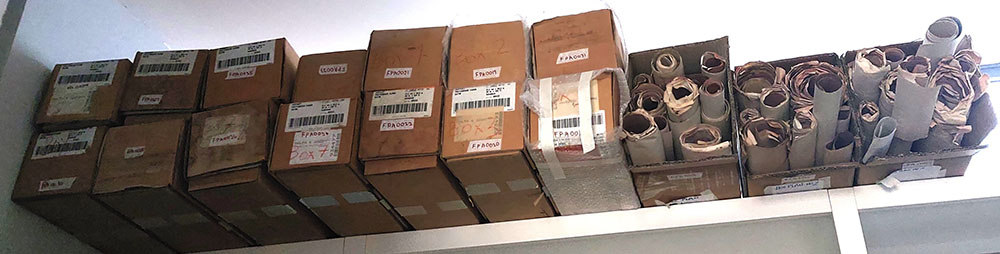
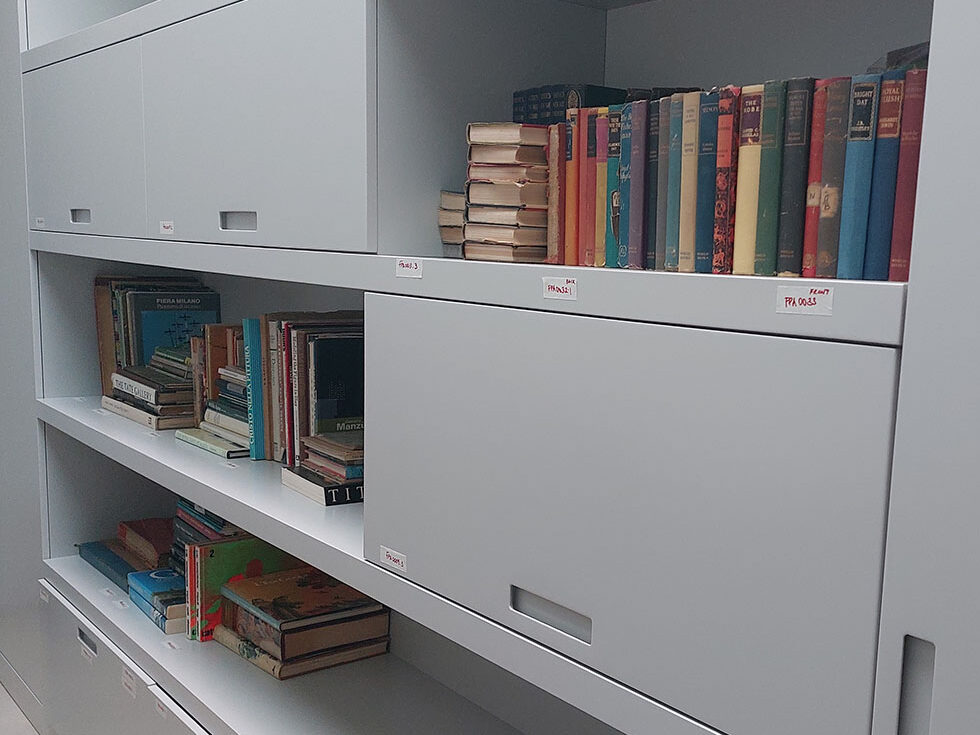
My dissertation reveals that Portelli’s archive contains a variety of material that contributes to national memory. Providing further access to private archives through collaboration would resolve archival gaps, enrich collective heritage and allow us to understand our identity further as an island state. Finally, having private artists’ archives officially recognised by the state is crucial for obtaining funding, facilitating access and protecting Maltese heritage.
Learn more about the Frank Portelli Archives here.




Comments are closed for this article!