


Skip to content

TxK

Facebook
Twitter
LinkedIn

Game Review_Costantino

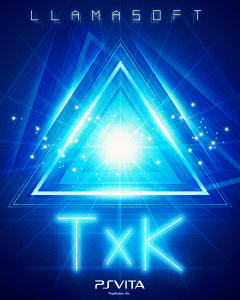
TxKTxK marks the return of seminal designer Jeff Minter whose career spans over 30 years. The recurring themes in Minter’s works are frenetic action and psychedelic experiences. All these abound in TxK — a new arcade shooter for PS Vita.

The game starts off with the player in a wireframe setting being attacked by what looks like an army of angry ribbons. Soon you will discover that you are actually an oddly shaped spider(ish) creature that is crawling at extremely high velocity. Once your attacking abilities have been mastered, the environment will constantly reshape around you. Before you know it, you will find yourself up-side down fighting enemies from every direction. 

It is an exercise in minimalism; so much is achieved with few details. It is up to the player to make sense of the bizarre juxtapositions of graphics and sounds. Thanks to its unique style, TxK shines.

This article forms part of The Gaming Issue

Author

More to Explore

These Insoles Are Made for Monitoring: A Step Towards Preventive Healthcare 

What if healthcare could learn more about our health between appointments? Wearable technology is opening up new possibilities for continuous monitoring, and researchers at UM’s Centre for Biomedical Cybernetics and Department of Podiatry, in collaboration with Tarsos, are making significant contributions in this area. THINK went to learn more about a research project investigating how smart insoles could improve foot health monitoring for people with diabetes.

The Chosen One? Adoption Beyond the ‘Happy Ending’

You look at your reflection in the mirror. Your face tells a story of the generations that came before you. A familiar smile, or a shared eye colour, a resemblance that has probably been pointed out more than once. For most, such observations are brushed off with a smile and quickly forgotten. But what if your reflection raised more questions than answers?

Molecular Mail: Tiny Parcels for Tracking Tumours

Tumours are not discreet. As cancer cells grow and change, they release microscopic particles into their environment. Some of these particles enter the bloodstream. They are small, abundant, and, as researchers are beginning to realise, potentially informative. A Maltese research project is testing whether extracellular vesicles can provide a less invasive source of cancer information.

Comments are closed for this article!