

Are you a doctor? A friend? A mother? An athlete? All of the above? Kieran Teschner talked to Dr Patricia Bonello from the Department of Social Policy and Social Work (University of Malta) about the relationship between people and their profession, and how music can capture this relationship.
Who does your favourite love song remind you of? Your current partner, first teenage love, or maybe a long lost crush? When Dr Patricia Bonello was working on her research, listening to love songs instead made her think about her profession.
In her seminar ‘For Better or for Worse’ last December, she invited the audience to explore the concepts of professional and personal identity through song lyrics. She played snippets of new and old pop music, while asking us to reflect on our feelings towards our jobs, which gave insight on professional identity.
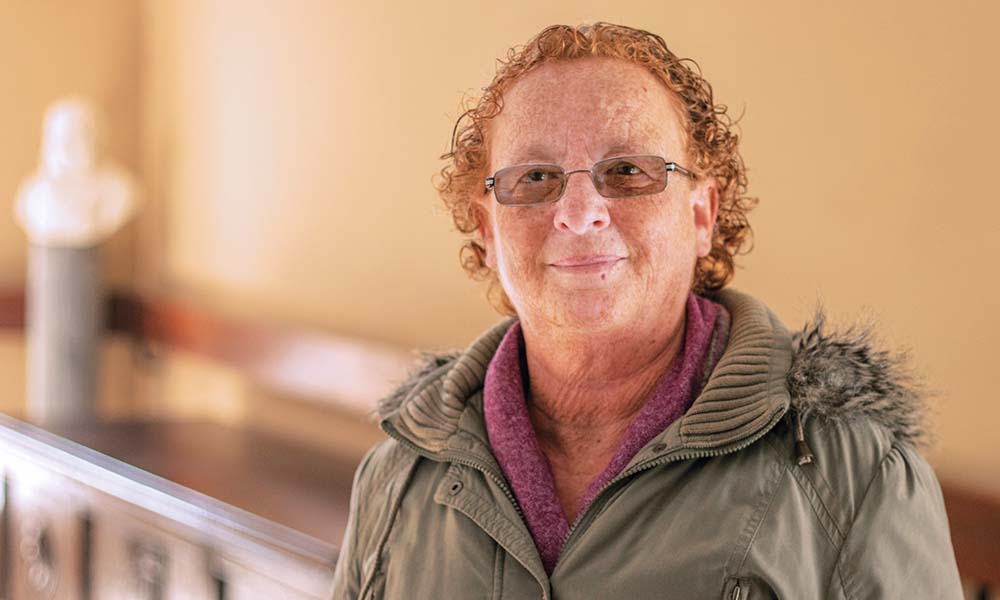
The concepts of ‘professional’ and ‘personal’ identity are not as clear-cut as it may first seem. But finding the boundary between our professional selves, our identity in personal lives, and where these two can be integrated is beneficial, claims Bonello. She says that in humans there is no singular, unitary sense of self. Instead, we must contextualise ever-changing circumstances, responsibilities, and relationships into an idea of who we are as a person.
Because of this multitude, we may struggle to figure out our identity. No matter how structured and straightforward we think we are, our lives can be unpredictable and chaotic. It might be difficult to find a sense of self in the vast number of experiences we have over a lifetime. To make things easier, we tend to organise our lives into different episodes, arranging these episodes into larger stories. Changing schools, graduating, beginning and ending jobs and relationships, can all mark the episodes that make up the story of our life.
Stories have main actors. Roles help us identify our function in society to ourselves and others. When we assign an existing label to our identities, we derive a code of conduct for our behaviour. This simplifies the ordeal of making sense of ourselves and our role in society. Taking on a different role helps us adapt to the situation at hand — we often leave our personal feelings and prejudices behind when going to work, and focus on our job.
Changing schools, graduating, beginning and ending jobs and relationships, can all mark the episodes that make up the story of our life.
Bonello says that when we reflect on and define our personal and professional identities, we can improve our psychosocial wellbeing, increase awareness of our strengths and weaknesses, and ultimately become better at our jobs. ‘In the helping profession, I don’t think it’s possible to separate completely, because I have to use myself in doing the work I do. This is me. So what I am, I bring to my work,’ Bonello adds.
In her research, Bonello explored how social workers identify with their profession. She found that people bring a lot of themselves into their work. It is especially difficult to divide the self from the practice. This integration of the personal and professional selves has a lot to do with the type of person that chooses social work as their career path. Social work does not rely on clear diagnostic tests and requirements — rather, a social worker must appreciate everyone’s different character. Therefore, this profession requires a great deal of empathy and professional judgement.
On the flip side, helping professions have a tendency to bleed into one’s personal life. Especially in a small community like Malta, keeping up an acceptable public image even after hours is quite important. ‘Otherwise one risks appearing hypocritical at work,’ Bonello says. ‘Do as I say, not as I do’ does not work.
The high amount of personal engagement and emotional strain with limited financial gain and social prestige makes a career in social work less acceptable for men. One of the reasons for this could be that the society still expects men to be breadwinners for the family. Another is that employers expect that care is something ‘natural’ for women, rather than a skill to master. In Bonello’s seminar, the majority of the audience were women. This is not surprising, as social work is a largely female-dominated profession. In 2013, around 81% of social workers world-wide were female. Bonello speculates that a combination of factors has led to this gender disparity. Even though social workers are important to the community, the work is often undervalued. Female-dominated jobs tend to be regarded as lesser than male-dominated fields, which in turn reinforces the existing bias, the researcher says.
‘Do as I say, not as I do’ does not work.
Research shows that social workers expressed an exceptional amount of pride in their work, even when aware of the drawbacks. Bonello says that at first, the deep-rooted love and devotion coupled with lingering resentment made her think of a rocky marriage. But by listening to pop music, she found a much more fitting way to verbalise these feelings: love songs. ‘Can’t help falling in love with you’ and ‘Change the World’ describe the ‘call’ that many feel, as they see their profession as a true vocation, driven by a wish to help people and make a difference. ‘Every Breath You Take’ by The Police reminds Bonello of the way that social work takes over one’s entire life, figuratively ‘watching’ over every step and every move, while Nazareth’s ‘Love Hurts’ speaks of the sacrifices and pain that come with fully committing to the profession.
But Bonello challenges the view that social work is a second-class profession. Instead, she focused on individual choices, and chose to end the seminar with Leona Lewis’s song ‘Happy’. She explained that social workers make their choice of profession and take on its challenges with pride. Their heads are held high as they accompany people in their struggles. These dedicated workers know it is not an easy task, but they want society to acknowledge that they are happy to do it. Their voice needs to be heard.



Comments are closed for this article!