
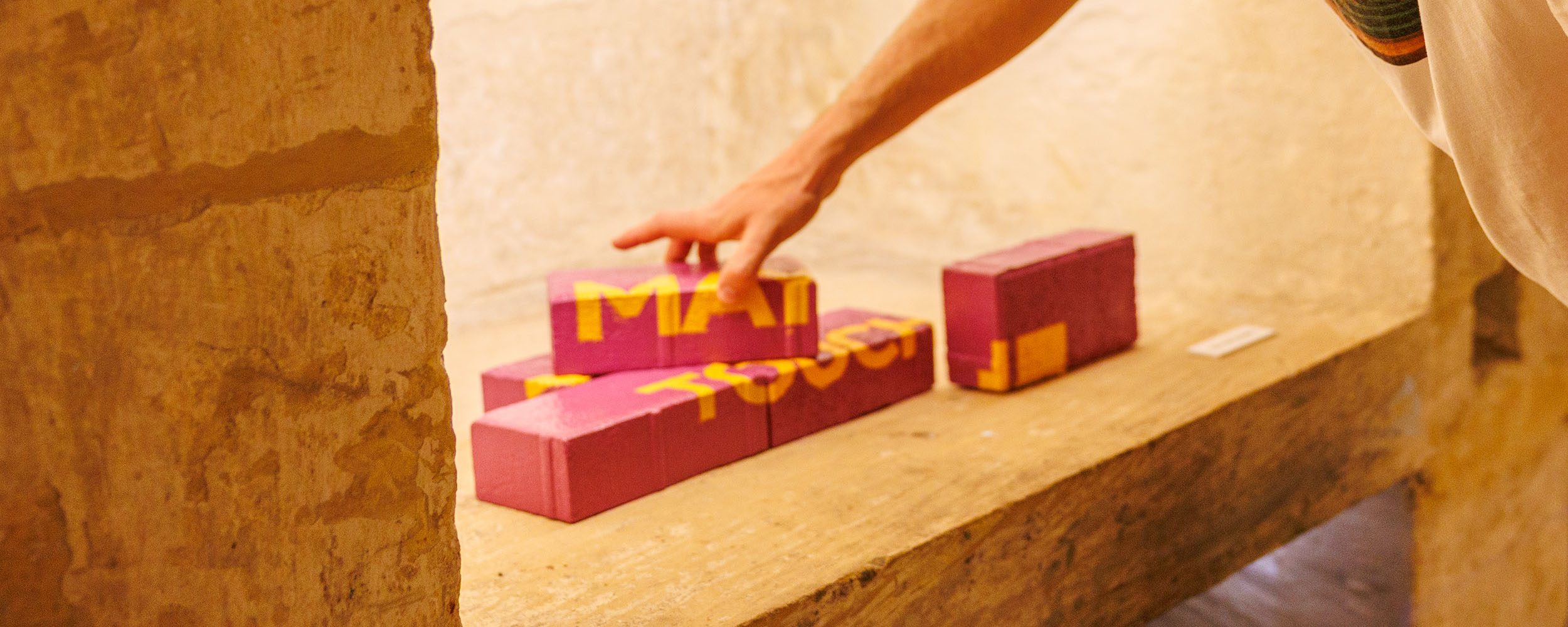
In an era where technology obsessively curates our perceptions, Josèf Farrugia’s Tabula Rasa exhibition studies sight, taste, smell, sound, and touch within Malta Society of Arts’s limestone rooms. Drawing on thinkers from Locke to Baudrillard, this review explores how breaking down the senses exposes the limits of desire and the modern self.
Sixty-two years have passed since Bernard Rudofsky’s Museum of Modern Art exhibit depicting Mesoamerican structures fashioned out of limestone and chiselled flat in monochromatic photographs. Upon these primordial forms, humanity’s discretion planted itself amid the harsh conditions of early life, as Rudofsky writes in the companion book to the exhibit: ‘Man’s physical freedom manifests itself no doubt in his ability to choose the place on earth where he wants to live.’ Set against the Western obsession with ‘exotic’ art, much of the irregular, unbound, if perhaps harsh composition of each building struck intrigue among the architects of the era.
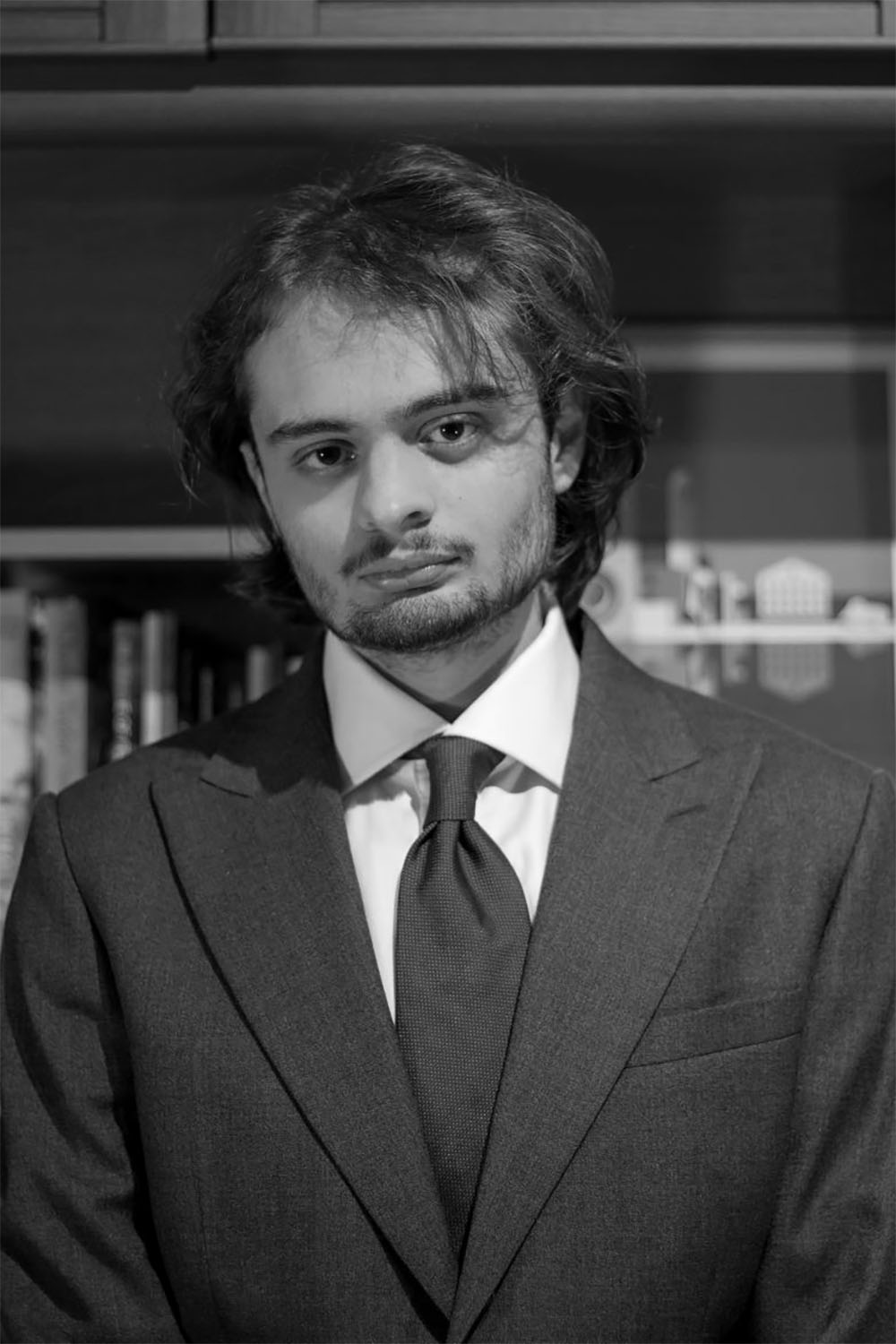
Andrea Farrugia is a third-year Bachelor of Laws (LL.B.) student at the University of Malta with a passion for philosophy and the arts (Photo courtesy of Andrea Farrugia).
I was reminded of those primordial forms when I visited an exhibition at the Malta Society of Arts (MSA) basement in Valletta. Entitled Tabula Rasa by Josèf Farrugia (a BFA in Digital Arts graduate), the exhibit explored the five senses: sight, sound, smell, touch, and taste – a nod to the Lockean idea of the ‘blank slate’. As it were, the basement room of the SoA building harkens to a time not so distinct from an ‘architecture without architects’, a moment prior to the époque de hâte (epoch of haste) in which the immediate duration of every art object is made brief.
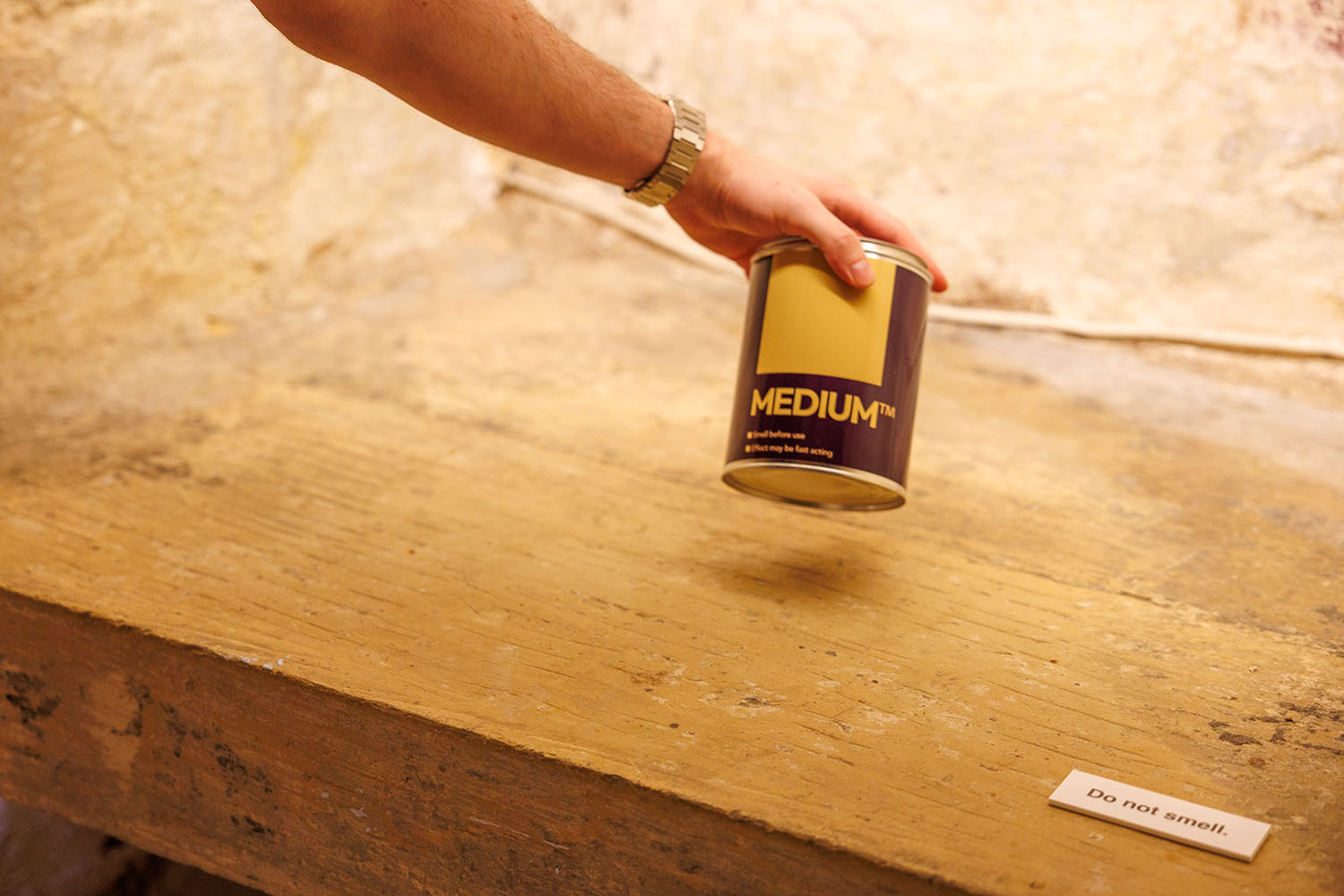
Entrance through the small opening meant I had to duck slightly, and once I stepped onto the mirrored floor, immediately the intentions of the exhibit appeared. That first room is the mirror floor (sight); then a second room appears with an offer of chocolate bars (taste). The last room exhibits the remaining senses in small carved apertures of stone – scent, sound, and touch.
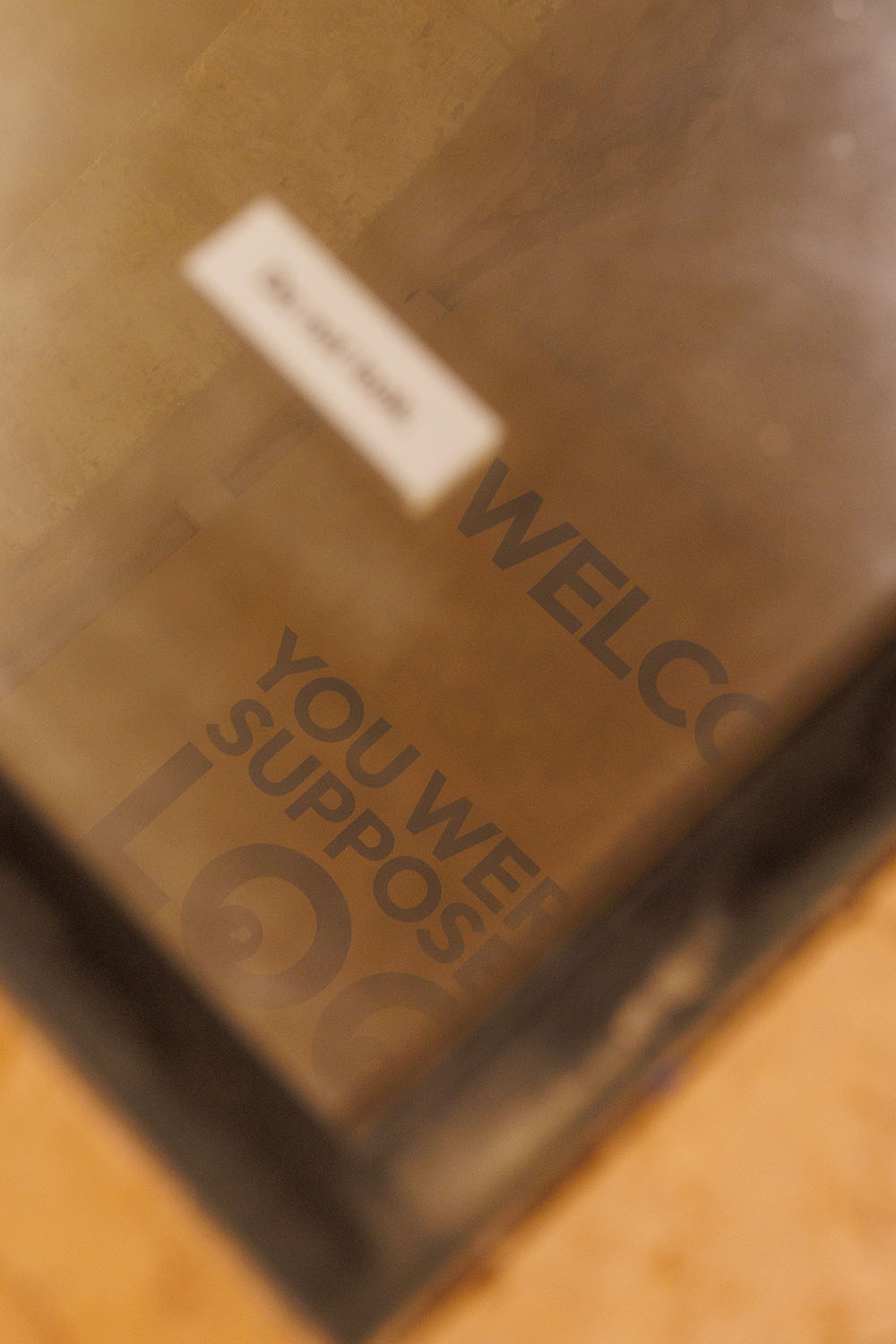
(Photo by Josèf Farrugia)
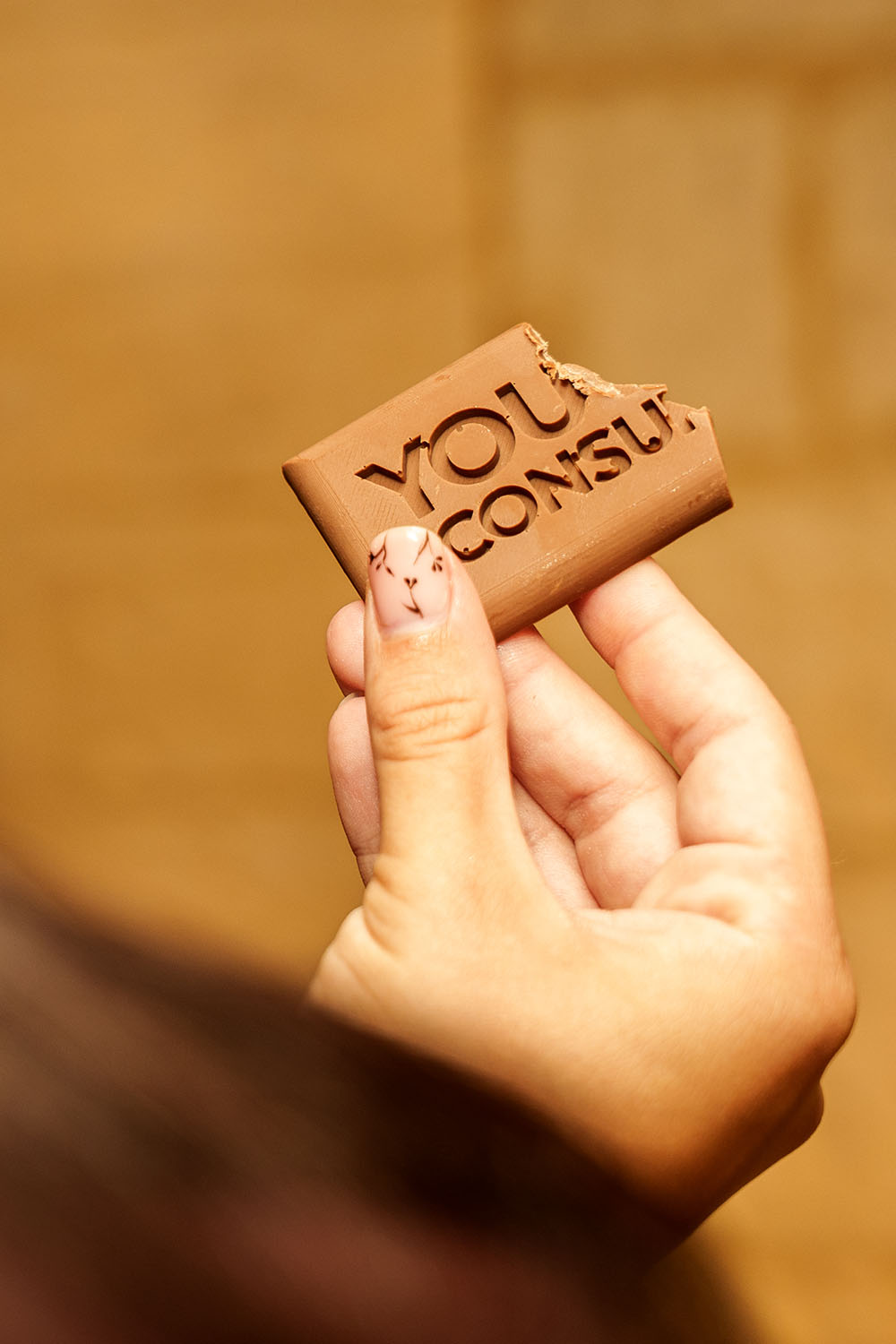
(Photo by Josèf Farrugia)
That vital part of human development, what Henri Bergson called ‘intuition’, wasn’t completely put off course by the supposed unreasonableness of today’s distilled and purified senses, especially since ‘intuition’ strikes first as a method of problem solving. How shall it take form? Even if by accident, Farrugia largely pins the effort on (what human desire in its wake fulfils) that constant and enduring problem which defines the self through what it doesn’t have. None more is this evident in the work of psychoanalyst Félix Guattari, who constantly reminds us that ‘desire comes first’ (production désirante), and in human development as traceable and transparent as it appears in Claude Lévi-Strauss’s acclaimed ‘Tristes Tropiques’, and whose travels in Brazil document the preemptive essence of the ‘self’ upon the changing tides of modernity. On one end, we have a Gauguin-esque retreat into the moulds cast by that initial encounter with the five senses; on the other, what Romano Guardini termed the ‘mass man’ – conformist and largely ‘without personality’.
Each of the five senses in Tabula Rasa comes with a ‘do not…’ title, followed by a ‘do’ written on the objects themselves. At play, each formation bounces off the natural pinhole of desire, namely what one can and can’t do. The limits at hand, whether material, psychological, existential, or theological, concern ‘goods’ insofar as the self, in its transparent flight, creates and forms through the compounding of each object as a narrative. First, you see, then you smell, hear, feel, and taste. Not necessarily in that order, and the exhibit is clear enough to separate each sense without prejudice. Meaning, there is no logic to what follows.
To the visitor, each sense sparks an invitation. Think of how the five senses appear in a given moment, either natural or artificial, and a thorough narrative emerges. Here, Farrugia ‘breaks’ each sense to suspend it, and follows upon a sensory field which mirrors that of ‘mass man’ – largely uprooted and isolated upon the senses without harmony. Perhaps this bit is accidental, yet it is true at least in the pursuit of the ‘masses’ wherein the matter of objects is broken to such a degree that it cannot, even if it tries to, interact with all of the senses.
Through technology, we have created controlled environments wherein each sense is curated extensively, almost obsessively, perhaps as a result of that prior ‘breaking’ down and alienation of the senses. A subtle nod to humanity’s survey of the world appears as a small sign placed next to the security camera at the exit reading ‘visitor behaviour and interactions are being recorded’. Once the place sinks its teeth, and especially when the excessive grasp of the ‘self’ begs for more definition, we find a panoptic strike against the wall, micro-adjusting ourselves until we become selfish.
Of course, a clear reference to Jean Baudrillard is present throughout, namely through the repetition of taste and the simulation of sound. This constant repetition, which forms our sense of self, from that expression which Baudrillard uses to explain the constant copying (‘xerox and infinity’), entails the virtual sphere we interact with in our day-to-day lives. Lévi-Strauss’s more poignant assertion on the self, that ‘Le moi n’est pas seulement haïssable: il n’a pas de place entre nous et rien’ (‘The self is not only hateful: it has no place between a “us” and nothingness’), draws on one’s material conditions and the tabula rasa as constitutive of the ‘self’, which desires repetition and success on its own terms. Our constitutive self, taken from a dynamic world, tones and chisels us with no distinction between the blank slate and its colour, for the slate was itself materially constituted prior to.
Josèf Farrugia is a UM alumnus and multidisciplinary artist working across design, photography, and object-based practices.
Even if these insights are largely incidental, one cannot help but pin their presence in Farrugia’s Tabula Rasa, largely through keeping each element of its presentation simple. And, unlike the anxieties at play in most philosophical texts, the jovial if sudden prod to the visitor once they step inside (who most assuredly would be baffled at first) then slowly cognising thereafter each of the senses into a mesh, recalls that each art exhibit, even those with prejudices, are manifestly that part of our mind which is nothing and whose structure initialises upon leaving the exhibit. A mark left on the white wall.
By interacting with the exhibit, visitors become one with Tabula Rasa as they have inextricably seen, touched, smelled, tasted, and heard what they were told not to. Watch the video to experience it for yourself.
(Video courtesy of the Malta Society of Arts)
The Tabula Rasa exhibition ran from 23–25 April, 2026 at the Malta Society of Arts in Valletta.



Comments are closed for this article!