
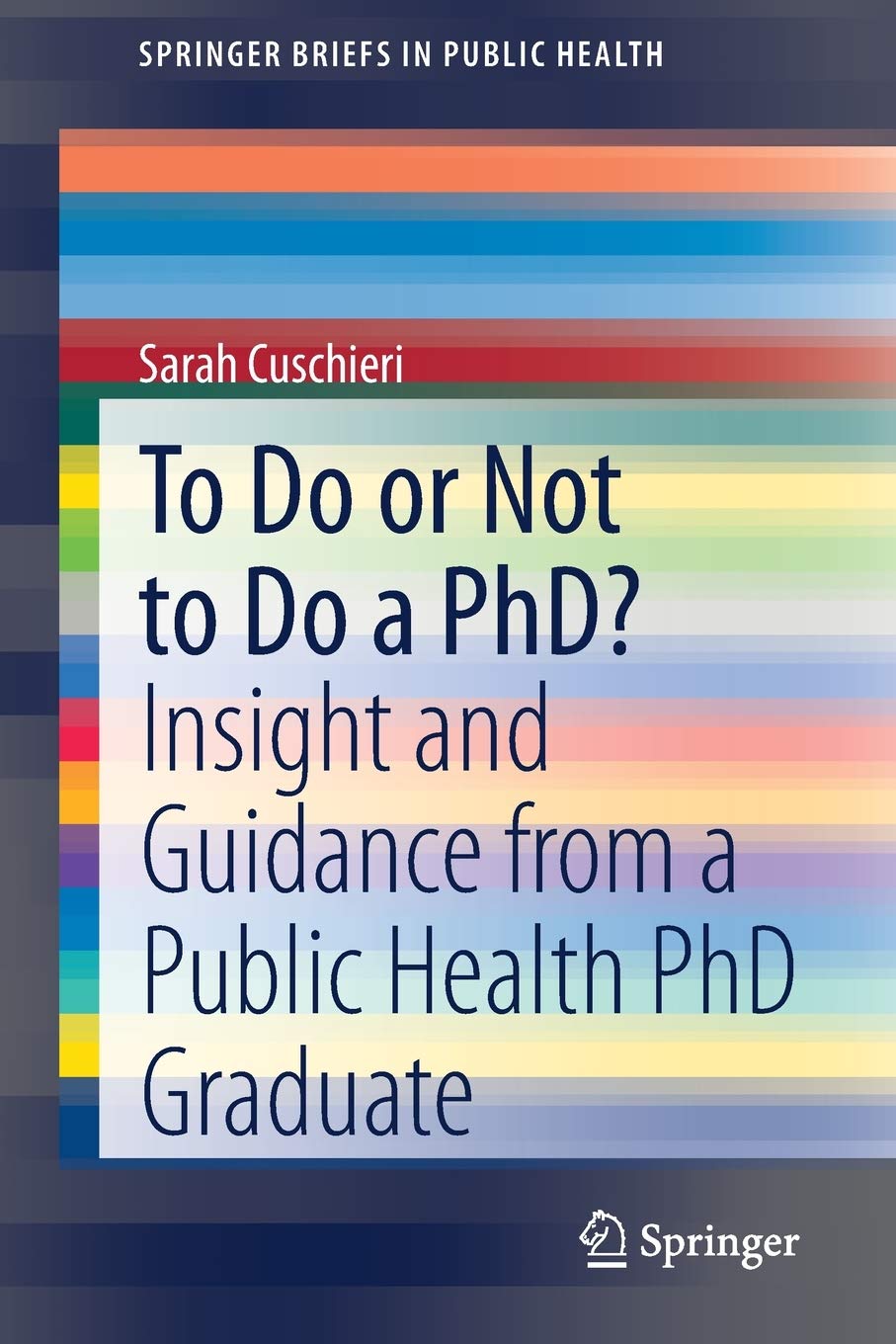
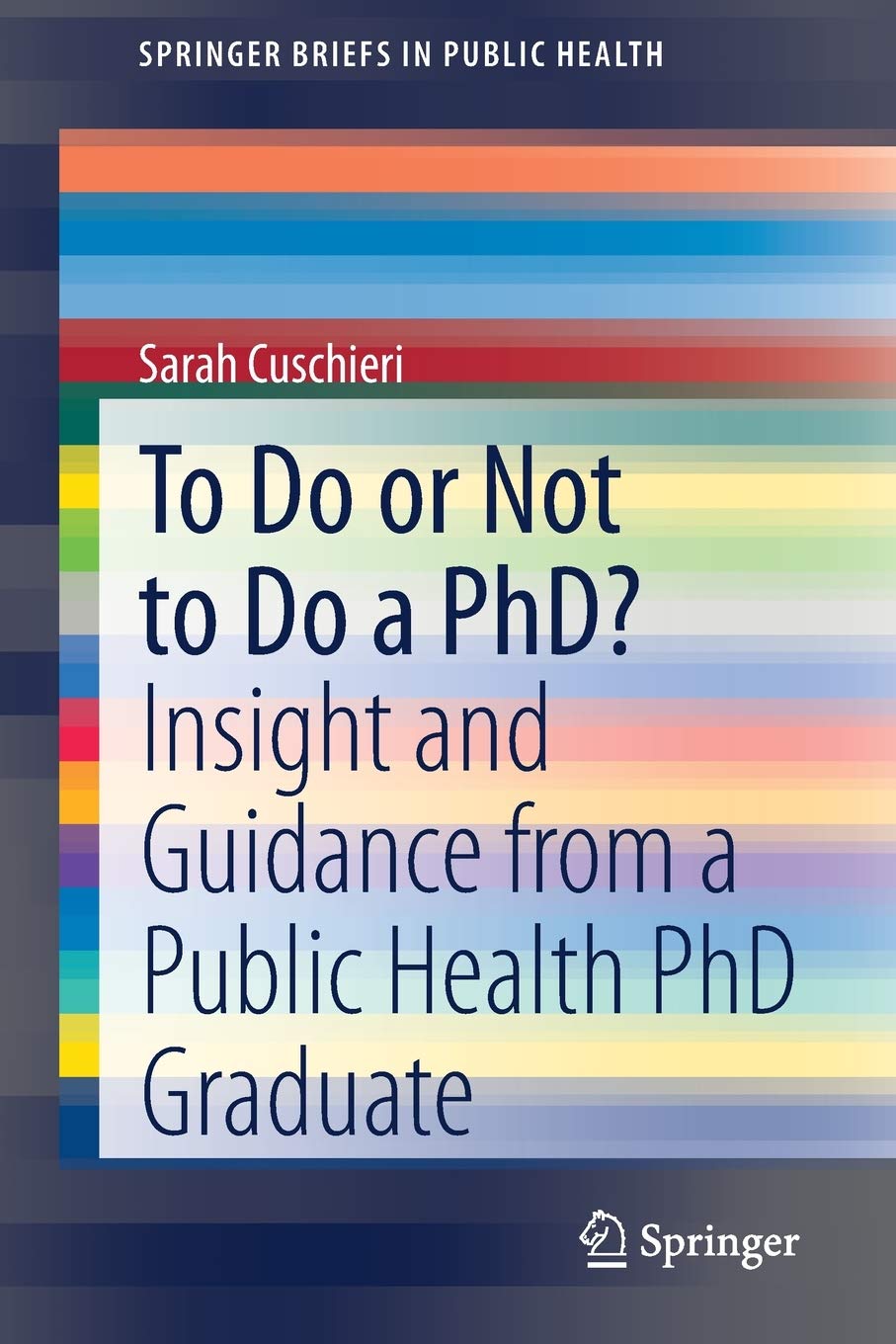
Are you debating whether or not to start a Ph.D.? Have you just started and are already overwhelmed? You might be asking yourself, why am I putting myself through this? Don’t panic! We’ve gotten in touch with Dr Sarah Cuschieri, author of To Do or Not to Do a PhD to ask that very question.
Should you do a Ph.D.?
You’ve probably asked yourself this question dozens of times. Chances are you’ve heard a number of truisms, things like, ‘It’s going to be a lot of hard work,’ or ‘a Ph.D. is like a marriage — it’s a commitment.’ But, as well-intended as these comments might be, they don’t bring you any closer to making a decision.
‘If you want to enter academia, you need to do a Ph.D.’, explains Cuschieri matter-of-factly. Dr Cuschieri is a lecturer from the Faculty of Medicine & Surgery and completed her Ph.D. in 2019. ‘The truth is you need time, patience, and to be passionate about research,’ she explains.
You will be dedicating a chunk of your life to your research, and problems are always going to crop up. It might be busy supervisors or disheartening moments where you just have to burn everything (metaphorically!) and start from scratch. Cuschieri also points out the logistics involved. Unless you’re lucky enough to embark on a scholarship Ph.D., you’ll need to create a research proposal from scratch (with the help of your supervisor/s) and work out the budget for your proposed research. And that is only just the beginning.
Securing funds can be a nightmare! Not every research design will need a lot of money to be conducted successfully. Yet some, such as conducting a nationally representative study, can become expensive very quickly. That is only just the tip of the iceberg, however, since the biggest issue of all is time commitment. You should see how much time you can dedicate to your research — especially if you have a full-time job or a family to take care of. These are things you need to consider carefully before signing yourself up for a Ph.D.’
‘But it’s not all bad!’ she hastens to add. Besides being the highest academic achievement you can reach, there is a huge sense of satisfaction. You might even be asked to help or supervise someone with their research. ‘It’s an amazing feeling,’ Cuschieri explains, ‘when someone reaches out for your professional help to supervise their research.’
Tips from the book
From identifying your title and preparing for the dreaded viva, to what comes after getting your Ph.D., To Do or Not to Do a PhD offers readers a number of tips to guide you through the process. The book draws from Cuschieri’s own experience doing her own medical Ph.D. So, while certain chapters are aimed directly at postgraduate medical professionals, other chapters — which tackle research proposals, structuring a thesis, and scientific publication, for example — are universally beneficial.
The book aims to provide a concise, all-rounder explanation of the good, the bad, and the evil scenarios of a typical Ph.D., from beginning to end. A number of facts and myths, helpful for current or prospective students, are discussed in Cuschieri’s book.
‘The most important thing is that you choose a subject that you love,’ Cuschieri says.
There is a lot of stress involved, but you just need to juggle time. There will be moments when everything feels overwhelming. If you’re determined, you will manage, though! Just breathe in and breathe out. Find someone who’s not involved to talk to. Take a few days off, clear your head and try again. You’re not the first, and you won’t be the last. Stop. Breathe. Rethink. In the end, there’s always light at the end of the long, black tunnel.
The book itself is written in an informal style, spoken like a recent graduate talking to someone who might be about to start their Ph.D. It’s perfect for some light reading in between research sessions! If you want a helping hand or practical advice during your doctoral adventure, be sure to pick up a copy of To Do or Not to Do a PhD, available online from https://www.springer.com/gp/book/9783030646707 or Amazon https://www.amazon.com/Do-Not-PhD-Guidance-SpringerBriefs/dp/303064670X


Comments are closed for this article!