

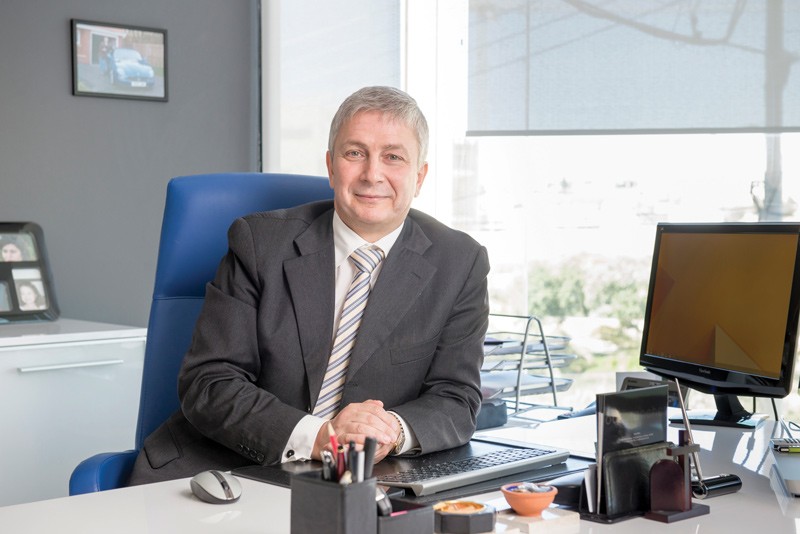
I have been directly involved in ICT for over 30 years. The last 10 years have been all dedicated to ICT in health.
I have visited hospitals and health centres in the United States, Canada, the United Kingdom, Ireland and Italy. During the several health conferences I have attended, I met with people from practically every corner of the world. Their common denominator: no health system is sustainable unless ICT is perceived as an enabler to assist health providers deliver an improved and more efficient care service that governments can afford.”Malta shares this concern. The added pressure is its ageing population.
Q:How can ICT truly reduce the financial pressures on our Health Service and make it sustainable?
A:Malta needs to develop a culture where citizens realise their responsibility to monitor their own health and maintain their own online electronic medical record. This can be done through daily, weekly or monthly monitoring of vital signs such as blood pressure, weight and others. Studies prove that people using eMonitoring services take better care of their own health.
I urge the Ministry of Health to run a simple pilot project in Malta. It could be run amongst the diabetic community. The pilot project would include 1,000 people. 500 of them will use the standard glucose-monitoring device while the other 500 will use a personal, electronic glucose-monitoring device. Within three to six months the results will show the superiority of eMonitoring devices for patient care. These existing health tools can enable people to live healthier lives and stay away from our overburdened hospital. The key is to control a condition without depending on medicines.
Q:Length of stay in hospitals and outpatient visits can be reduced through eMonitoring devices. How?
A:How many patients remain in hospital after medical intervention to have their vital signs monitored? Using these devices patients can be discharged from Mater Dei sooner by being given an eMonitoring kit to monitor themselves from home. The data would be sent electronically to Mater Dei for doctors or clinicians to analyse. These devices could reduce the patient length of stay and make more beds available at Mater Dei translating into reduced costs and waiting lists. They could alleviate the number of outpatient visits that would reduce pressure on the infrastructure and workforce providing more time to increase care quality. Such devices provide an opportunity for every Maltese citizen to have an online electronic medical record that would be always available to clinicians and general practitioners.
My vision for the Maltese health service is one of empowerment. The patient will be enabled to take better care of him or herself and become more accountable, disciplined, and committed to self-healthcare in the same way someone is committed to their job or hobby.
Ivan Bartolo is the Chief Executive Officer of 6PM, a leading IT company delivering award-winning health care products. emCare, a subsidiary of 6PM, provides eMonitoring services. For more information visit www.6pmsolutions.com and www.emcare360.com




Comments are closed for this article!