
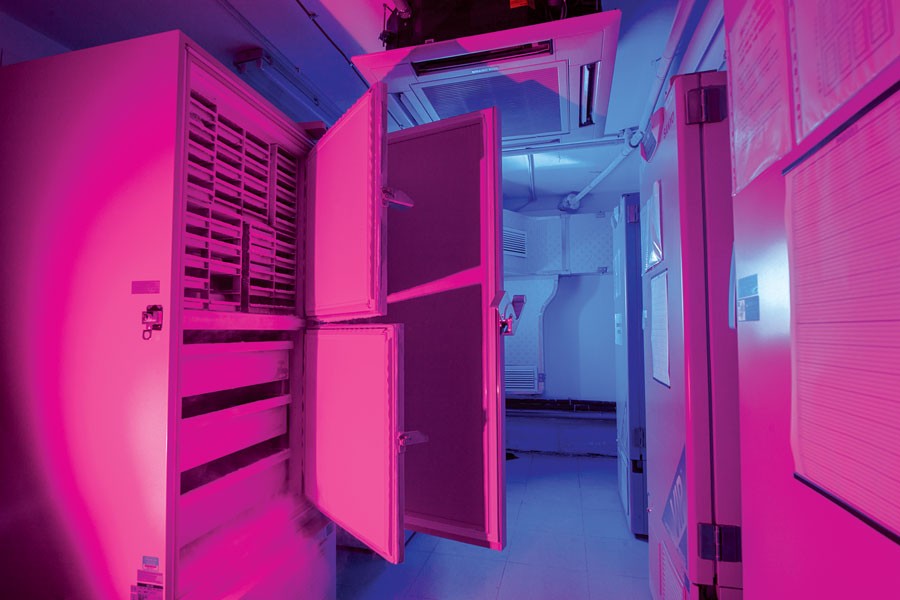
In the early 1990s, the Malta BioBank was started with the collection and storing of samples from all Maltese children who had been screened for rare blood disorders. Set up as a collaboration between the University of Malta and the Malta Department of Health, it was first launched using Italia-Malta project funds followed by EU pre-accession funds.
| Various Sanyo, Ultra Low-Temperature Freezer Models: MDF-U54V |
Quick Specs:
|
The BioBank is a research tool that provides high quality samples for human biological research which in turn allows Maltese researchers to collaborate as members of international consortia to investigate important diseases. The BioBank has helped studies in, to name a few, thalassemia (a locally prevalent blood disorder), Type 2 Diabetes Mellitus, Parkinson’s disease, and kidney disorders. It has also aided population-wide studies that collect data on genomes, and clinical and health data, from large numbers of people.
In the spirit of citizen science and shared ownership, the BioBank is part of an FP7 project called RD-Connect and the BBMRI-ERIC network (founders of the EuroBioBank) whose members are developing IT tools to have a catalogue for medical research. A future project will allow research participants to become research partners. The idea is to create a cooperative of research subjects that would use smartphones and the Internet to exchange data and information with the research team. The Biobank provides an essential service to the Maltese Islands for biomedical research. It has grown to continue innovating local research solutions to worldwide health problems.




Comments are closed for this article!