
This time last year, the Ice Bucket Challenge made ALS (Amyotrophic Lateral Sclerosis) one of the hottest topics across the world. Who had not watched videos of people dumping buckets of ice-cold water over their heads to raise funds for ALS? ALS is a neurodegenerative disease that causes the death of the body’s motor neurons, and which in turn causes mobility problems that can lead to death in the space of just three to four years. Words by Sarah Spiteri.
Earlier this year, the Ice Bucket Challenge took on a completely new meaning for Bjorn Formosa, who was diagnosed with this disease. He fought back by setting up the ALS Malta Foundation, focusing on three main aims: to raise awareness about the disease in Malta, to improve the quality of life of ALS sufferers, and to support ALS/MND (motor neuron disease) research at the University of Malta.
The University’s research trust (RIDT) has been working with the ALS Malta Foundation. Dr Ruben Cauchi (Faculty of Medicine & Surgery, University of Malta) is currently researching the function of RNA-binding proteins (Ribonucleic acid) which, on mutation, cause a degenerative motor neuron disease that is similar to ALS. The research team needs funding to be able to overcome the particular challenges of this disease.
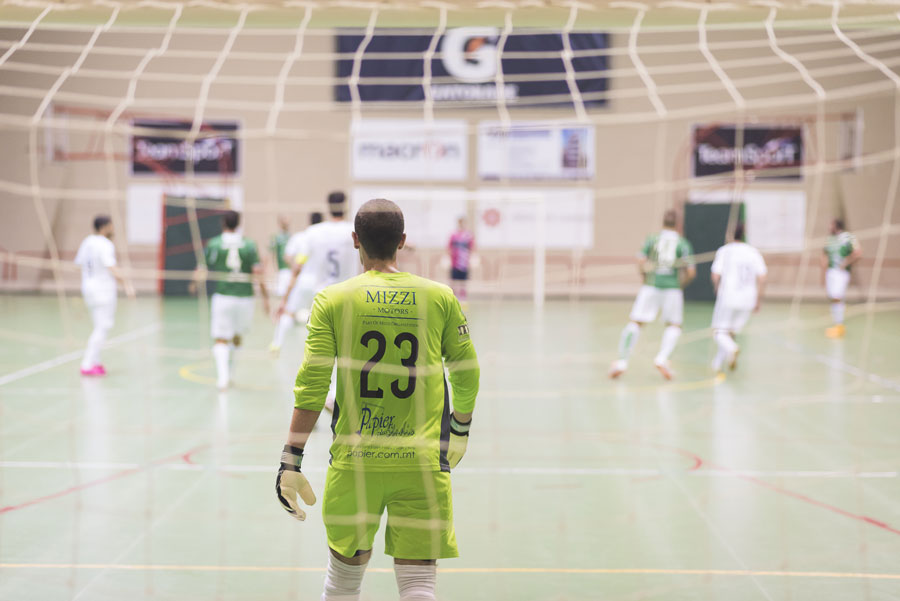
Many fundraising activities are being held for ALS research. The University’s Futsal Team (the University Knights) is organising a series of friendly matches outside its normal fixtures, with all proceeds going towards ALS research. The club is a daughter organisation of the KSU (Kunsill Studenti Universitarji), and a joint initiative with MUSC (Malta University Sports Club) and Mdina Knights Football Club. University students and staff from various faculties run the club which sees people from diverse social backgrounds and sportive experiences competing in the Futsal Malta Association National League.
‘RIDT favours dynamism and talent. Futsal is a vibrant sport and our club boasts talented players and personnel,’ said Gayle Lynn Callus, Sales and Marketing Manager of the club. ‘We believe in investing in the future by nurturing potential players. In order to help the University of Malta develop tomorrow’s players, we are collaborating with RIDT to help promote its efforts towards research. As a sports team, we feel that we should be on the frontline in helping RIDT’s efforts to research the ALS Motor-Neuron disease’.
Part of the membership fee for joining the University Knights goes directly towards this fund.



Comments are closed for this article!