
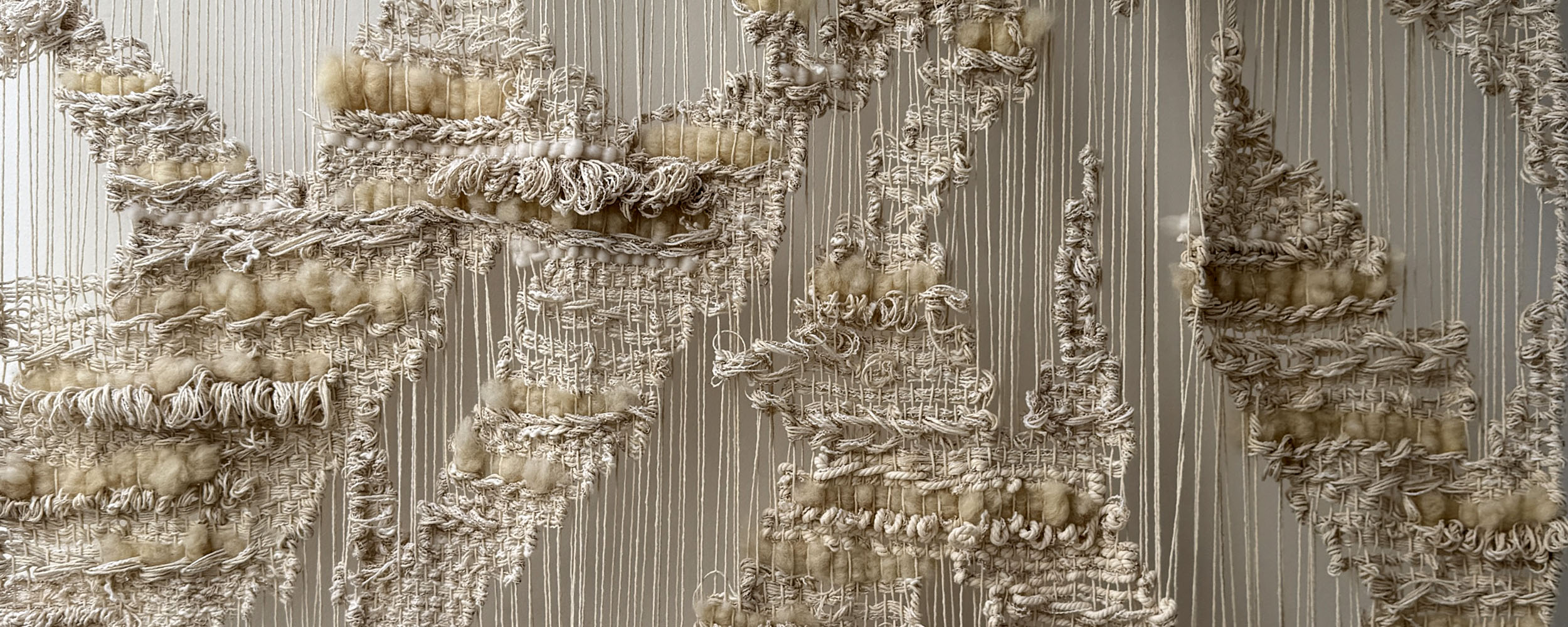
A Retrospective on Walking the Coastline by Matylda Maria Jarosz
Matylda Maria Jarosz is an artist who recently exhibited Walking the Coastline, which uses materials from Malta’s natural space to depict that same wilderness. Following her experience and master’s at the University of Malta, she will be teaching courses on Contemporary Weaving and Sustainable Art later in the year. THINK’s Jonathan Firbank speaks with Jarosz about her Master of Arts project, and the journey it represents.
The longer you spend time in a place, the more likely you are to take it for granted. Malta’s shock of blue sea will always command attention, but one may grow accustomed to the subtler beauty of its wild spaces. The inland view of Malta’s coastline, with its stone, dust, and scraps of coarse greenery, is a quieter vision. Fawn-grey limestone and ruddy Ħamrinu have a soft interplay that becomes familiar in moments. Fortunately, familiarity doesn’t need to be constant. As any host knows, there’s a great pleasure in seeing home through a fresh pair of eyes.
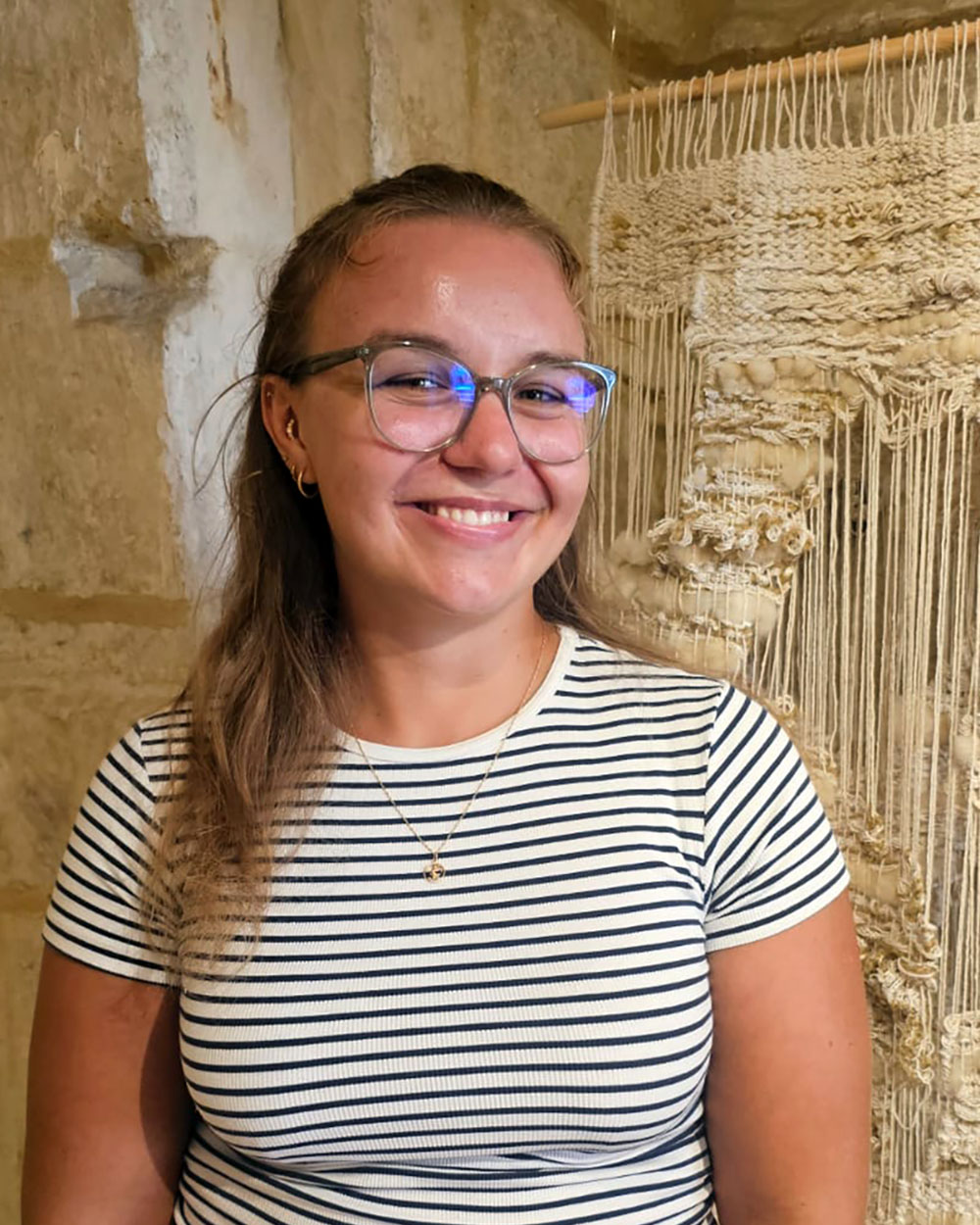
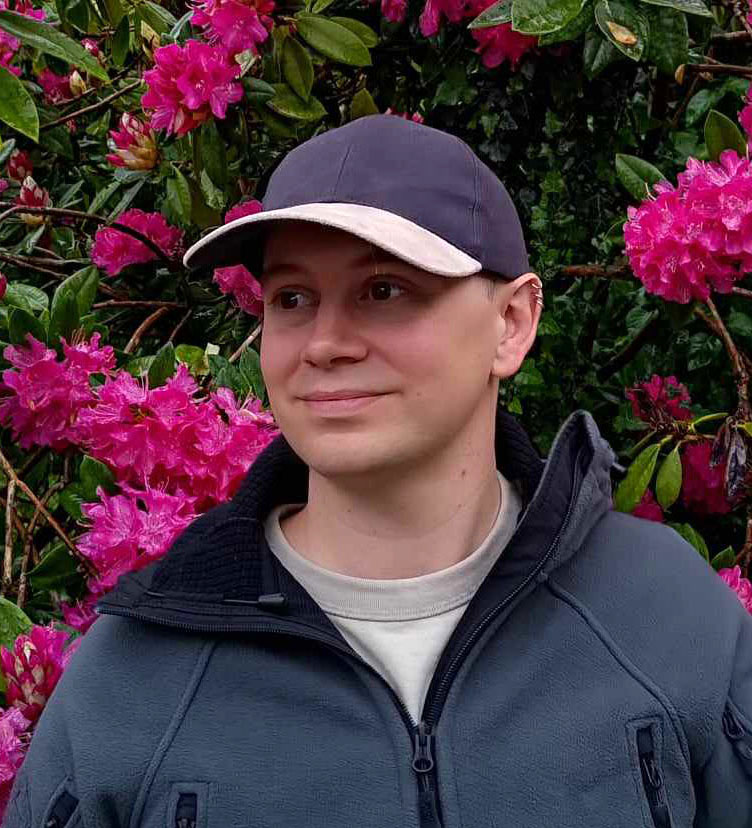
Matylda Maria Jarosz is an artist and alumna of the University of Malta (Photo courtesy of Matylda Maria Jarosz)
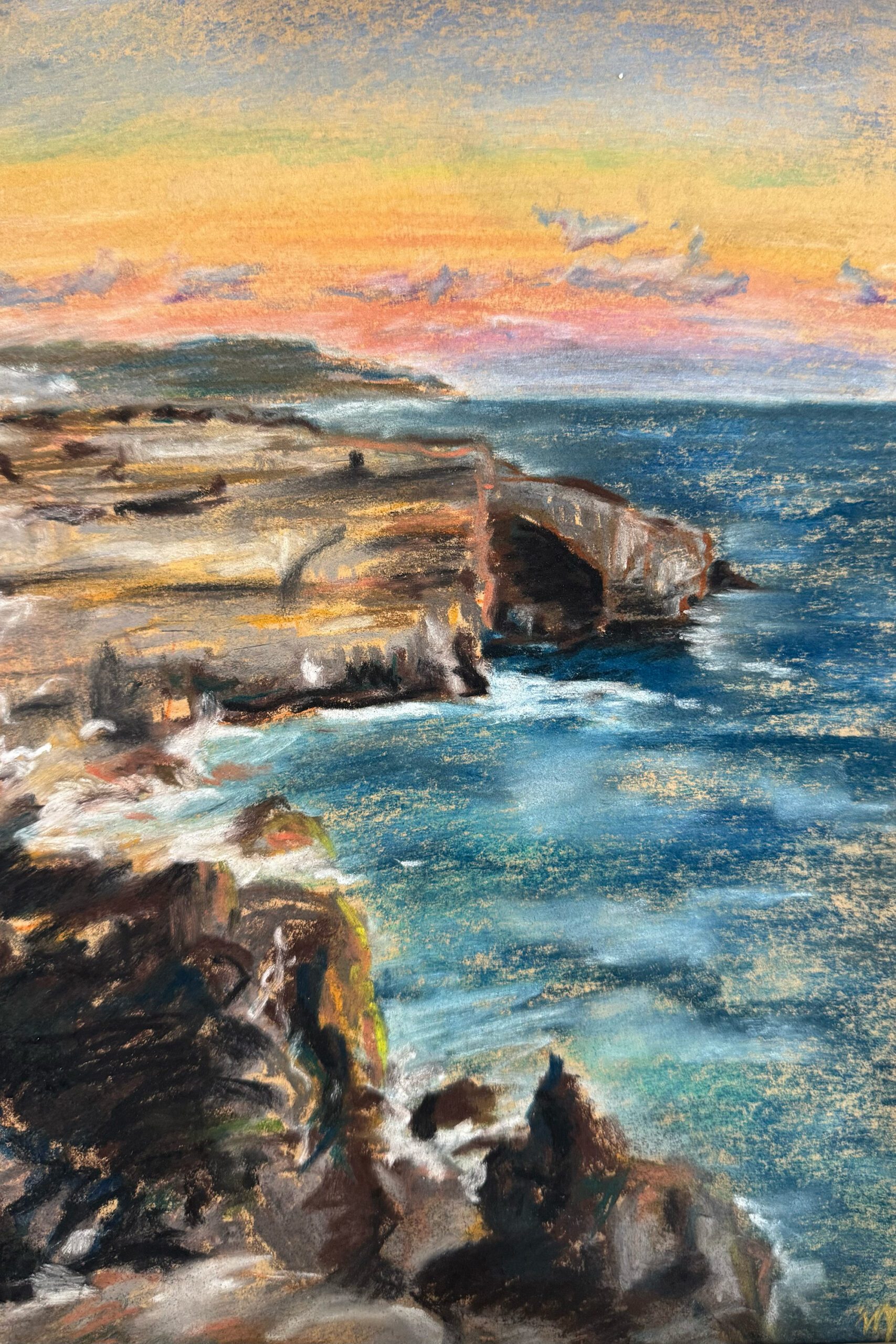
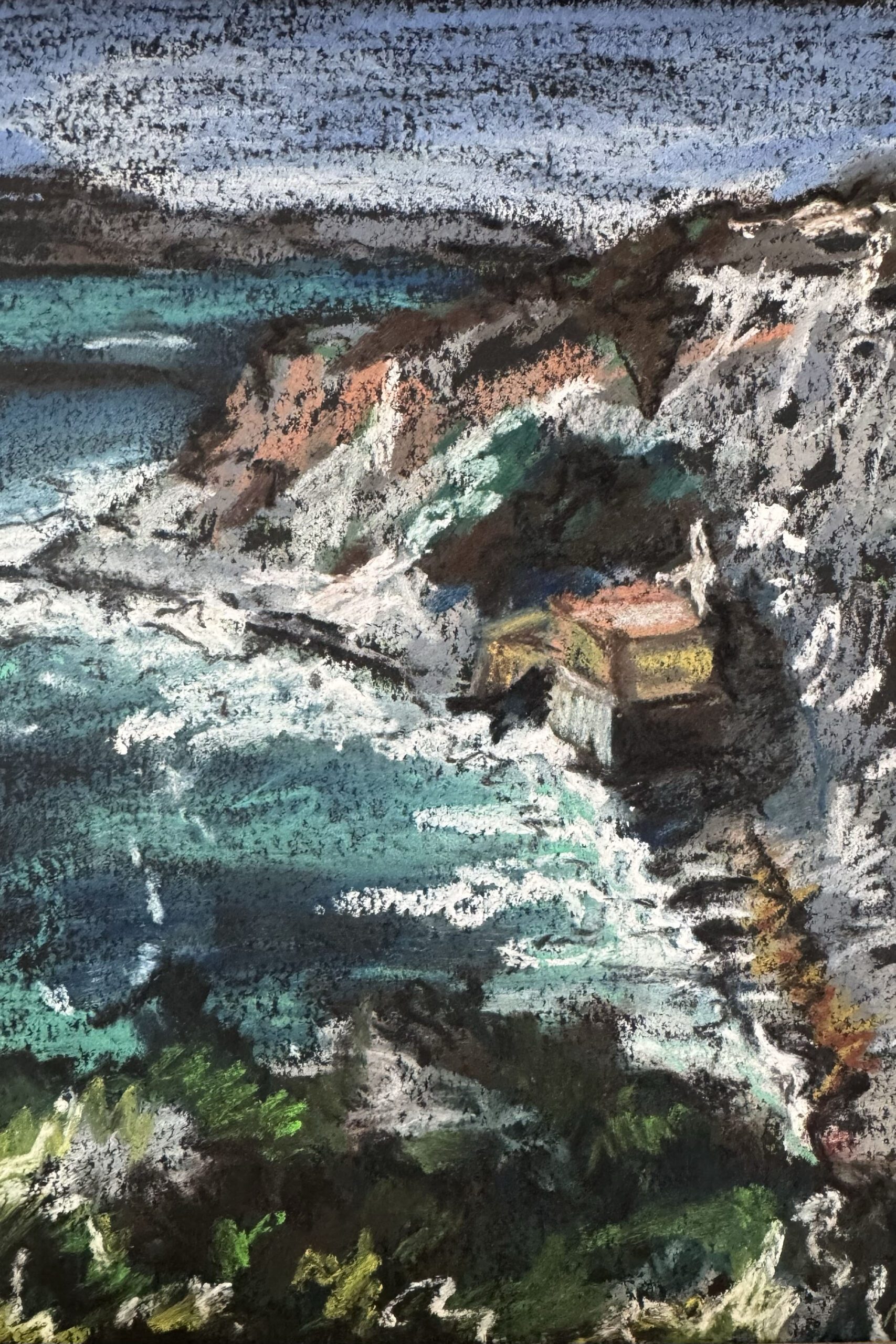
One such pair of eyes belongs to Matylda Maria Jarosz. An artist from Poland who specialises in sustainable practice, she has recently completed a Masters in Art at UM. The master’s degree project culminated in Walking the Coastline – a multifaceted exhibition, incorporating depictive and abstract paintings as well as installations made of textile and stone. Materials, pigments and even techniques are drawn from Maltese land and heritage.
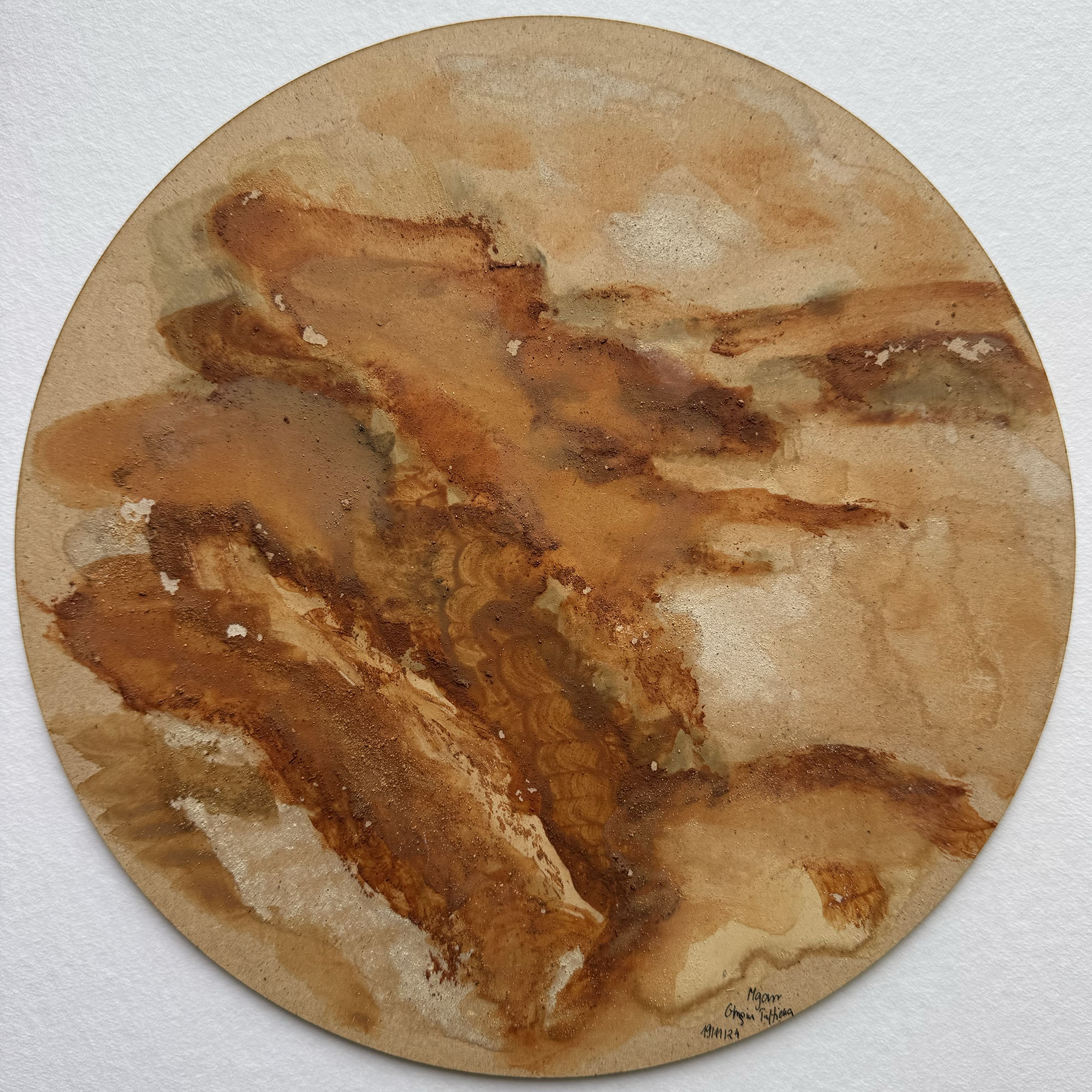
(Photo courtesy of Matylda Maria Jarosz)
Exploring Malta
As Jarosz explains, ‘I have always been passionate about sustainable practice.’ Her journey as an artist ‘began with fine art, but then I moved towards textiles and costumes, developing biodegradable materials for them.’ Her Maltese work has that same throughline: ‘I’ve navigated around the subject of sustainability, keeping it centred, but my main inspiration became Maltese nature.’ The project had three strands: site-based research; material experimentation; and digitally mediated processes.
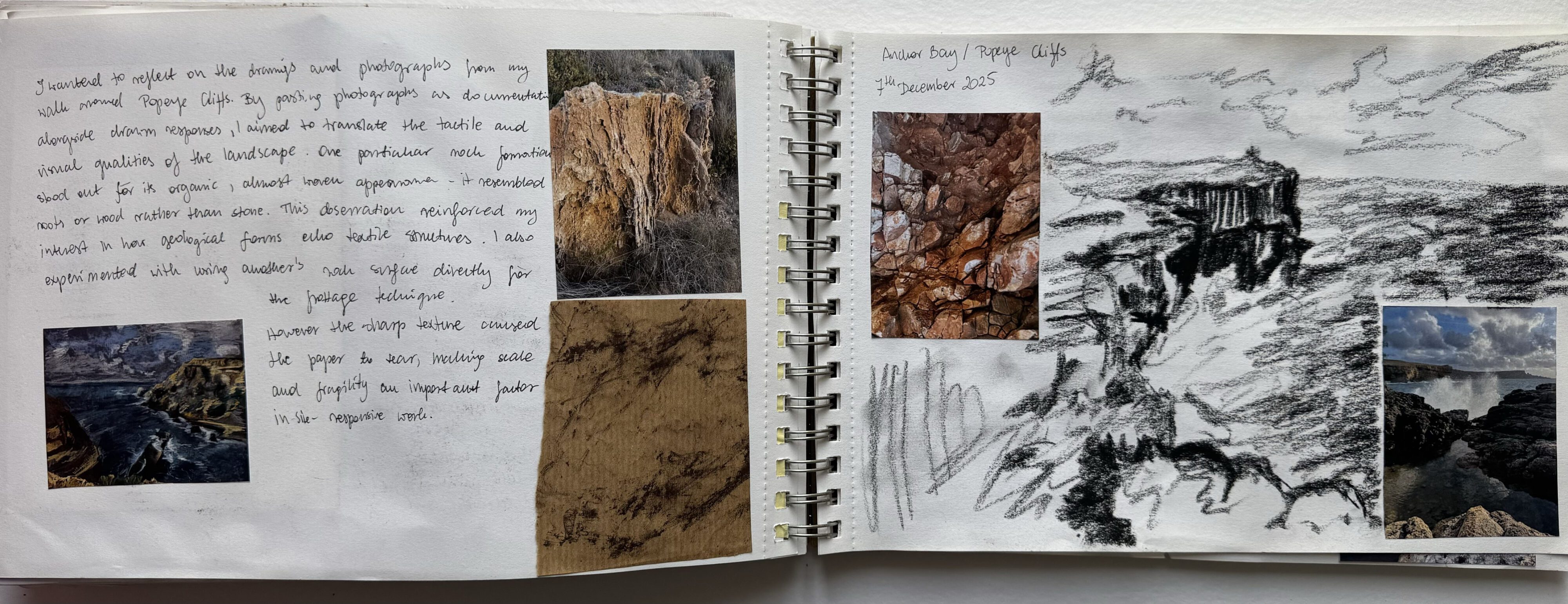
The site-based research was a physical exploration of Malta’s natural space. ‘I treated walking Malta’s coastline as an art-practice in and of itself. It was all about collecting materials. Soils of different colours, stone, leaves and seashells. Dried leaves of the opuntia, the prickly pear cactus, have fibres that look beautifully woven to me, like textile or embroidery.’
‘Soil and rocks can be crushed and made into pigments.’ Primary materials included different shades of limestone, as well as Malta’s blue clay. Its soil, ‘which has a sort of reddish ochre colour,’ provided darker tones, while the Golden Bay provided ‘a beautiful orange-yellow sand. Seashells as well’, which could be processed into whites. These water-based pigments were highly experimental, flowing in different ways and changing colour as they dried. But the resulting palette is Malta: layered, bright off-whites capture light while contrasting with deep, yet warmer hues. Texture was central to the work, and found materials were presented whole and unadorned. Rocks and shells were laid across museum-esque displays.
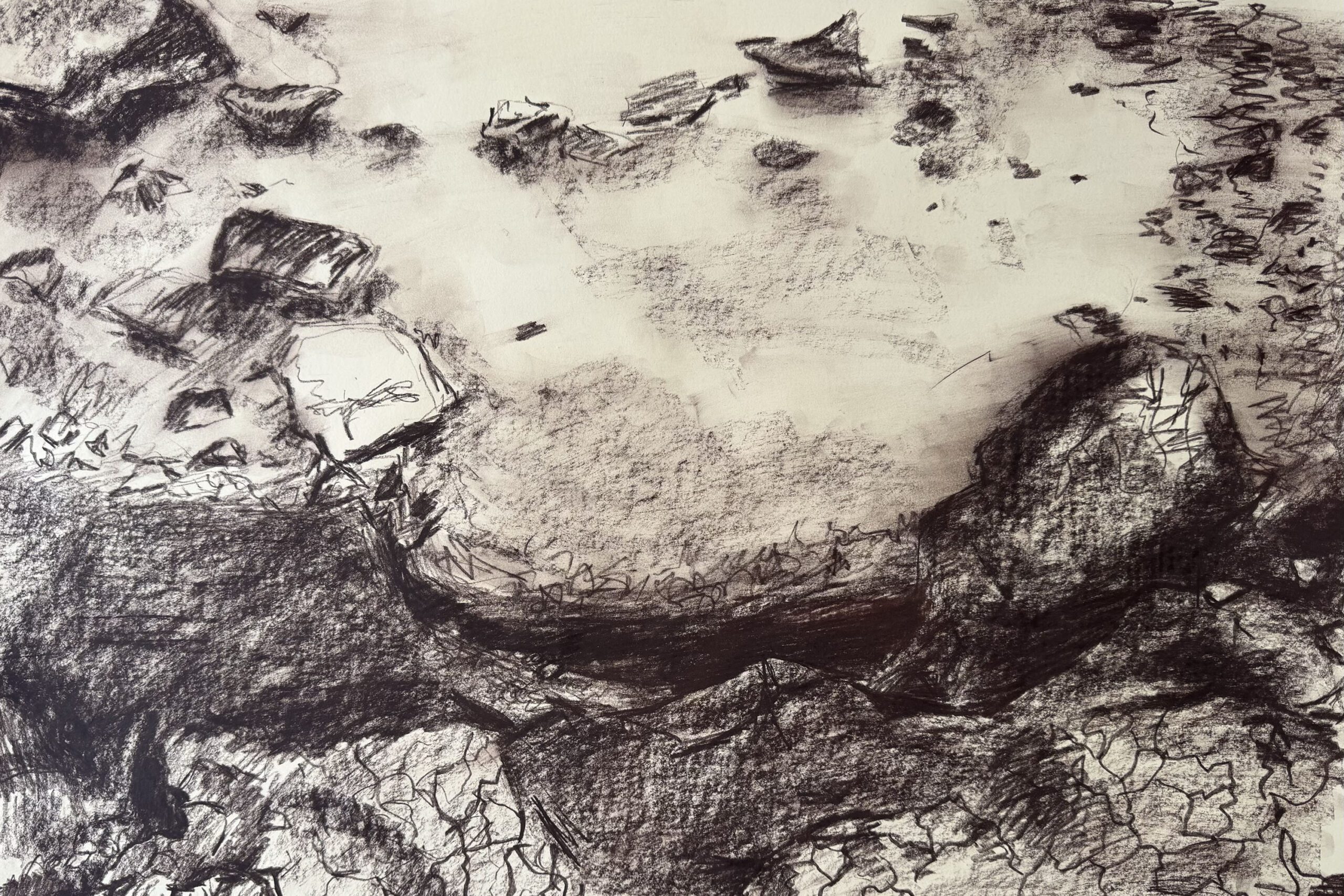
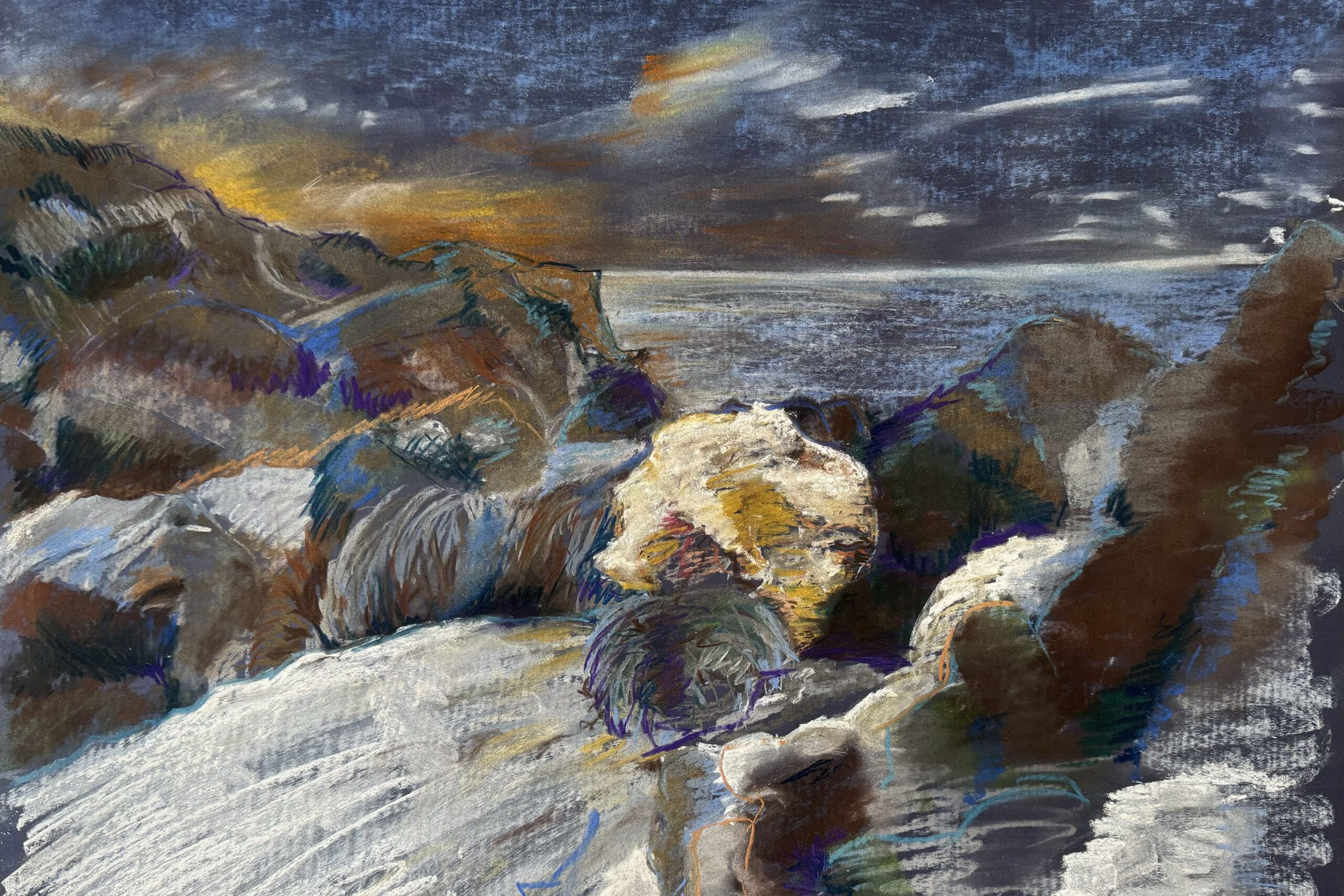
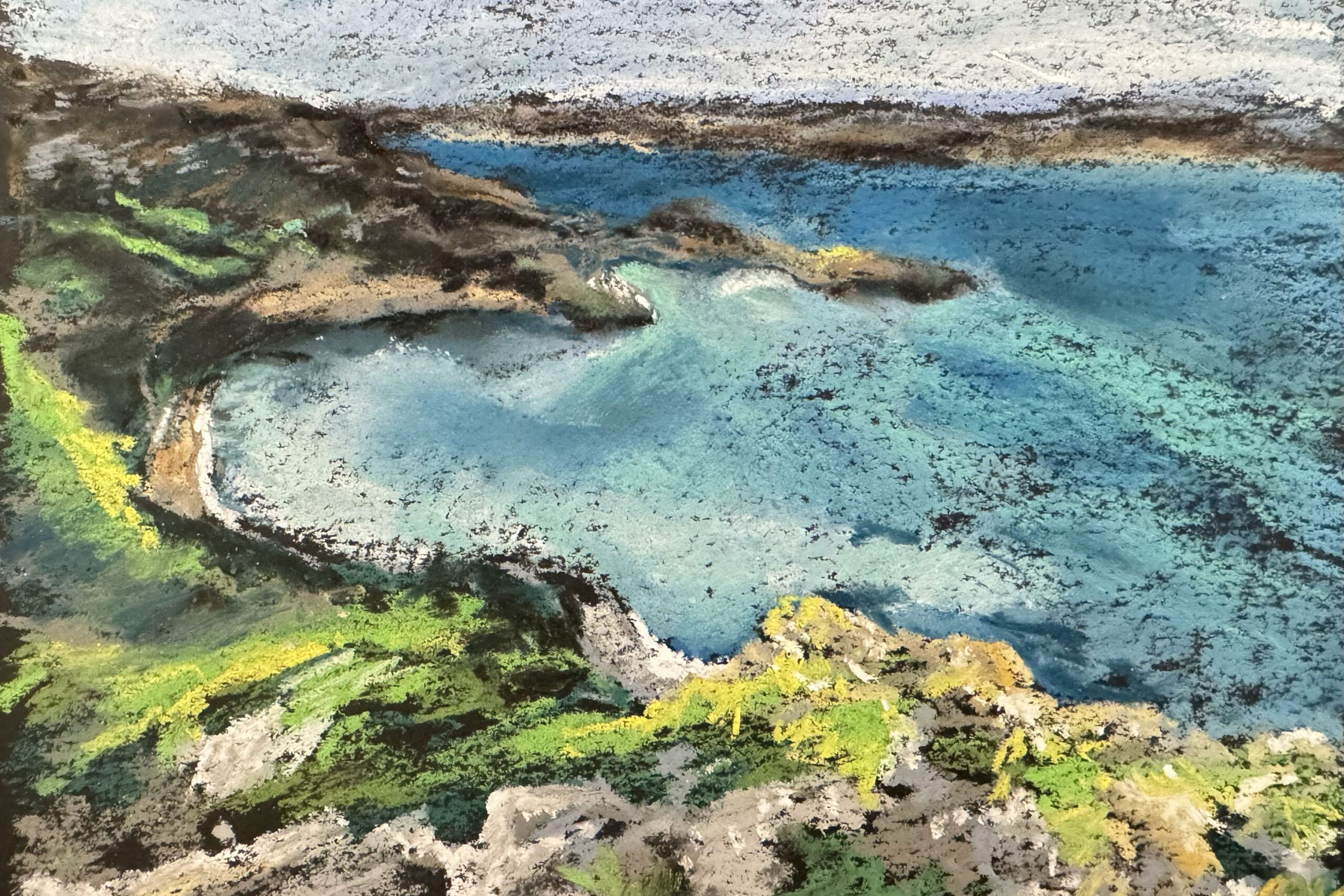
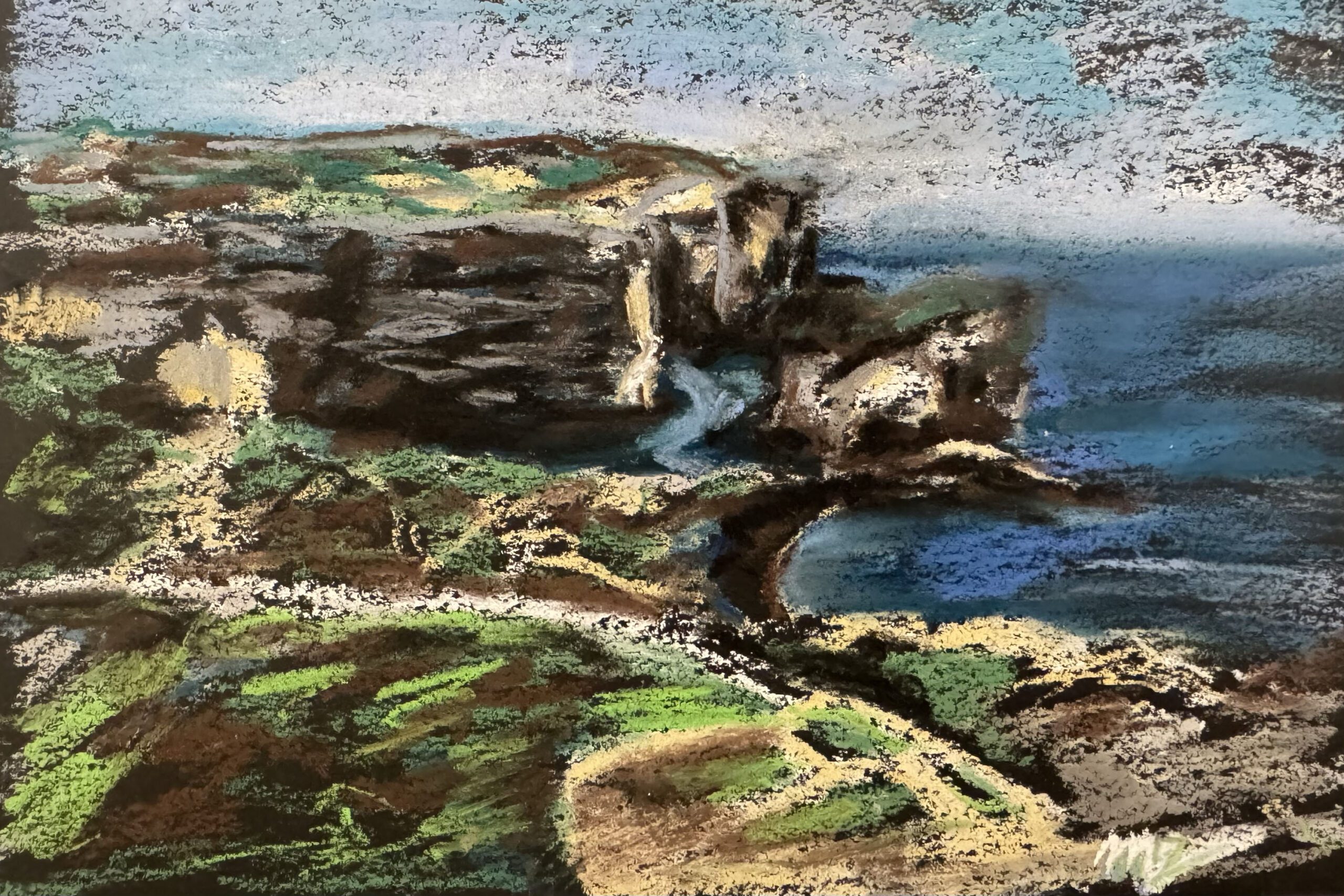
These centrepieces were themselves inspired by Malta’s stone formations. Their skeletal impression is particularly fitting as the limestone that influenced them is itself made from the calcified remains of living organisms. Maltese wool that Jarosz worked personally is integrated into certain pieces, and several canvases were hand-made or hand-stretched. ‘I’ve also experimented with not stretching the canvases onto the frame, so they are just hanging loosely. Those canvases are not primed, either. I approached these as I would approach textile pattern design.’
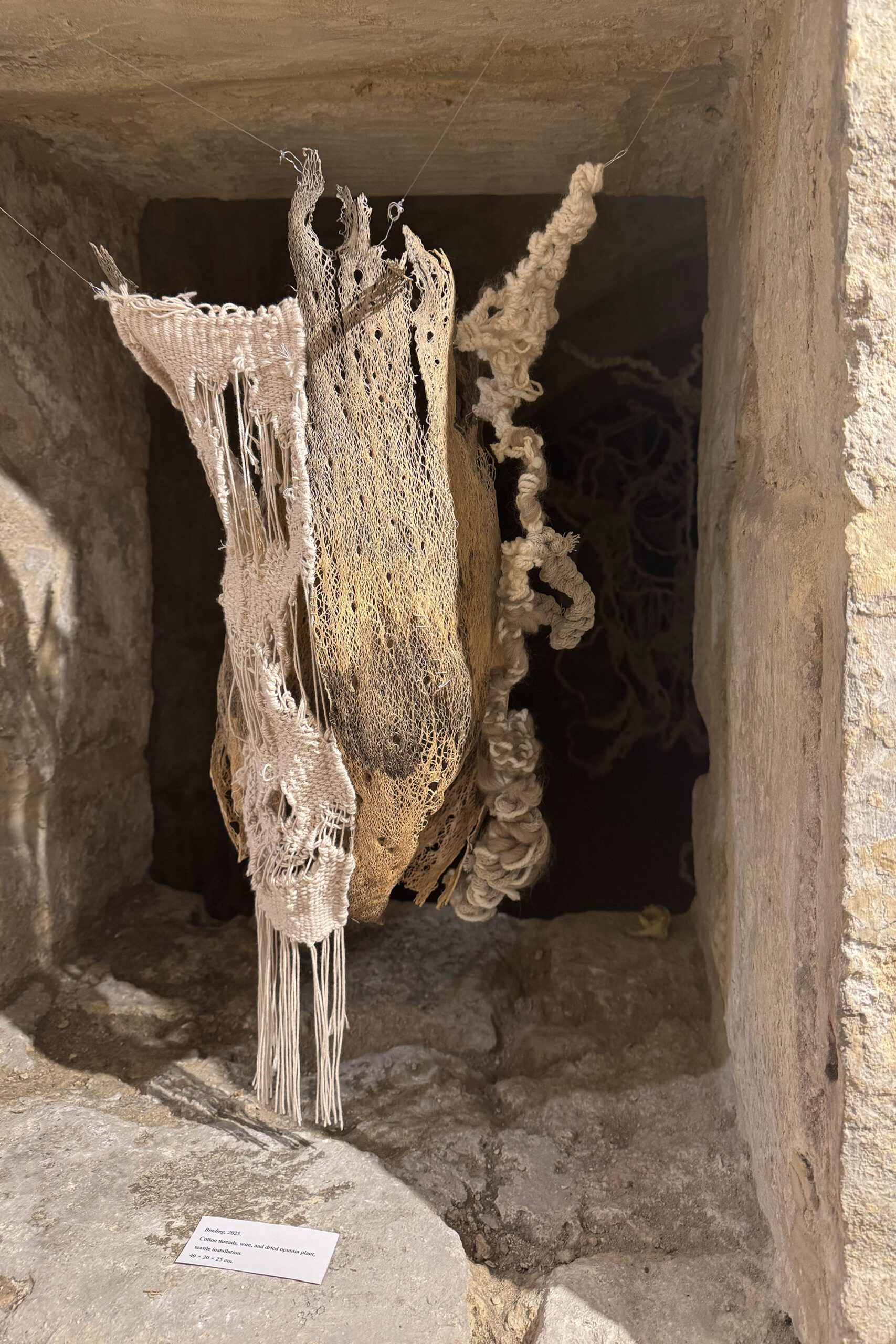
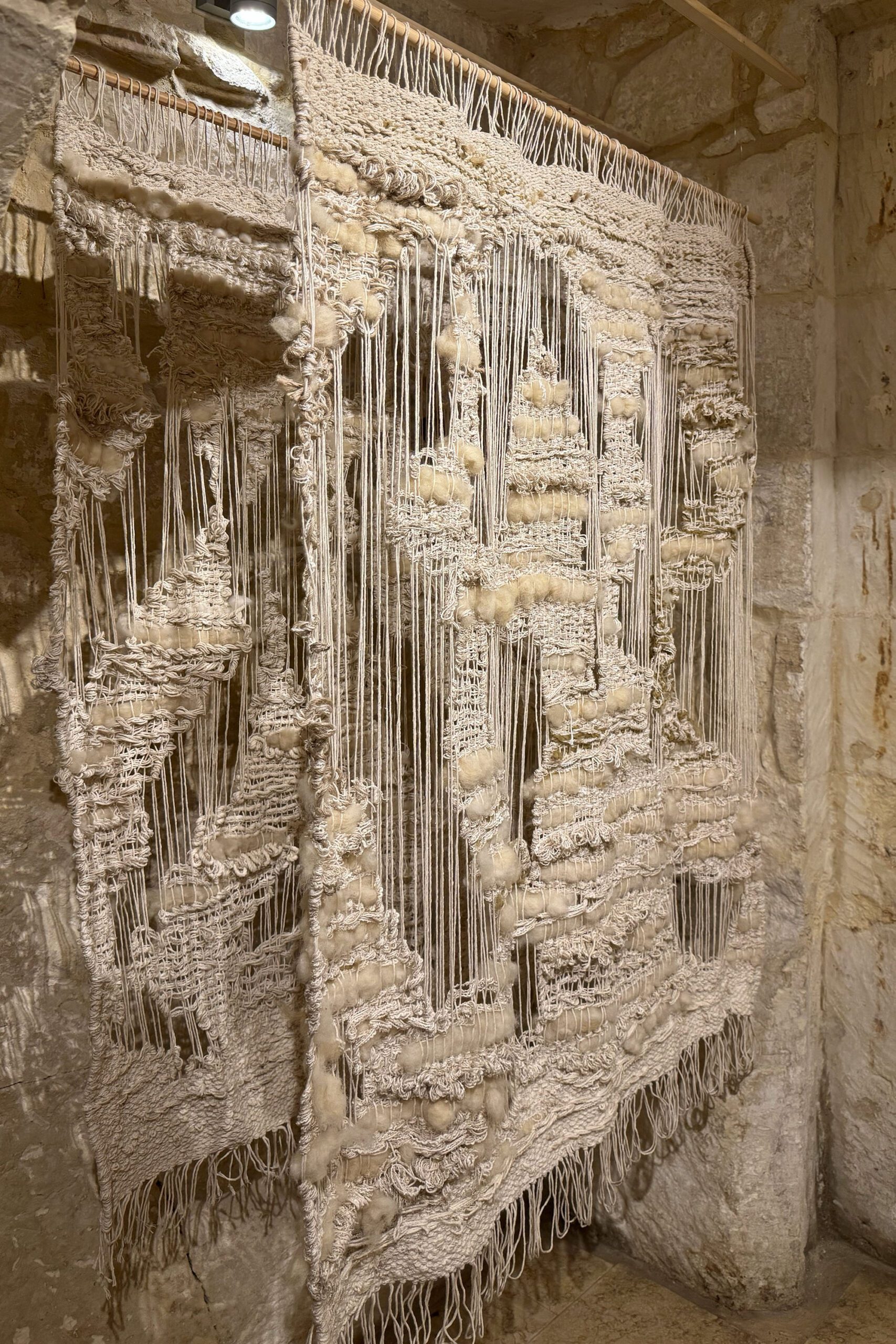
(Photos courtesy of Matylda Maria Jarosz)
In part, Jarosz brought traditional craft to Malta. ‘I’m from Poland; I was taught Polish traditions and techniques. I used a frame rather than a loom for weaving. I even brought some of my grandmother’s fabrics from Poland.’ Jarosz then interviewed Maltese artists and craftspeople to learn and integrate elements of their craft. ‘I was able to visit a workshop that was producing traditional Maltese lace, bizzilla. It was a privilege to be invited to that space. Hearing the bobbins over the sound of people speaking Maltese, being able to try their techniques, was a beautiful experience.’ The human element of Jarosz’s exploration was crucial – local ironworkers made canvas frames, and local farmers provided raw wool. ‘As I was making friends, people would tell me about Malta’s history, and where I might go next. They talked about Filfla’, Malta’s stark islet, ‘or the Dingli Cliffs’, where Malta’s strata are most exposed.
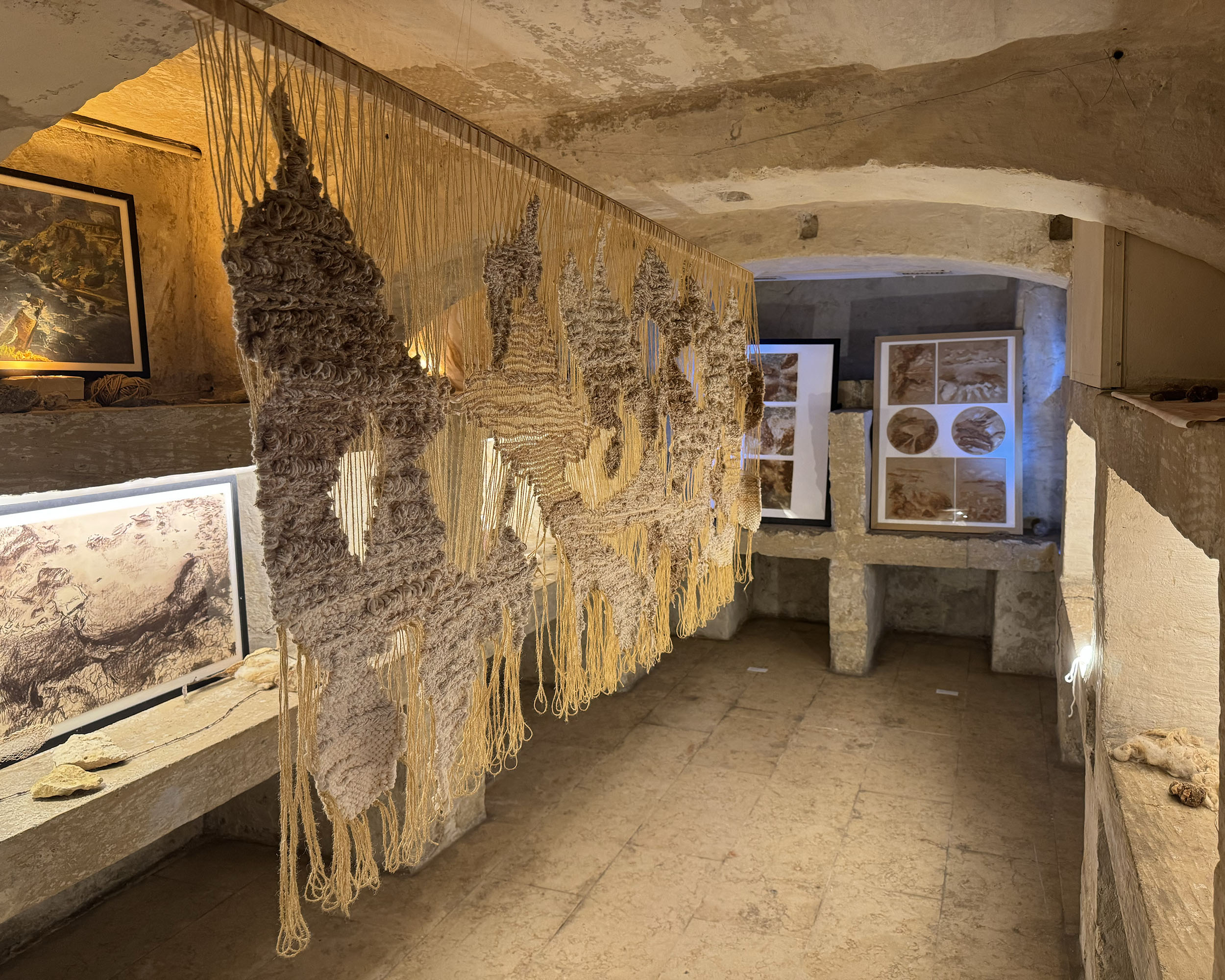
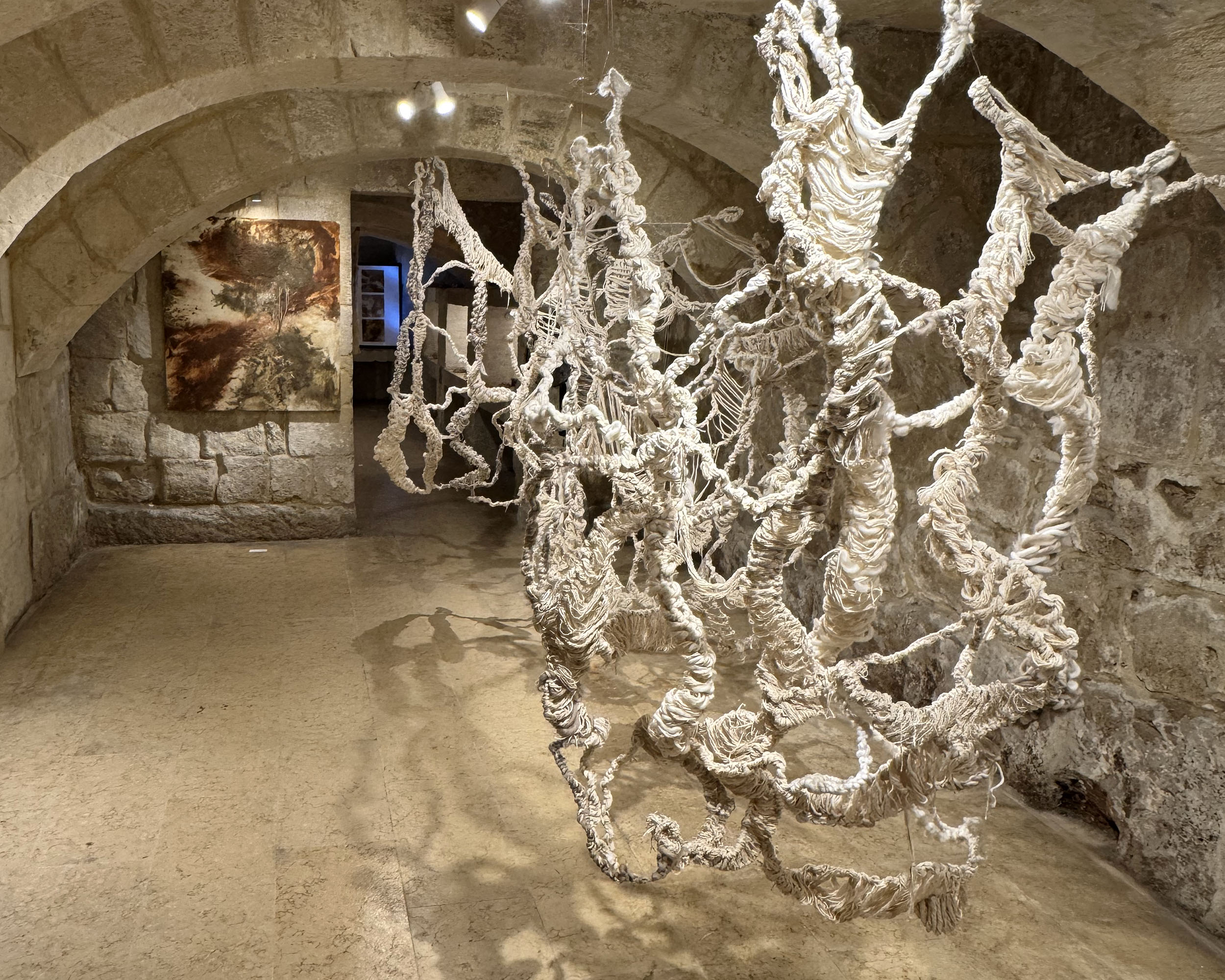
(Photos courtesy of Matylda Maria Jarosz)
Next Steps
Walking the Coastline has been displayed twice. ‘The first was an examination exhibition held in Ta’ Qali. The space was provided by the Faculty of Art and Art History within UM, through collaboration with Ta’ Qali, which worked very well because the space was quite large, with high ceilings.’ This gave Jarosz a degree of freedom in placement, and the hyper-minimal art-gallery interior was ideal for showcasing individual pieces. ‘But after the university project, I still wanted to exhibit it more to the public. I had the opportunity to collaborate with Malta Society of Arts (MSA), and they had a very different space available – the basement vaults of Palazzo de La Salle (Valletta) that used to be a wine cellar. It was the complete opposite to the first exhibition, a very small space with low ceilings. But because it’s an old building, all the walls were limestone.” Walking the Coastline is a love-letter to limestone. This new space created continuity between each piece, integrating them and adding new dimensions of colour and texture for the exhibition as a whole.
The MSA collaboration is another example of human connection proving foundational. Walking the Coastline is complete, but its ethos is extending beyond Jarosz’s master’s degree. ‘MSA and I are creating a couple of courses. One will be on Contemporary Weaving, in October. There we will be combining different traditions and techniques’ for weaving, knotting and textile-based craft. ‘The other will be on Sustainable Art, in November, which will allow me to share knowledge on using natural materials’ and provide an opportunity to discuss the ethos behind it. This interactivity is a natural evolution of Jarosz’s work. Walking the Coastline is an expression of seeing Malta for the first time. It is a deconstruction of visions familiar to locals but astonishing to newcomers. Jarosz’s courses, and the art they will produce, may have a touch of the inverse. They may express the familiarity that comes with learning a place, of integrating with it via quieter, but deeper, connections. That too, is beautiful.
Follow Matylda’s work on her Instagram.


Comments are closed for this article!