
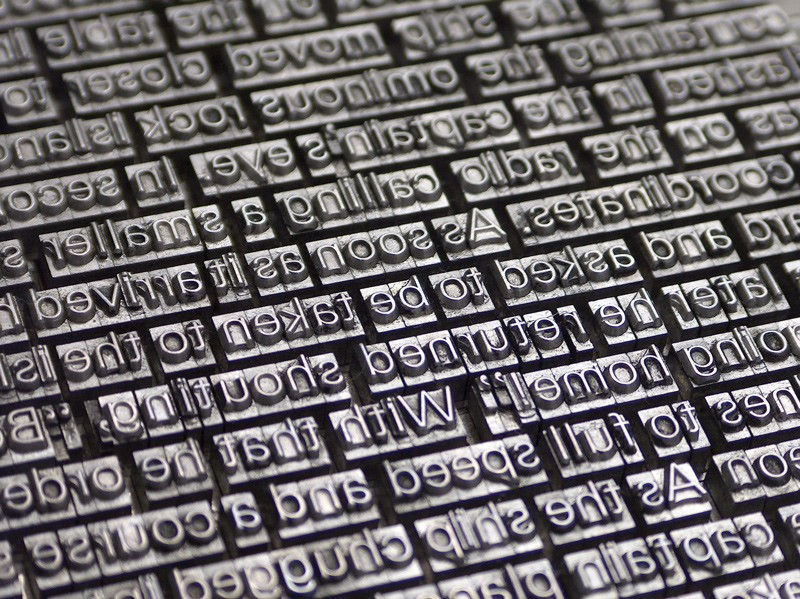
The Gutenberg printing press revolutionised the world in 1455. It brought the written word to the masses, though in its day critics thought it would corrupt language. Today, text and instant messages are the new technologies that critics are accusing of degrading writing.
Research from Coventry University shows that online chatting can improve spelling, questioning the popular mythology spread by the media. Building on this foundation, Lara Vella (supervised by Professor Sandro Caruana) studied online chatting extracts by Maltese secondary school students. She found some evidence which shows that students who chatted online for several hours had a lower spelling ability.
To measure chatting behaviour, she distributed a questionnaire to 205 Maltese secondary school students (95 males and 110 females, who were about 14 years and 5 months old). These students were assessed on their spelling by two different tests and an analysis on extracts of online conversations. In Malta, it seems that chatting might be linked to a lower spelling score in both Maltese and English. Chatting and instant messaging is normally assumed to be dotted with spelling errors and abbreviated words, like: u, lol, abt, c, msg, tks, rofl and others. Her study showed that only 16.21% of the words used included such alternative spelling. Stereotypical beliefs did not hold true and were clearly outweighed by normal spelling.
Taken together, the study clearly shows that the relationship between spelling and online chatting is not clear-cut. Vella cautions that other factors affecting spelling need consideration. Speculation about the effect of online chatting needs to be replaced by research aimed at separating fact from fiction. Research will allow strategies to be developed that help improve literacy for Maltese students in the online world.
This research was performed as part of a Masters in Education at the Faculty of Education.




Comments are closed for this article!