
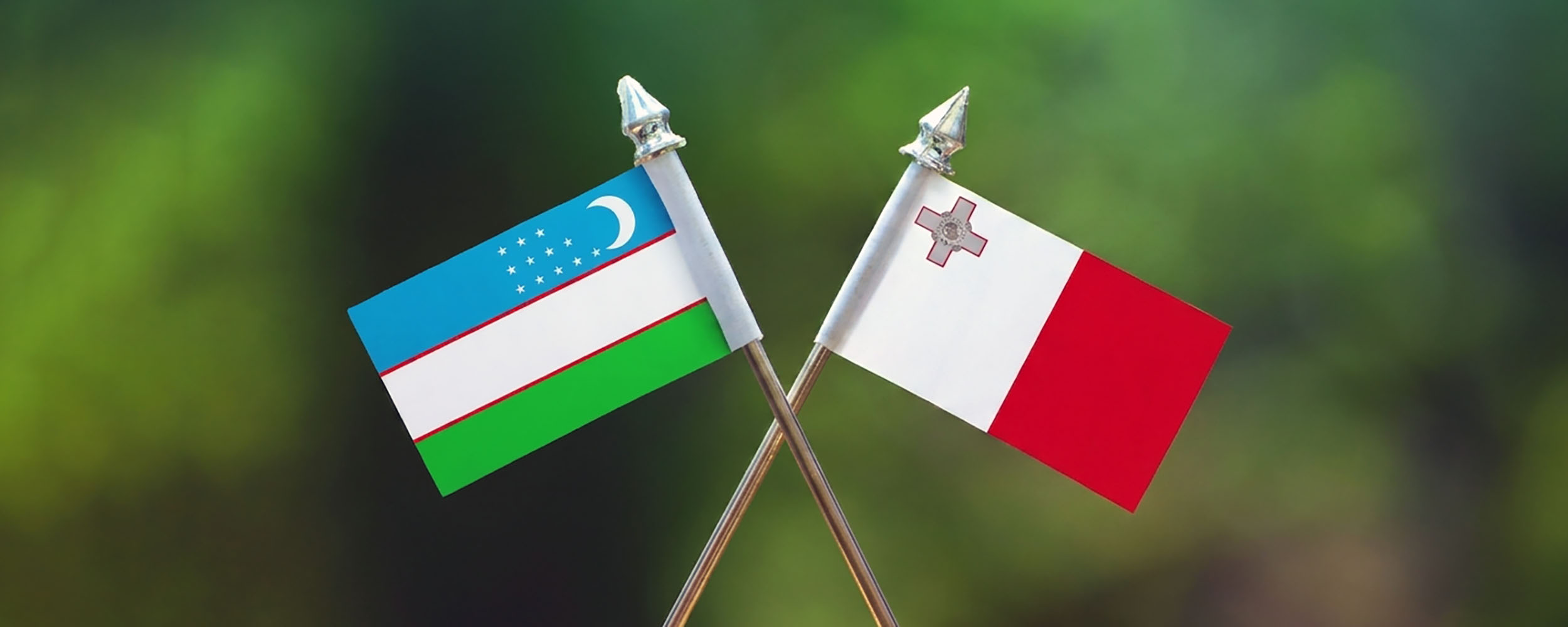
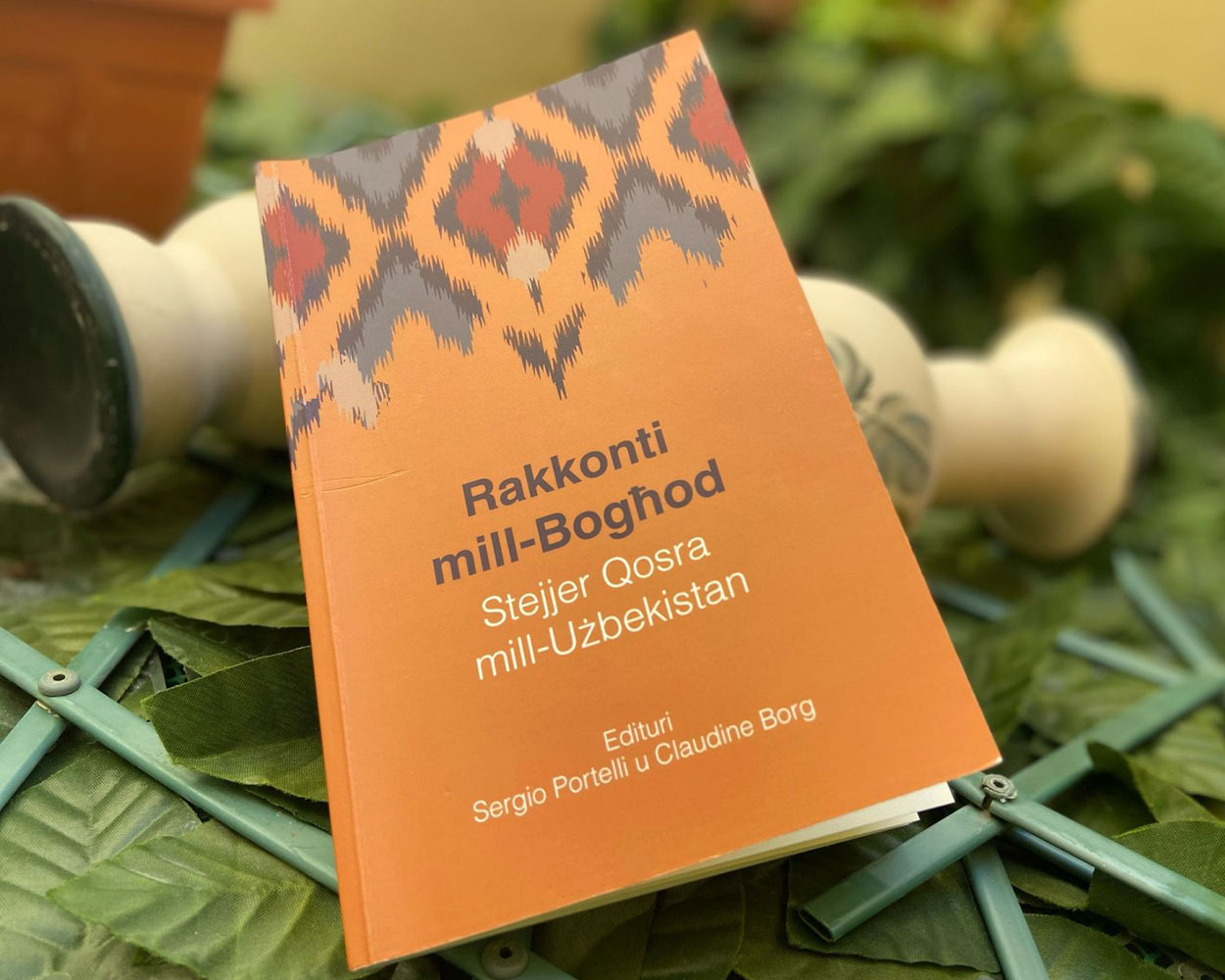
A joint effort between UM’s Department of Translation, Terminology and Interpreting Studies and Prof. Gulnoza Odilova, who heads the Department of Theory and Practice of Translation at Kimyo International University of Tashkent, has led to the production of Rakkonti mill-Bogħod, Stejjer Qosra mill-Użbekistan, published by Kite Group in March 2025. Funded by the 2024 Malta Book Fund, Prof. Sergio Portelli and Dr Claudine Borg edited the translation of ten classic stories of Uzbek heritage and folklore into Maltese.
The collaboration involved in Rakkonti mill-Bogħod, Stejjer Qosra mill-Użbekistan is extensive. For these ten stories, all originally written by ten different Uzbek authors, ten distinct translators were involved. Prof. Sergio Portelli translated the first story – Khayriddin Sultanov’s ‘Kemm Int Sabiħa, O Ħajja Kiefra!’ – while the rest were translated by alumni of the department. Portelli then carefully edited the collection alongside Dr Claudine Borg.
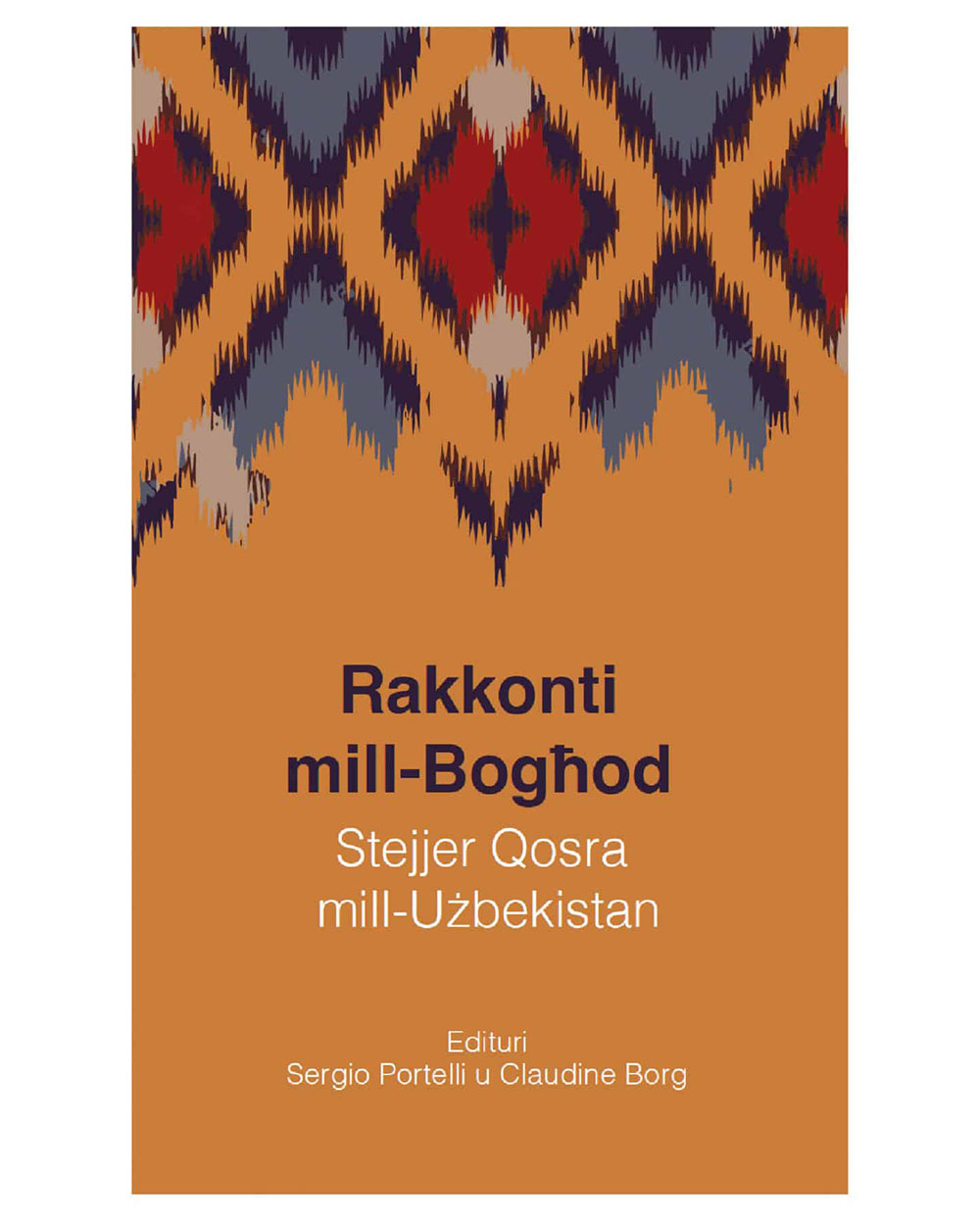
However, the stories were not translated from Uzbek into Maltese directly. Instead, they were translated from a pre-existing English translation of the stories recommended by Prof. Gulnoza Odilova – A Collection of Uzbek Short Stories, translated by Dr Mahmuda Saydumarova. Saydumarova was especially helpful, not only in securing permission rights for the works to be translated, but also in ensuring that all translations produced maintained the cultural authenticity of the source material.
Rakkonti mill-Bogħod, Stejjer Qosra mill-Użbekistan was published in 2025 by Kite Group (Cover image courtesy of Dr Claudine Borg)
Still, collaboration – or rather, connection – takes on a deeper meaning when considering the setting of these stories. Borg states that one of the aims of Rakkonti mill-Bogħod is ‘to introduce this faraway culture that most Maltese are not familiar with’, thus making ‘the unfamiliar more familiar’. Yet, very interestingly, Malta and Uzbekistan have more in common historically than one would initially think. For instance, just as Malta has a postcolonial background, Uzbekistan has also been under the rule of different imperial forces, such as the Persian Empire at around 550 BC and the Russian Empire from the mid-1800s until 1991. This unfortunately came with its downsides. Napoleon robbed Malta of much treasure during his brief yet careless reign. Uzbekistan faced economic misfortune and political and religious persecution under the Soviet regime. Colonialism has brought both peoples to cherish their independence and the birth of their respective nation state.
The collection therefore conveys a consciously sombre, repressed sense of self through its characters. This would be something the Maltese are familiar with in their own stories. Qamchibek’s death in Sultanov’s Kemm Int Sabiħa, O Ħajja Kiefra! recalls the Koranta’s fate in Oliver Friggieri’s Il-Koranta. While Qamchibek is shot by the Russian soldiers, Koranta is neglected by her own people – both share a fate of total abandonment. The corruption that follows with how Yepifanov is ‘rewarded’ for Qamchibek’s death echoes a shady way of doing business and the inhumane treatment of people present in Vincent Vella’s Bl-Irħis.
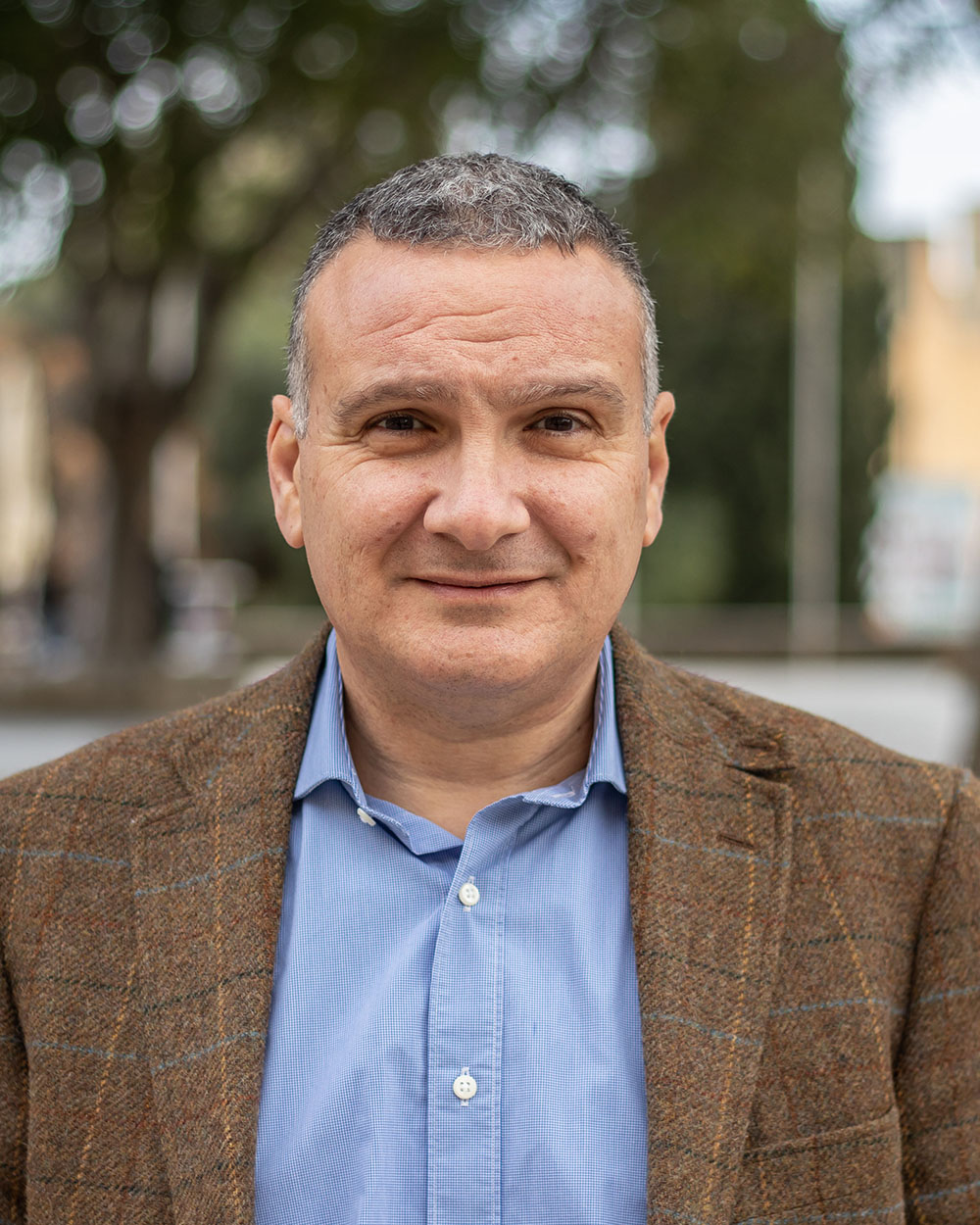
Prof. Sergio Portelli is a full professor in the Department of Translation, Terminology and Interpreting Studies (Photo by Sarah Moffett)
Portelli notes that Saydumarova aimed for her English translation to ‘deliver to Anglophone readers the culture, traditions, and mindset of the Uzbek population’. Rakkonti mill-Bogħod follows a similar goal – by translating these stories into Maltese, Borg and Portelli shine a light on similarities shared between the two nations, particularly with regard to struggles they have faced. Having both experienced their fair share of conflict and subjection to colonial powers, it is apparent in both Maltese and Uzbek literature that the people of the two nations share the same ideals: a desire for a good life, freedom to live as one wishes, and most importantly, independence.
Today, Malta and Uzbekistan have both gained independence and emancipated themselves from their postcolonial pasts. Malta achieved independence from Britain in 1964, but for Uzbekistan, their independence would come later with the end of the Soviet Union. Nevertheless, they have since seized the opportunity to better their quality of life. Modern Uzbekistan has utilised its strategic position in Central Asia to increase international cooperation, enhancing areas of culture, conservation, and education as it pursues economic improvement. This same description could be applied to Malta, swapping the strategic position in question for southern Europe, rather than Central Asia.
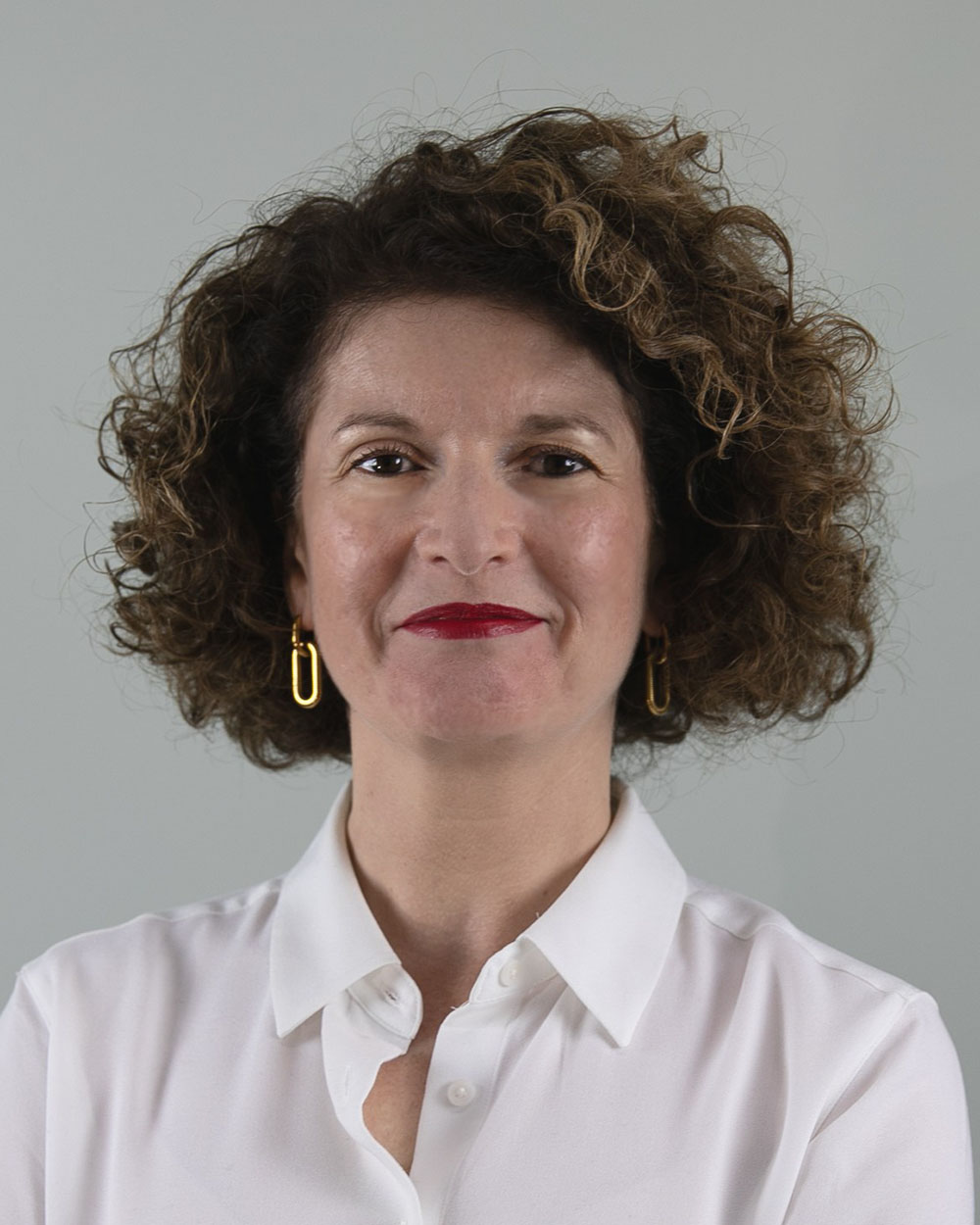
Dr Claudine Borg is a senior lecturer and currently heads the Department of Translation, Terminology and Interpreting Studies (Photo courtesy of Dr Claudine Borg)
It seems therefore that both countries are working diligently to bring about that same innocent tranquillity and peaceful life that emanates in the atmosphere of Pierre J. Mejlak’s Jacqueline, or Normurod Norqobilov’s Il-Qawsalla, translated by Nadine Micallef. Today, what concerns Uzbekistan and Malta seems to be a pursuit of prosperity and optimism. In this way, the two countries can hopefully move away from the difficult times of the past towards better opportunities. The core importance in this journey, though, is to ensure that each country’s identity is nurtured and, perhaps more importantly, protected.
Literature is the Key to Freedom
Portelli understands that each country and its people ‘are always living with the geopolitical consequences of the power at play’. When a nation is controlled by powers that ‘dominate all aspects of life’, certain negative feelings of restriction can become ‘ingrained in the identity and spirit of the nation’. What was especially tampered with for the Uzbek people was their language – the crux of any people’s identity. The mix in Maltese is readily apparent in its varied vocabulary, originating from other languages like French, English, Italian and even Arabic. This mix is a by-product of colonial rule. However, in the case of Uzbek, colonial rule had a far more drastic impact than borrowing words from other languages. At times, their language had to undergo almost total change to satisfy different colonial rulers. The Uzbek alphabet changed completely twice (first from Arabic to Cyrillic, then from Cyrillic to the Roman alphabet), all within the brief period of a century.
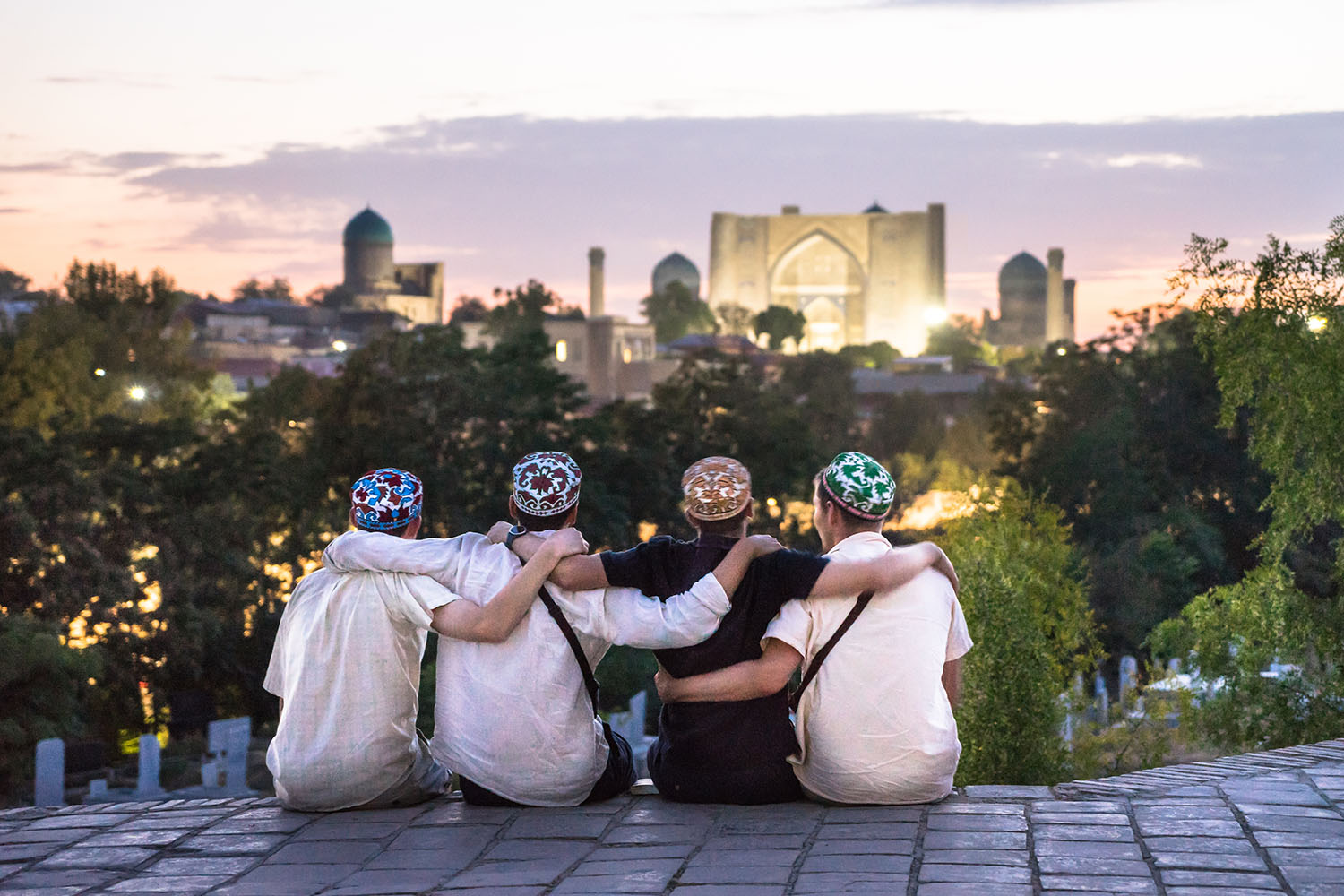
Still, no matter how the Uzbek language is suppressed, the stories and voices of their authors persist. The introduction to Rakkonti mill-Bogħod notes that the novel, as a genre, is of great importance in Uzbek literature. It explains that each story reflects the long history of Uzbekistan and its people. And now, through Saydumarova’s work and the present translatory efforts of Borg, Portelli and their team of translators, Uzbek history, identity, and the psyche of its people can be carried beyond the country’s borders to other nations. In this way, foreign readers may reflect on the events and themes portrayed, potentially finding themselves relating to Uzbek identity and heritage.
Translating as an Emerging Profession
In translating these stories, Borg and Portelli hope to ‘present a broad overview of Uzbek identity’, emphasising a crucial point: a distinctive link exists between an island in the Mediterranean and a vast country in Central Asia. This is an impressive feat, showing patience and skill in preserving the essence of a text as it is repackaged for more readers to enjoy.
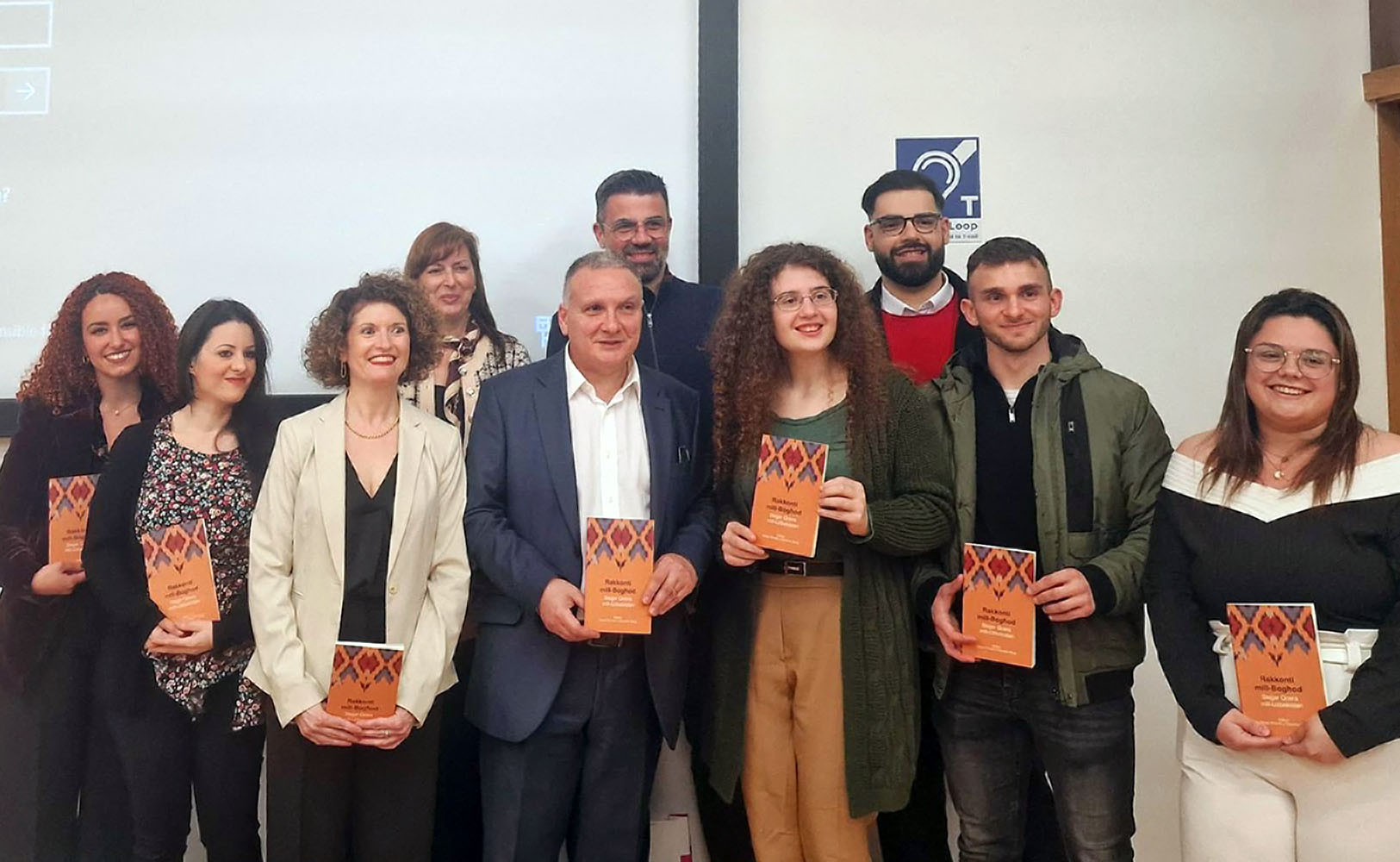
To learn more about what goes into translation and potential career prospects, UM’s Department of Translation, Terminology and Interpreting Studies offers two postgraduate courses: a Master in Translation and Terminology Studies, and a Master in Interpreting Studies. The former allows prospective students to specialise in three modes of translation: audiovisual, technical, or literary. These are offered in a variety of language combinations, such as English to Maltese, English to French, and English to Chinese, among others. The latter, on the other hand, trains students in interpreting – a skill in high demand in today’s globalised world.
Prof. Sergio Portelli and Dr Claudine Borg would like to thank the Malta Book Council for funding and Kite Group for publishing Rakkonti mill-Bogħod, Stejjer Qosra mill-Użbekistan.
The team of translators included: Dr David Aloisio, Nathalie Bezzina, Maria Victoria Bonello, Sephora Francalanza, Daniel Gatt, Hermanda Gauci, Jude Magro, Céline McCarthy, Nadine Micallef, and Prof. Sergio Portelli.
(Photo by Ilona Sciberras)



Comments are closed for this article!