
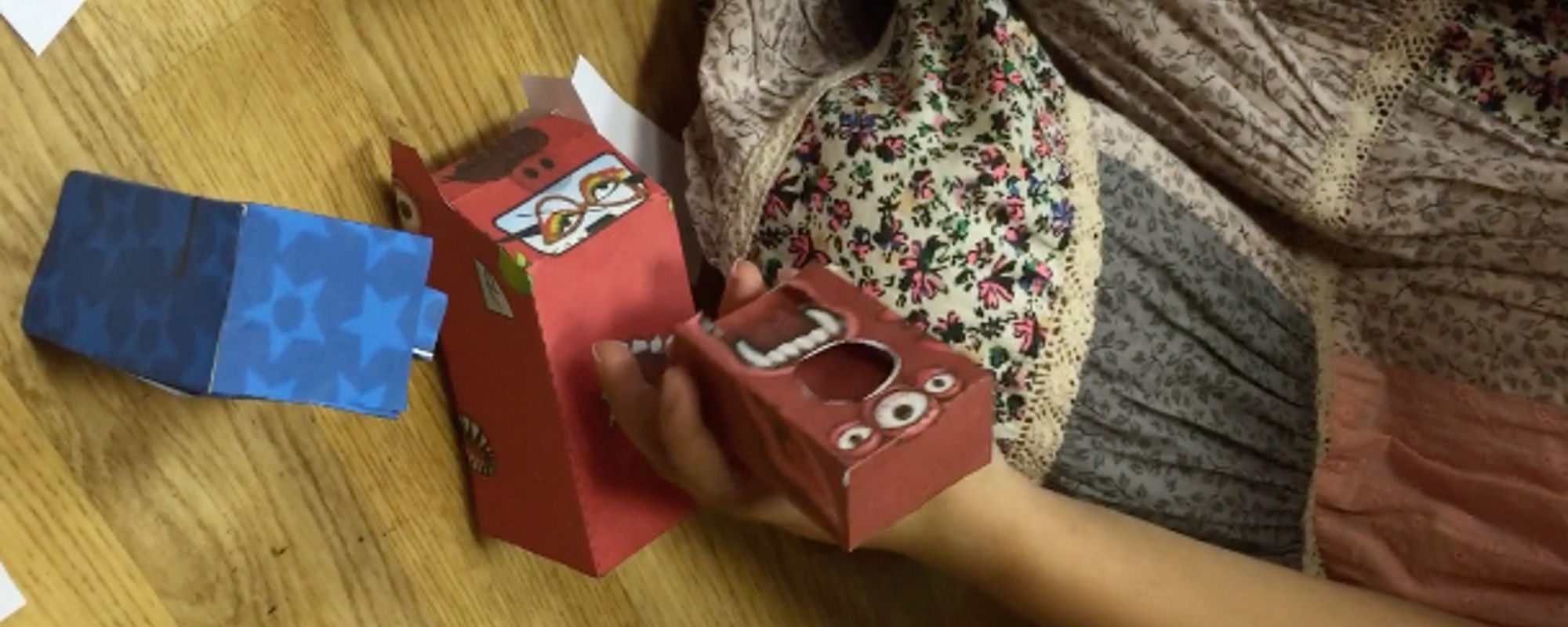
Don’t judge too soon when children enjoy various online tools, says researcher Dr Velislava Hillman — and brings data to prove it.
‘I want to become a YouTuber, says Edgar (not his real name), a nine-year-old (at the time of this research) from a Maltese private primary school. ‘I really like that people will watch me. It will be quite fun.’ The next moment, the boy, much taller than the rest of his classmates, expresses sadness. ‘I’d like to keep it a secret,’ he suddenly adds, ‘Because they [his parents] won’t want me to be that, so when I grow up they will not have any choice but will comply. I think they want me to be a scientist or [something] like that…’
Edgar is not alone in exemplifying how networked technologies become a conduit of possibilities for young people. Children use their devices to learn how to draw, read about diseases and warplanes, make miniature movies about things they find funny, or sing along to favourite artists. To make sense of children’s networked worlds spanning across classroom walls, I (Dr Velislava Hillman) carried out a qualitative nation-wide research in Malta during 2014–2016. I wanted to find out how seven- to ten-year-olds use digital media inside and outside classrooms, and how parents and educators react.
Most researchers focus on networked technologies’ effect on children’s psychological and socio-emotional wellbeing and development. Knowing how much knowledge there is on the risks, I focused on the opportunities and developed a theoretical model for fostering creative production, which could easily be applied to the mainstream ICT curriculum.
Technological skills or Contextual Learning
Children enjoyed richer digital experiences outside of school. The majority used technologies to consume and interact with existing content rather than create new material for personal projects. Yet children still found the range of experiences and opportunities to follow personal interests to be wider after school hours.
Most digital media practices at school focus on basic reading, writing, mathematical, and technical skills. Children described their digital media use in class as ‘practising maths’, ‘reading comprehension’, or ‘making PowerPoints’. The national ICT curriculum learning objectives are about picking up skills like emailing and content creation. However, they have no context where these skills could be applied.
Digital devices create opportunities for children to independently navigate through content, tools, ideas, and networks in unprecedented ways. Many parents and educators interviewed for this study tended to lump activities together without looking into the nuances between one game and another, one YouTube video and another. However, research has demonstrated that entertainment and educational uses of games and videos overlap, so it is very important that parents play the video games their child enjoys to realistically evaluate the qualities and skills many games provide. Those parents who haven’t tried the games are more likely to misjudge these activities.
Similarly, taking selfies may seem like an idle act or, as a private school teacher put it, ‘[Children] just don’t care — [because the ability to take pictures] is there, and because everyone else is doing it. They don’t really know what they’re doing’. A school principal called today’s generation ‘a culture of narcissists’ because ‘they’re learning from these YouTubers that it’s all about the looks’. However, taking selfies can be a meaningful experience for a nine-year-old. To a ten-year-old boy from a state school, the photos he takes serve a purpose: ‘I use [them] for skins I create on Minecraft.’ Others take selfies and pictures of things they like so they can share them with friends and relatives.
Few parents and teachers positively valued the way children used networked technologies. Most leaned towards negative perceptions. Meanwhile, when given the opportunity, children fondly discussed what activities like taking selfies meant to them. This does not disregard the concerns of spending time on social media and the risks children can experience online. My research highlights the child’s voice and perspectives on the things they enjoy doing, how, while caring, adults may misinterpret this voice and the opportunities digital technologies can provide. AI-based technologies are enabling ‘personalised’ learning, as the software automatically adjusts instructions to user behavior. Educators and policy makers should ensure that these tools are developed while taking into account students’ voices and perspectives.
As Edgar dreams of becoming a YouTuber and making people laugh for a living, he keeps learning new skills. It would be wrong to focus only on the risks and omit the opportunities. My research led to several policy pointers that should help educators shape schooling into a more student-led, self-directed, and contextualised learning experience. Children will seek out networking opportunities in any case, so they need to be equipped with socio-technological skills. While critics argue that simply leaving children to their own devices can lead to mindless tinkering and boredom, this research highlighted the important role of teachers to steer students in their creative production with digital tools and to enable their greater potential. Acknowledging children’s perspective is the first step.
Full study forthcoming as a monograph as part of the Journal for Education Research Monograph Series. Contact Prof. Carmel Borg, Editor, Education Research Monograph Series (ERMS) at carmel.borg@um.edu.mt



Comments are closed for this article!