
Emmanuel Bonnici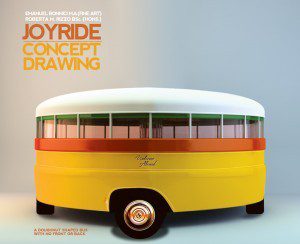

Scientists consulted: Roberta M. Rizzo
Location: St George’s Square
Sponsor: St James Cavalier
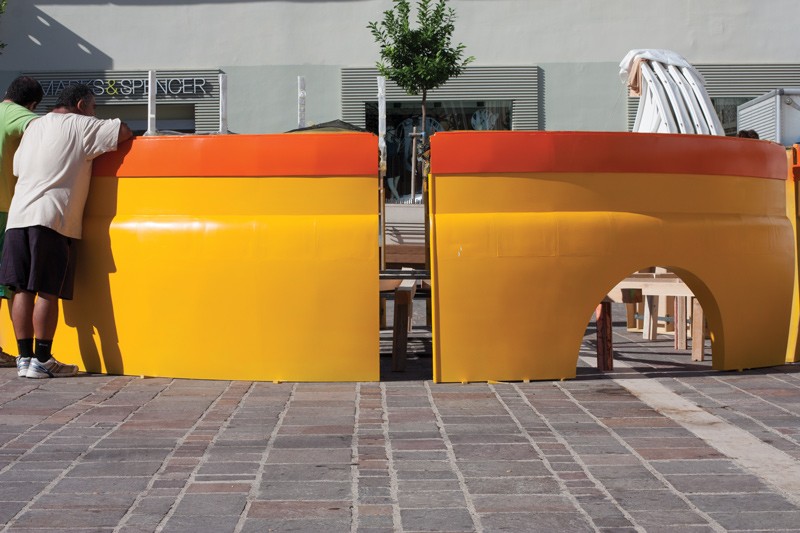
Imagine a bus with no front and no back, no doors, just windows. Joyride is a doughnut-shaped bus built to scale — if buses were round.Circles have fascinated humans since the dawn of recorded history. The Greeks saw it as the perfect form, pushing science, agriculture, and technology. Our fascination with circles has also led to conservative ideas that have held back science and technology.
The dual aspects of circles are intrinsic within Joyride. Genetic engineering is a powerful and frightening new technology. It involves the insertion, or manipulation, of DNA — the stuff of life. Joyride provokes viewers to ponder about what tinkering we should do. Through gene therapy, genetic engineering could cure incurable diseases from cancer to Alzheimer’s, but it could also lead to ecological devastation through certain genetically modified organisms.
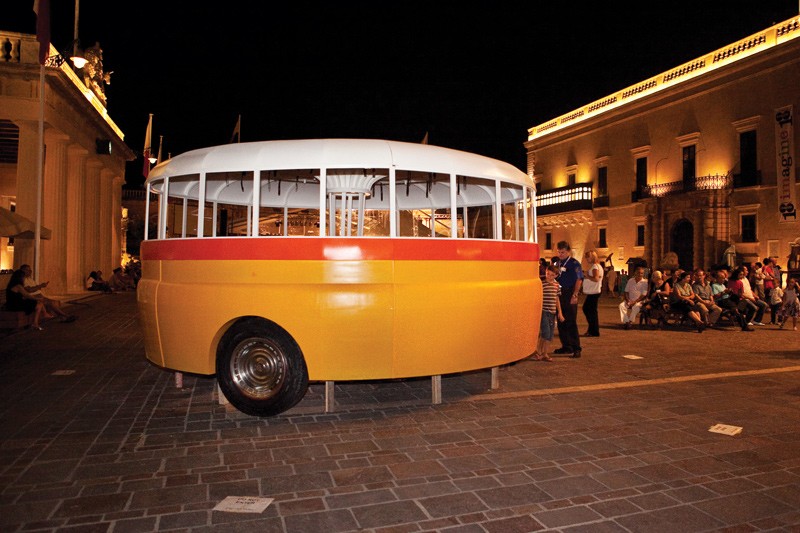 A circle’s qualities could also be perceived in research. Is all research needed and useful? Does some research simply go round in circles? It is up to the viewer to decide, whether the circle is futile or a masterstroke of nature and science.The artwork also challenges its viewers to question our cultural identity by re-modeling the familiar Maltese Bus. The artwork is a means of facing both our personal and cultural identity face on. Never obliged to change our views, but offered the chance to play out the full extent of our relationship to such ‘cultural images’.
Part of Science in the City, Malta’s Science and Arts Festival
For more stories click here


Comments are closed for this article!