
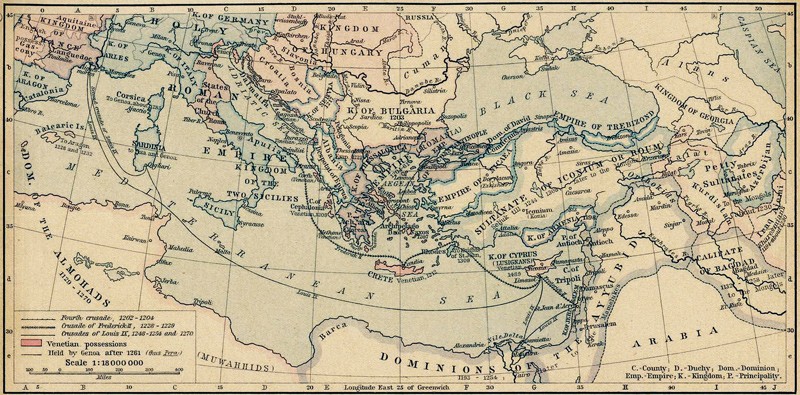
Islands have played different and unique roles throughout history. The process of decolonisation, starting in the late 50s, led to a proliferation of small island states. These new independent nations sought to develop their own foreign and security policies.André P. DeBattista (supervised by Dr Isabelle Calleja Ragonesi) studied International Relations in Malta’s history to examine the role of small island states in regional and global security. He found that small island states reinforce security and can stabilise regions.
Due to their geography, small islands can wield disproportionate influence. They may serve as military outposts and control waterways used for commerce, trade and defence. However, islands can still be vulnerable, weak and externally manipulated. For millennia, Malta has been fought over by regional powers for purposes of trade and defence. In 1964, for the first time in its history, Malta became independent and could chart its own political trajectory. Despite political independence, it was and still is reliant on other states.
Throughout its history, Malta has played an important role in the provision of regional security. It had a strong influence in both the Cold War period and also after its recent accession to the EU. DeBattista believes that Malta is well positioned to spearhead research on small islands; “as a small island state, Malta managed to adapt to different circumstances and challenges. It excelled both within its region and in the international community. This success should encourage us to conduct further research in this niche area, in order to provide solutions and policy options to other small island states.”
This research was undertaken as part of a Masters of Arts in International Relations.



Comments are closed for this article!