
by Matthew Cesareo from the Gadgets team
msn, hi5, and Myspace started the social media trend. Facebook turned it into a frenzy with over 1 billion people signed up. This could be, perhaps, because Facebook enjoyed the birth of smartphones and super-fast mobile Internet making the service available virtually anywhere.

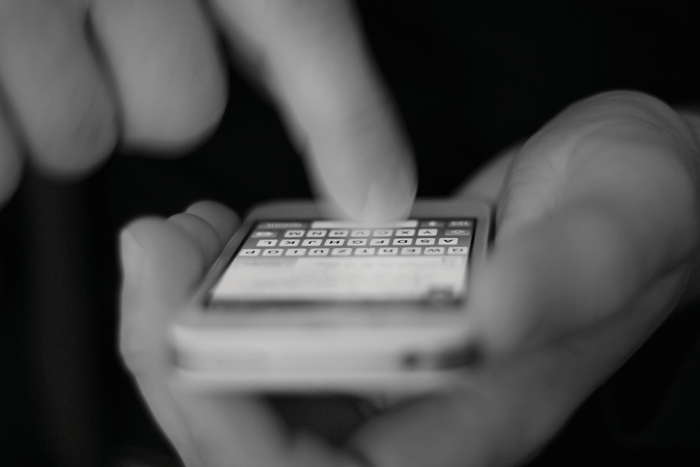
But with such facilitated tiny, portable devices, I can’t help but think that these innovations have hindered social interaction. I mean, yes, one might argue that you can now find your great uncle Larry from Australia and communicate with him whilst sipping a coffee at the Sliema Waterfront. Then again, is that what people are using facebook for? All I can see are people stuck to their devices posting images of food and statuses about how happy they are, whilst ignoring their significant other sitting across the table who, incidentally, is doing the same thing.
Go to a restaurant and all you can see are people glued to their phones. Families sit silently around the table on tablets or mobiles, ignoring the fact that they are wasting their precious life playing Candy Crush, or browsing funny cat photos.
As time goes by, things will become worse. Smart clothing, smart jewellery, and smart appliances hit the shelves late this year—you can actually get a facebook-ready fridge. Are these actually necessary? In five years time, people will spend less time going outside or travelling, and spend their lives living a fictitious virtual life in a bid to boost their ego.
I don’t mean to sound like a grumpy old man, or like the guy from the Pepperridge Farm advert, reminiscing over simpler times. Truth be told, when I was young I used to be glued to my consoles—the Sinclair and SNES (Super Nintendo Entertainment System)—but I always made sure to spend proper time with my family and friends, and enjoy the great outdoors. •



Comments are closed for this article!