
In 2025, the European Research Area (ERA) initiative is celebrating its 25th anniversary since its launch to advance Europe’s research and innovation vision and ambition to become a global leader in scientific progress.
The European Research Area (ERA) aims to align the research policies and funding programmes of European countries to create a single, borderless market for research, innovation and technology across the EU. This alignment is intended to strengthen research and innovation, make Europe more attractive to scientists, increase excellence in the research sector, and advance European competitiveness.
The ERA initiative has made progress on many fronts, resulting in notable achievements since its launch, from the development of European Research Infrastructures and the launch of joint research initiatives to the reduction of barriers to researcher mobility and facilitation of open and collaborative knowledge exchange. The ERA initiative is effectively operationalised through a dedicated policy framework comprising governance (the ERA Forum, the European Research Area and Innovation Committee (ERAC), and the Council), a pact for research and innovation in Europe, and a Policy Agenda with concrete actions.
Advancing the ERA Initiative: INSPIRING ERA
The Horizon Europe Programme supports ERA through a range of initiatives, including the WIDERA programme, that focus on exploiting and valorising results relevant to its Policy Agenda. One such project is INSPIRING ERA, which launched in December 2023 for a three-year period, with the aim of raising awareness, sharing best practices, and supporting the speedier adoption of advancements made under the umbrella of the ERA. It supports the ERA through four main objectives:
- promoting the successful implementation of the ERA Policy Agenda;
- communicating results and lessons learnt from ERA Action;
- using mutual learning and cooperation; and
- building an ERA community and establishing a national and European brand.
The project supports researchers, research and higher education institutions, and innovation actors in understanding and applying the outcomes of the ERA. It helps turn policy into practice by connecting those who create ERA policies with those affected by them. The main targeted outcomes are to provide an information hub on ERA, foster a community of practitioners, organise mutual learning workshops and events, and develop policy recommendations and guidelines.
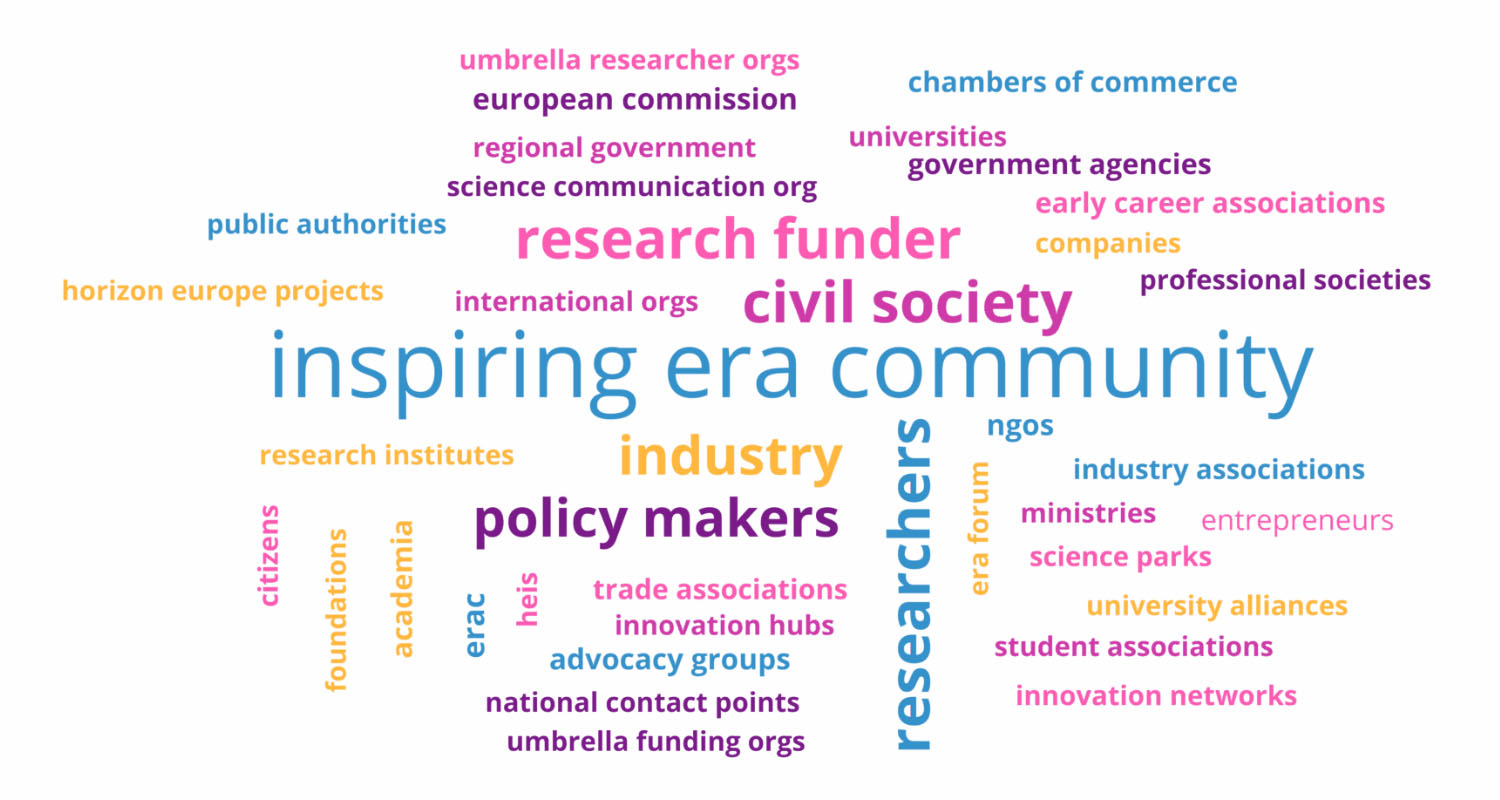
The German DLR Project Management Agency leads INSPIRING ERA, with a consortium including the Austrian Research Promotion Agency, the Research Council of Lithuania, the National Centre for Research and Development in Poland, the Slovak Centre of Scientific and Technical Information and Vetenskap & Allmänhet in Sweden, as well as two associated partners, the Slovenian Ministry of Higher Education, Science and Innovation and Xjenza Malta.
INSPIRING ERA works with the dynamics of the ERA initiatives, adding value by ensuring an optimal flow of information through close and regular interactions with the European Commission, the ERA Forum, and the new ERA Policy Platform. INSPIRING ERA works with EU Member States, Associated Countries, and stakeholders to implement the ERA Actions outlined in the ERA Policy Agenda, in collaboration with the European Commission.
The ERA Policy Agenda adopted in 2022 focuses on 20 ERA Actions. The first nine actions address the market, the next five address the twin challenges, the next three target amplified access, and the final three actions concern investments. This entails that every year, the INSPIRING ERA project supports the ERA Policy Agenda by carefully selecting a core set of ERA Actions where it will take action.
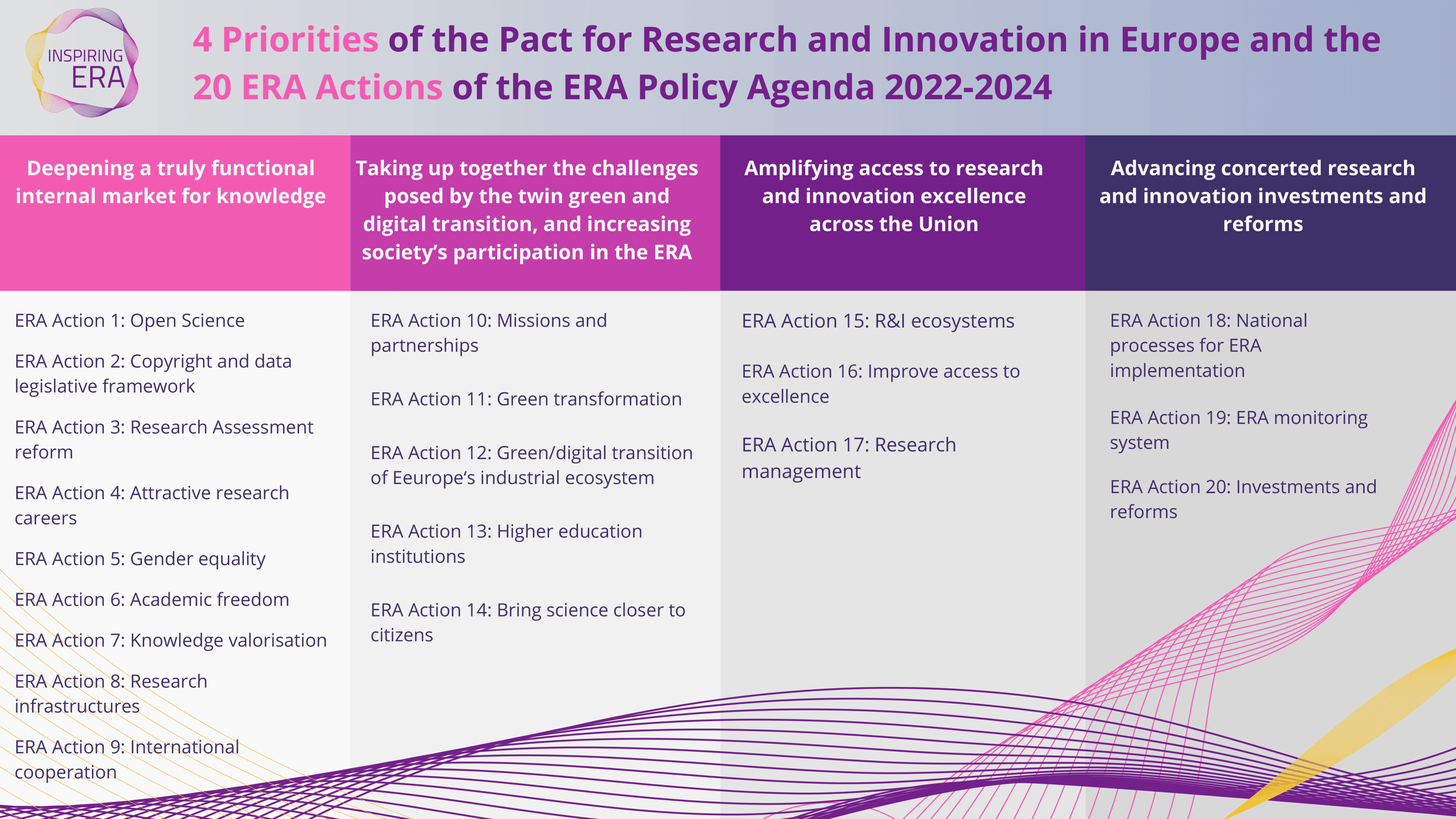
(Image courtesy of INSPIRING ERA)
In 2024, the focus was on three key actions: Action 3 – reform the assessment system for research, researchers and institutions, Action 4 – promote attractive research careers, talent circulation and mobility, and Action 14 – bring science closer to citizens. In 2025, the focus is on Action 1 – secondary publication rights, research exceptions to EU copyright rules, Action 2 – new data access rights under the EU’s data and digital legislation, Action 5 – inclusive and intersectional gender equality in R&I, and Action 6 – safeguarding academic freedom in the ERA. The project is currently in the process of selecting additional topics for 2026.
Xjenza Malta is committed to raising awareness on the ERA in Malta and Gozo, and its dissemination role within the INSPIRING ERA project aligns well with this commitment. The ERA Platform, in particular, offers useful tools and resources to support advances in the implementation of the ERA Actions. If you are interested in this project and connecting to the ERA Community, visit the INSPIRING ERA website for more information.
INSPIRING ERA is hosting an online event to explore how national and EU-level frameworks are monitoring progress. Learn from experts and practitioners how equality data can drive lasting change. Register here to join the event on 29 October 2025.
INSPIRING ERA is funded by the European Union’s Horizon Europe research and innovation programme (Grant agreement No. 101131556).




Comments are closed for this article!