
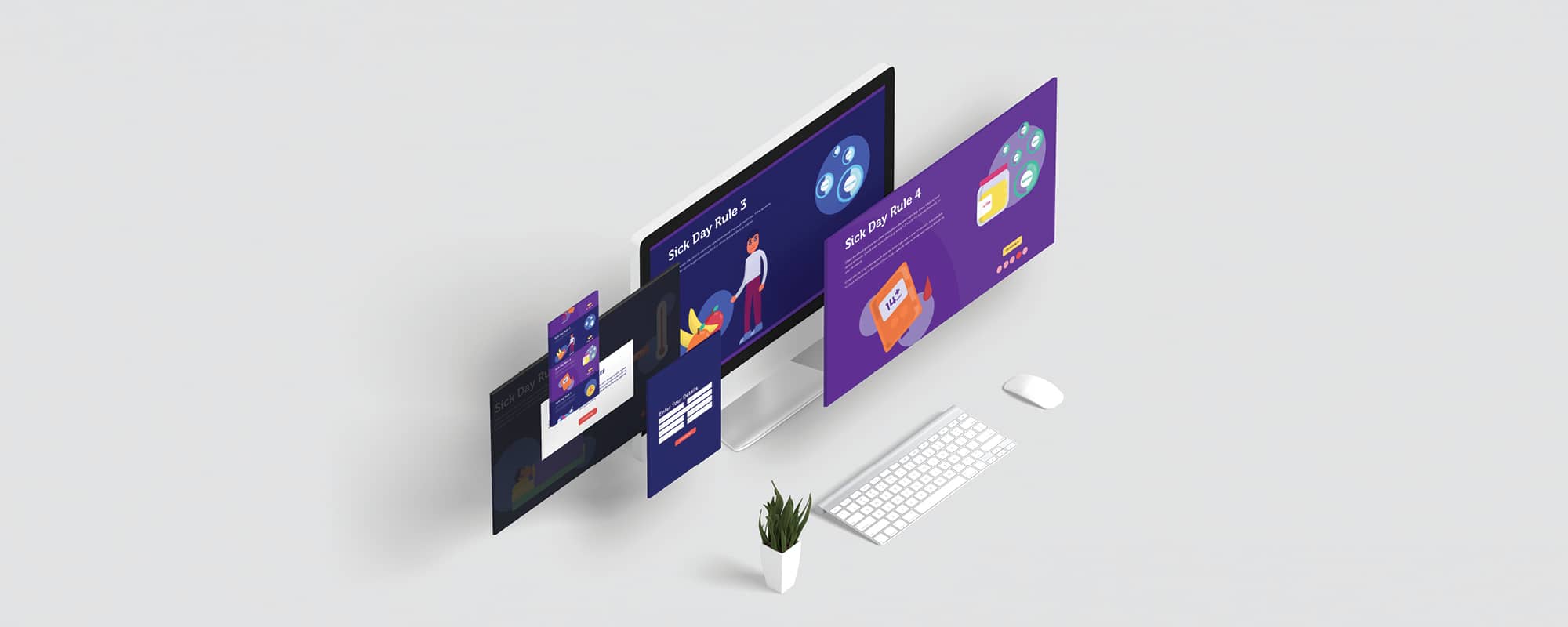
How do you help children adjust to living with diabetes? For Clayton Saliba, a Master of Fine Arts in Digital Arts graduate, the solution lies in the palm of our hands. By combining digital arts and medical information, Clayton developed Digitus, an app designed to help children better understand diabetes symptoms.
‘Ever since I was a child, I always enjoyed doing what I love, all while helping people as well. I feel that that’s where my inspiration for Digitus came from,’ explains Clayton.

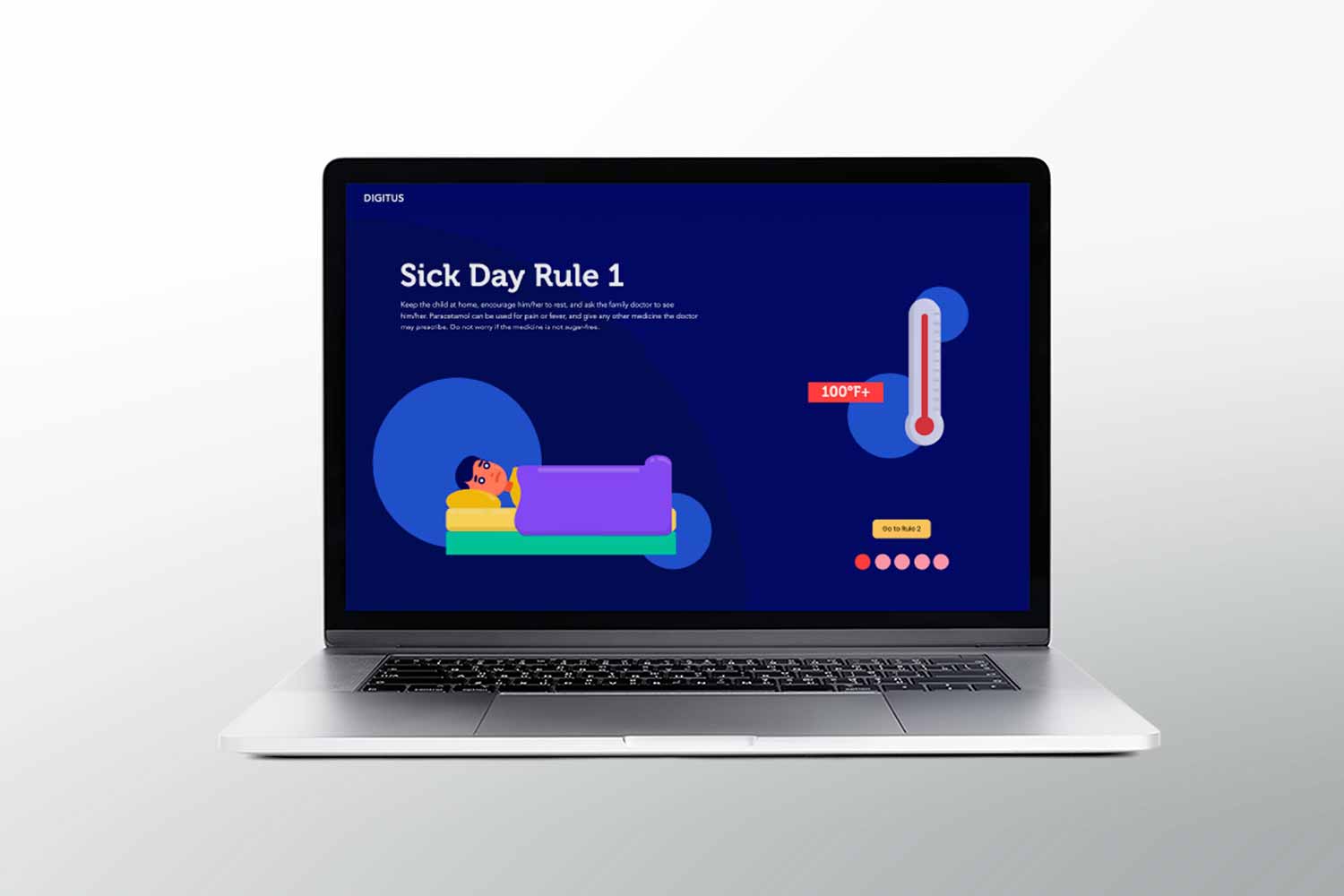
Digitus can be accessed on both desktop and phone. It starts out by asking the user to input their name, age, date of birth, and to choose their avatar, much like a videogame would. The choice of avatar also changes some aesthetic details throughout the app, creating a dynamic experience.
As Clayton points out, cartoons and avatars are appealing to children. Besides adding a personal touch, they add a face to a product, especially when they resemble the user’s appearance.
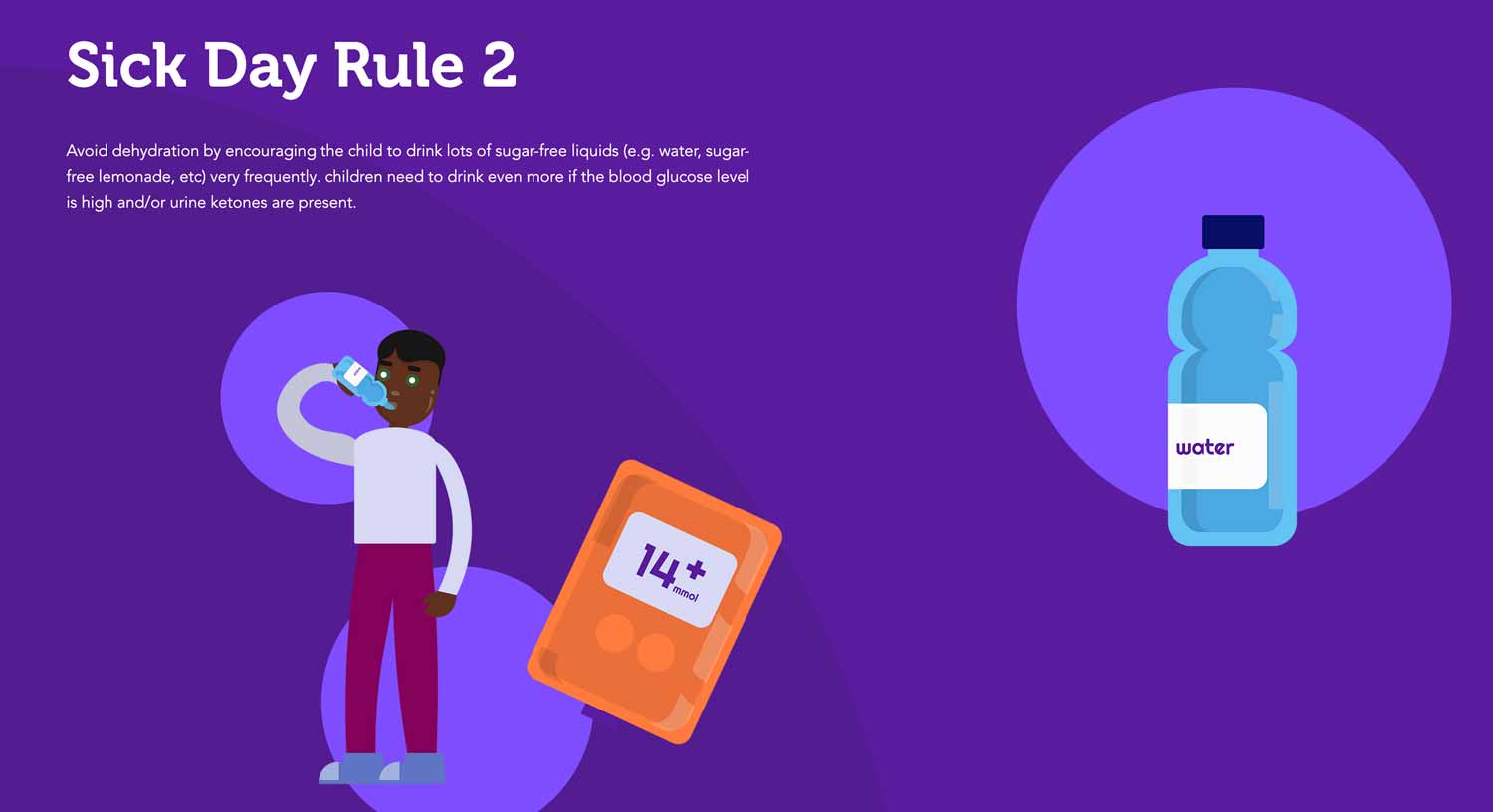
The avatar can be personalised to suit how the child perceives themselves. Whether it’s the length of their hair, their skin tone, or their eye colour, the customisation helps the child to relate to the app. When the child chooses an avatar, the character in the scenes changes to reflect the child’s look. This entices them to engage and participate with the information given to them.
Before settling on the final design, Clayton analysed several popular cartoons and illustrations such as Invader Zim, Teen Titans Go, and Dexter’s Lab. Clayton noted that they all use vibrant colours, and have a flat character and environmental design. Dark, yet colourful, background block colours create a contrast with the light and vivid characters. These types of design elements help children focus on the characters.
The creation of the avatars were easy for Clayton. The challenge was gathering information on diabetes. Originally, he wanted to ask people who had the condition. Due to data protection and ethical issues, he was advised to ask caregivers and healthcare workers rather than people diagnosed with the condition.
Another hurdle Clayton needs to overcome is language accessibility. Digitus is currently in Maltese and English. Clayton wishes to make Digitus available in even more languages; he also wants his project to be a part of something bigger. Not just for diabetes, but also for other diseases such as asthma or cholesterol, as well as for psychological conditions, such as depression and anxiety. Apps like Digitus are trying to help people become more aware about their body and the signs they give us. These apps are trying to help us better understand our body’s warnings, raising awareness in both the individual and their friends and family to help tens of thousands of people in Malta who have diabetes.



Comments are closed for this article!