

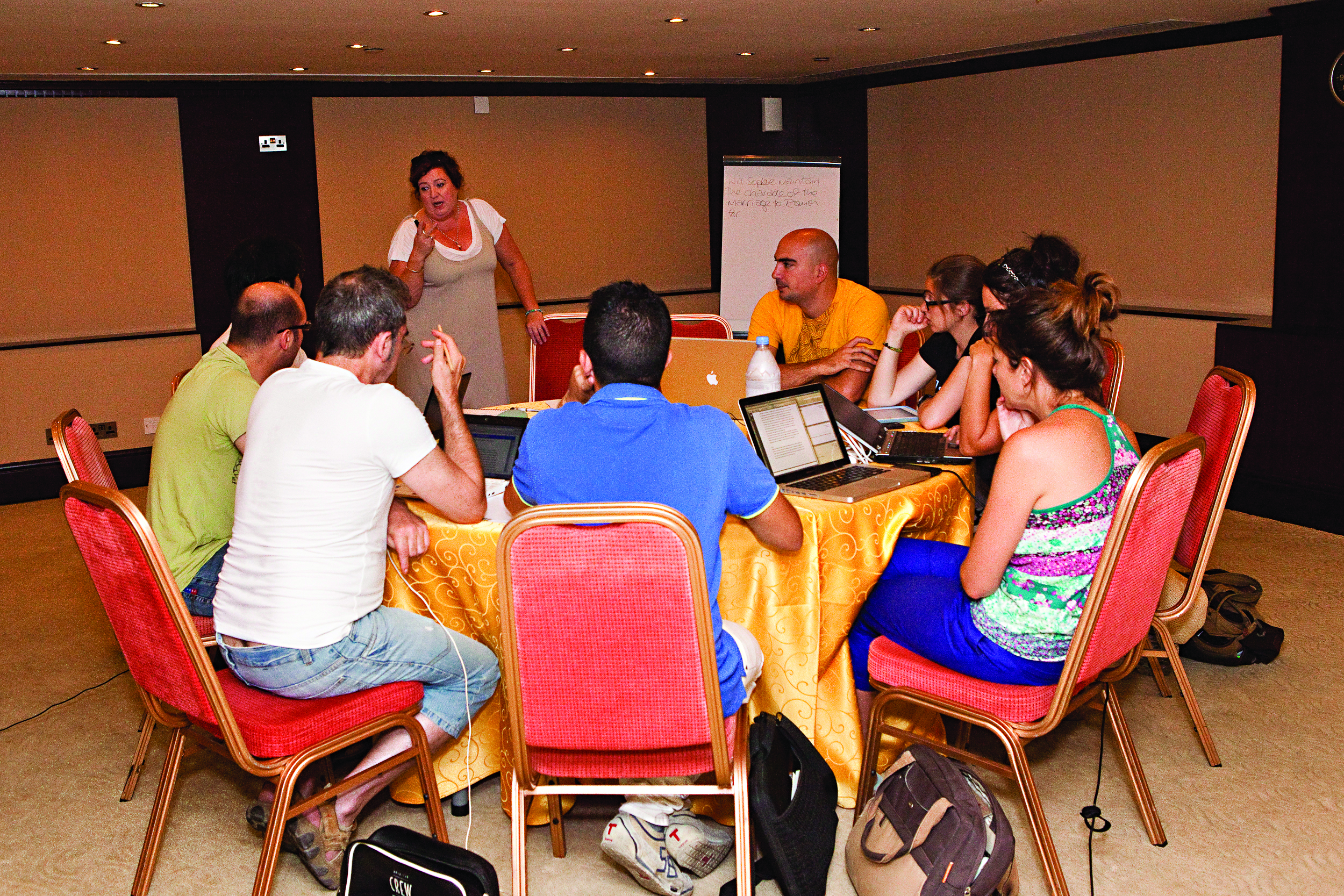
Earlier this year, the Valletta 2018 Foundation invited three tutors from the University of California to Malta to teach an intensive two-week course on screen-writing called Story Works to aspiring writers and producers. Two of the participants of the course, Kenneth Scicluna and Marta Vella fill us in on their experiences.
Marta Vella:
Attending Story Works was a golden opportunity, I still have to pinch myself to make sure it was real sometimes. To think I was taught by an Emmy Award winner and successful screenwriters is incredible. This is such a crucial period for our country, going through so many changes and fast developments both culturally and artistically. Such a course really helps take Maltese writers to another level. Thanks to it, I now understand that one’s background or resources have nothing to do with one’s ability to weave great stories.
The course not only equipped us with the tools needed to write a great script, but it also opened our eyes to a world of possibilities. I had looked at our little island as hindering opportunities but I now realise that it’s a little gem of untapped potential.
Kenneth Scicluna:
Story Works helped re-align my sights on my approach to film. It encouraged me to see my work from a different perspective. It also offered a sheltered environment of mutual understanding, trust, and cooperation amongst the attendees, which made it easier to give and receive criticism. The mentoring process steered clear of dogma, and marked a few signposts to guide one’s journey — the route to each point was, and still is, up to each writer to take. If anything, the course was also an exercise in building enough confidence to eventually adjust the signposts themselves.
My hope is that this initiative will be repeated, not only to provide continuity and help foster the seeds sown, but also to provide a structure which younger writers could look towards as a significant step in their development, channelling time and energy into the writing and the creation of tangible outcomes.
Story Works offered 24 individuals an opportunity to consult and learn from some of the best screenwriters around, namely David Howard, Mary Kate O Flanagan, and Martin Daniel. The programme aims to develop ideas to a professional level and leave with a tangible product in hand — a powerful story with the potential to cross borders. This programme is founded on an approach to screenwriting developed by Frank Daniel, who pioneered ‘The Sequence Approach’



Comments are closed for this article!