
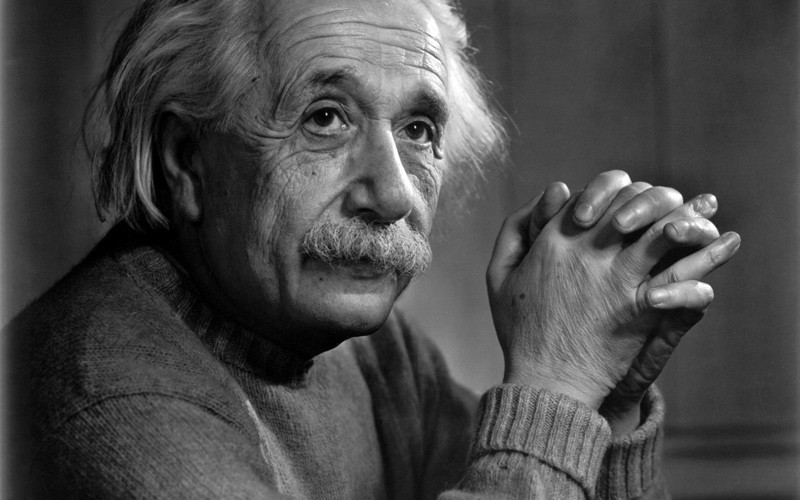
Probably not. It has been misattributed to Einstein to explain his great intelligence. The idea being that if only we used more, we would unlock the powers of our mind, become mathematical geniuses, perhaps even become telekinetic. Unfortunately, even when we think we are being lazy, like sleeping, our minds are quite busy.
Is all hope lost? Are we stuck with the intelligence we have? Probably a good education does not hurt and cognitive scientists have identified two methods that can push our brains further. The first involves focus. By concentrating on a single task, you can use more of your brain and tackle those complex mathematical formulae. The brain is usually very distracted.
The second strategy is optimisation. It involves letting your brain find the optimal solution by stopping to think and considering many alternatives before jumping on one answer.
Creativity can use a totally different ball game. Sometimes it is best to let your brain wander and simply consider all alternatives. Our brain is too complex for a few basic strategies to apply to all situations.



Comments are closed for this article!