
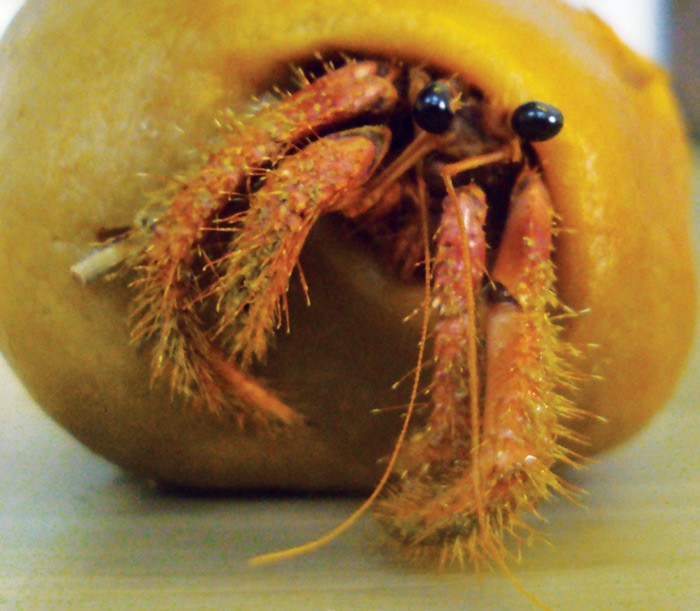

The deep sea covers 70% of the Mediterranean seabed, with Malta on the boundary of the Sea’s two main biogeographical sectors. Despite its importance in detecting changes in biodiversity, research on what lives in this habitat lags behind. Kimberly Terribile (supervised by Prof. Patrick J. Schembri) characterised the marine life on the seabed in deeper waters around Malta as a first step to find out what lives far beneath our waves.
Terribile studied species by-catch samples that were caught from depths of 72 to 201m during deep sea trawls from 2009–2011. These were part of the Mediterranean International Trawl Surveys (MEDITS), which is meant to assess the state of fish stocks around the Mediterranean. Over 100 samples were analysed, which showed that light and the grain size of the sea bottom greatly influence the species that can live there. The type and number of species found were different from distributions seen in the western Mediterranean. She also mapped which species groups were found where.
Taken together, these results show that the assemblages of species in the western Mediterranean are different from those in the central and eastern areas. The knowledge of these ecosystems is essential to properly manage these areas to maintain the health of fish stocks and for the management of the marine environment around Malta.
Mapping the deep sea holds strong commercial importance. By knowing where important feeding, spawning, and nursery areas may occur, fish stocks and other commercially important species can be properly managed to maximise the catch from the Mediterranean without causing the populations to collapse.
The study attempted to start understanding the deeper seas around Malta. Fish do not exist individually, they need to breed, shelter and feed on other organisms. To maintain commercial fish you need to understand how all species affect each other. The study is a first step in maintaining our seas for tomorrow.
This research was performed as part of an M.Sc. (Melit.) in Biology at the Faculty of Science. This project forms part of a collaboration between the Department of Biology and the Maltese Government’s
Department of Fisheries and Aquaculture.



Comments are closed for this article!