
Science and cinema are, in essence, two disparate fields. One relies on recording evidence and gathering data for research. The other captures visual and auditory art primarily for entertainment purposes. Yet something extraordinary is taking place inside the Electronics Systems Lab (Faculty of Engineering, University of Malta). THINK was invited to observe the on-going development of a high-speed performance video camera.
The MEMENTO Project is a tangible demonstration of the unusual and exciting combination of technology that serves both scientific and cinematic purposes.
With the ability to process up to 2,500 frames per second at Full HD in minimal light conditions, this camera is a piece of equipment that will not only ensure precise lab testing and analysis, but also offers high-quality image capabilities for videographers.
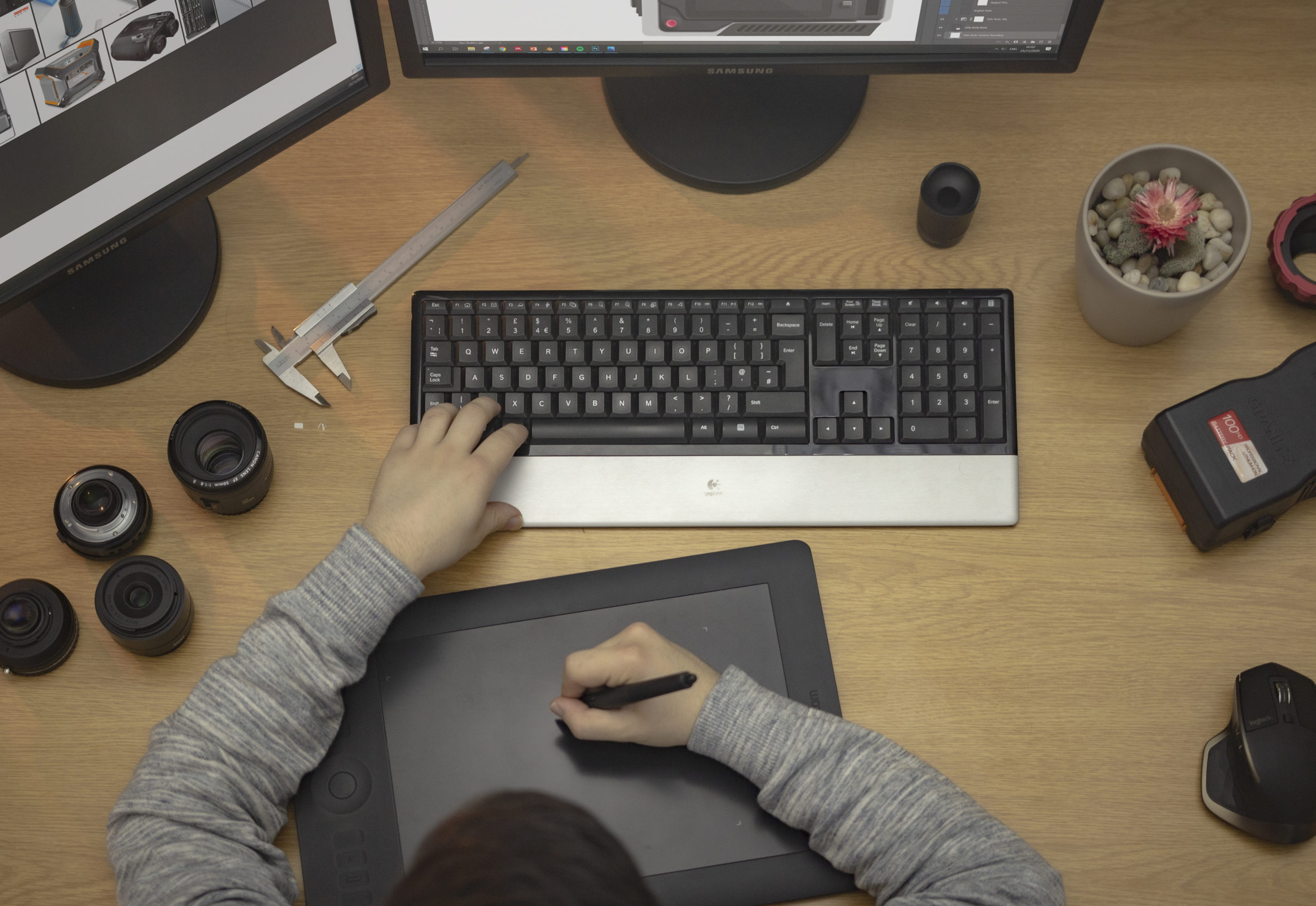
Mechanical Engineering Masters student, Alec Fenech, has been working on the design of the camera — ensuring a balance between the camera’s attractive aesthetics for video professionals, without compromising the high technical specifications required for scientific use. Co-supervisor Dr Ing. Marc Anthony Azzopardi, from the Department of Electronics Systems Engineering, asserts the camera’s wide range of capabilities, including frame interleaving, multiview imaging, and real-time stitching of video footage. ‘Such possibilities are appreciated in the creative media industry as well as in various scientific applications.’ Another innovation being developed is the inclusion of new sensor-cooling technology that will allow low-light observation without compromising image quality.
From the elaborate circuit boards and complex system design, it is easy to think of such a product being developed by some high-tech industrial company. Yet at the heart of all this lies the emphasis on collaboration. A deep passion for the project is evident in the way students, researchers, and academics spoke to THINK about this innovative camera, affirming how teamwork thrives across several departments, entities, and individuals with a like-minded approach towards research, development, and creativity. As Andre Micallef, co-supervisor to MEMENTO, admits: ‘Managing the interaction between technical departments was no mean feat. But once you see all systems working like clockwork, it’s all worth it in the end. We also learnt a lot from each other, with UM implementing industry workflows whilst the private partner (MST AudioVisual Ltd.) got to explore new experimental designs.’ Current collaborations also extend beyond Malta; the project is going international.
Project supervisor, Dr Ing. Emmanuel Francalanza, from the Department of Industrial & Manufacturing Engineering, confirms that ‘by bringing together a number of different engineering fields, this project enabled us to better understand the process of designing a product for different markets and users. This in turn helps us to improve both the design and the manufacturability of the components and product.’
Sure, Canon might be the go-to brand for shutterbugs, but the MEMENTO project might just blow them out of the water!
The MEMENTO Project secured close to €200,000 of funding from the Malta Council for Science & Technology through FUSION: The R&I Technology Development Programme.




Comments are closed for this article!