
Author: Cassi Camilleri
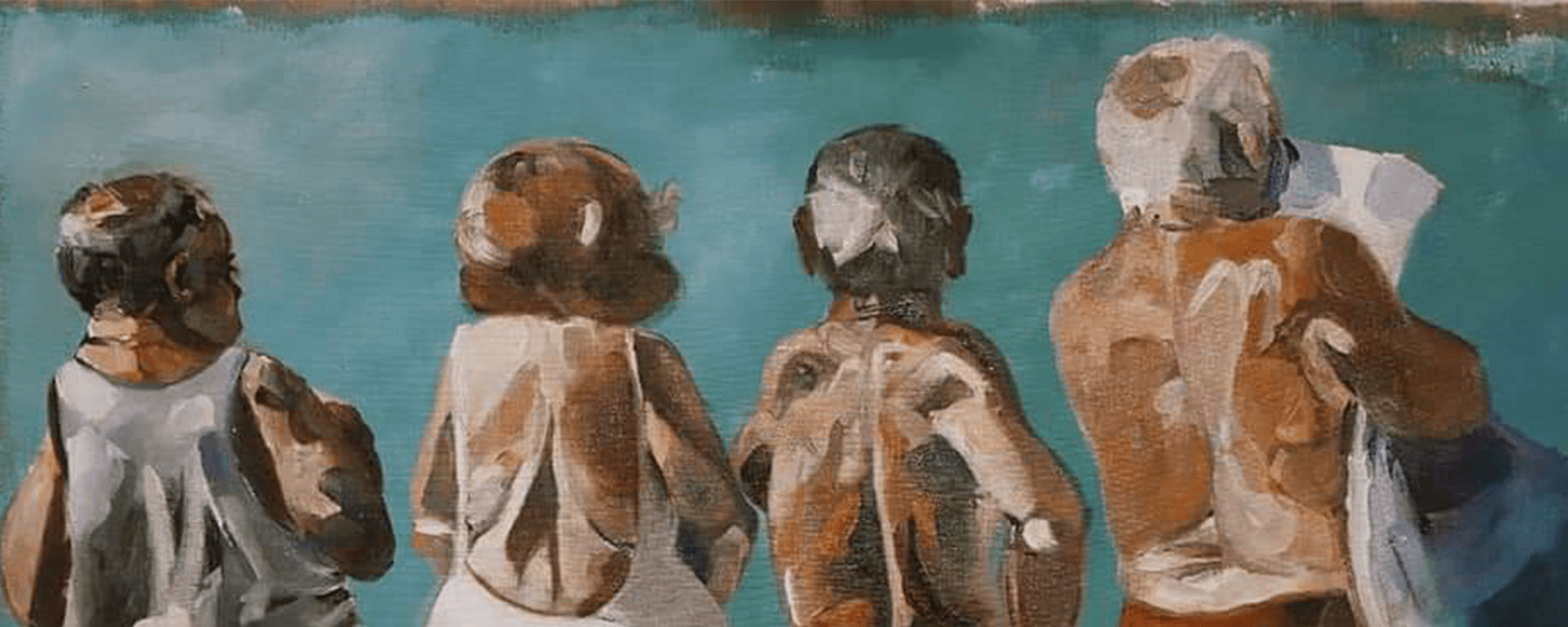
In formal art instruction, especially in contemporary art, the human body is but a mere shape and structure. Tina Mifsud’s latest series of paintings, collectively titled Plajja, takes the trope and turns it on its head. She uses forms not to create the perfect aesthetic, but to address issues of insecurity.
‘My latest beach collection was highlighting a positive body image and confidence, which is such an important topic of discussion these days. I wanted to make sure to highlight the beauty of all figures, shapes, and sizes, in a way I find so beautiful and fine,’ Mifsud says.
Her reference to ‘fine’ alludes to the artistic skills which are usually associated with Renaissance-era paintings. ‘It’s very important for [an artist] to experiment and use different methods and techniques to express themselves,’ Mifsud notes. ‘I think the idea of mixing [artistic] “eras” can be effective and fresh.’ And so she did. Her paintings blend modern Mediterranean visuals with the attention to the ordinary, evident in the classical Flemish masters.
As part of her artistic process, Mifsud also writes up her subjects’ profiles. ‘Profiling was not part of my training, it was just a technique I thought would be interesting to enhance my work, and I think it was successful.’ This attention to people’s personalities and characters allowed Mifsud to build colours and shapes around the lines of their bodies. ‘It happened pretty naturally, as I love speaking to people and knowing their stories.’ After all, she says, these people aren’t some ‘unrealistic, edited Instagram models. […] These people are us, now, and in the future!’




Comments are closed for this article!