
Why should public, private, and non-profit entities invest in research? Several reasons exist.
Firstly, research is key for our future. Research helps drive new knowledge that will improve the world. Society depends on research, across a wide range of disciplines, to strengthen our quality of life and sustain economic stability. By raising funds for University research the RIDT is surely not trying to reinvent the wheel. On the contrary, throughout Europe, the US and Asia public universities are enhancing their Government funding through various initiatives to sustain important research. Universities all across the globe appeal to public entities, private individuals and NGOs to fund research and invest in our society’s future.
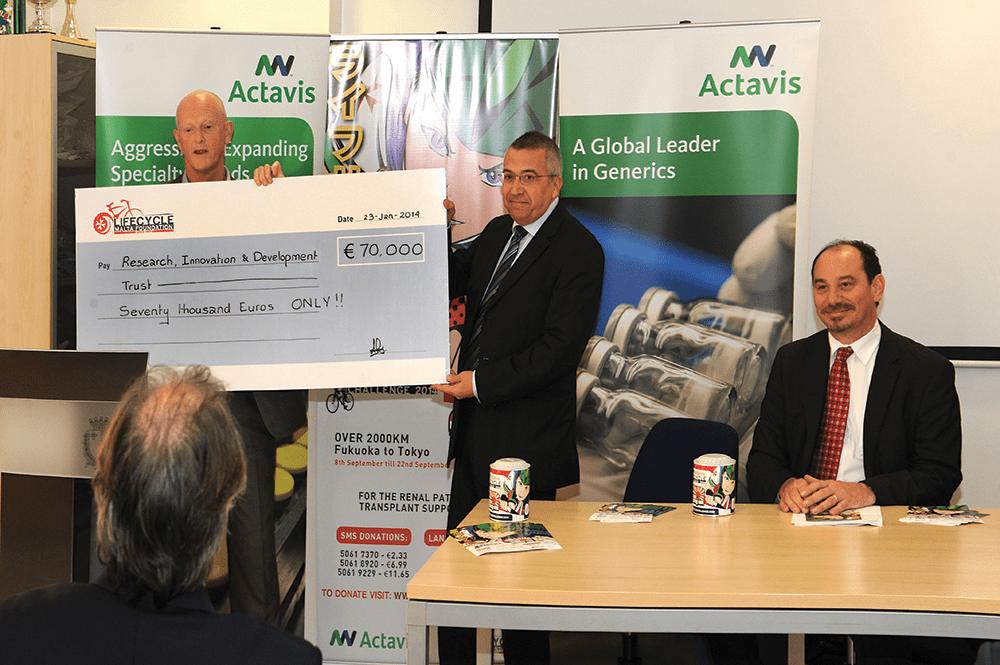
Locally, we have just started scraping the surface of fundraising for research. Recently, the RIDT received a number of important donations which shall serve to continue fostering local research. In the first of its kind, we received €55,000 from local NGO ‘Action for Breast Cancer Foundation’ (ABCF), raised through the ALIVE Cycling Challenge. They are being used to launch a Ph.D. studentship in breast cancer research. The Lifecycle Foundation has also donated €70,000 towards kidney disease research. These NGOs have followed a stream of public and private entities, as well as students, who have been donating money for research for the last three years.
Secondly, don’t you want to be part of something bigger? You probably cannot find the cure for cancer yourself, but everyone can contribute to make that a possibility. As the University’s Research Trust, we do not only want to attract big corporate companies or NGOs to donate money, but we also want you — the students, the alumni, the professionals, the workers, the parents, to realise that donating for research is a noble cause. A recent Christmas campaign at the University of Malta that was spearheaded by KSU, the UoM staff and the Chaplaincy managed to raise €12,000 from students, staff, and academics on campus. A third of these funds were donated to the RIDT, which were devolved to the Department of Anatomy. They will be invested in specialised research projects focusing on specific strands of cancer, such as leukaemias, sarcomas, brain tumours, breast and colon cancer.
Research affects our day-to-day lives. Though research discoveries take time and need constant investment to benefit our society, we can come together as a Maltese community by investing in research for good causes. Ultimately, let us imagine a world where we have cured all major diseases, where we can move objects with our thoughts, and unravel the mysteries of the universe.Imagine, and let’s make it happen!




Comments are closed for this article!