
Author: Daiva Repeckaite
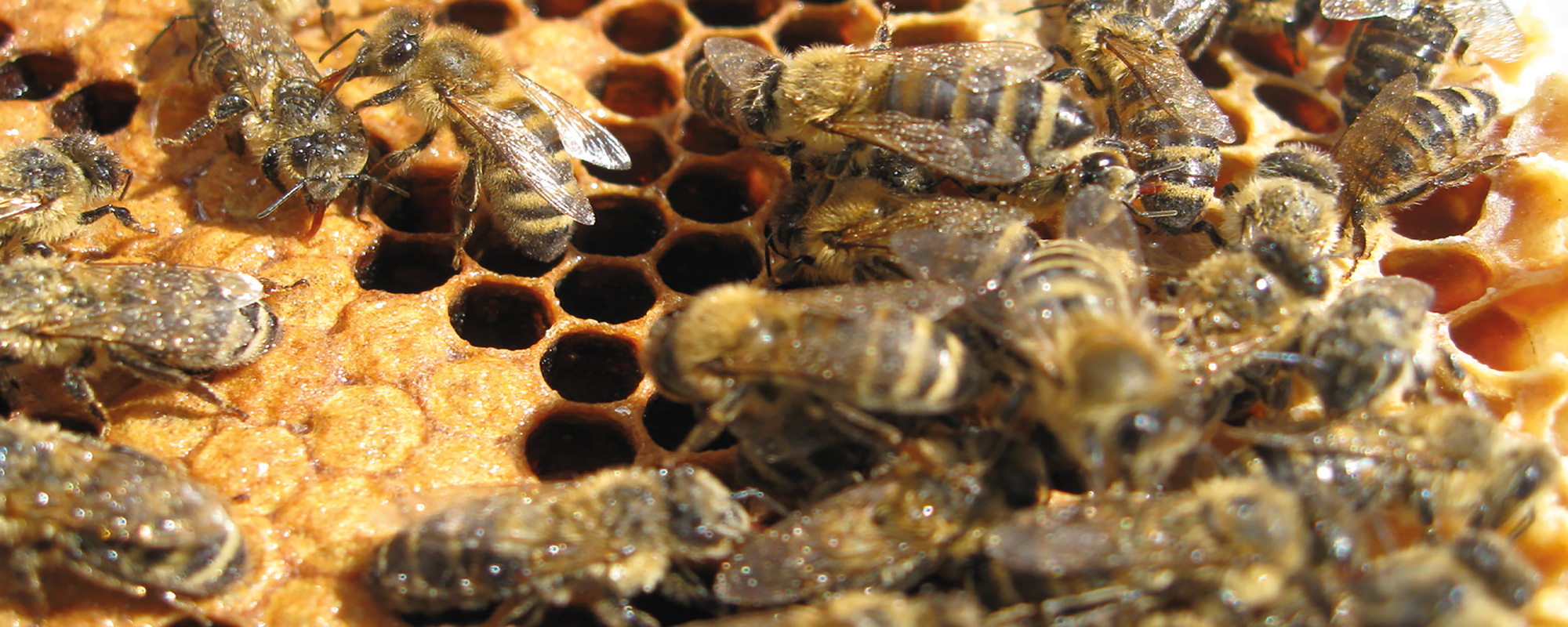
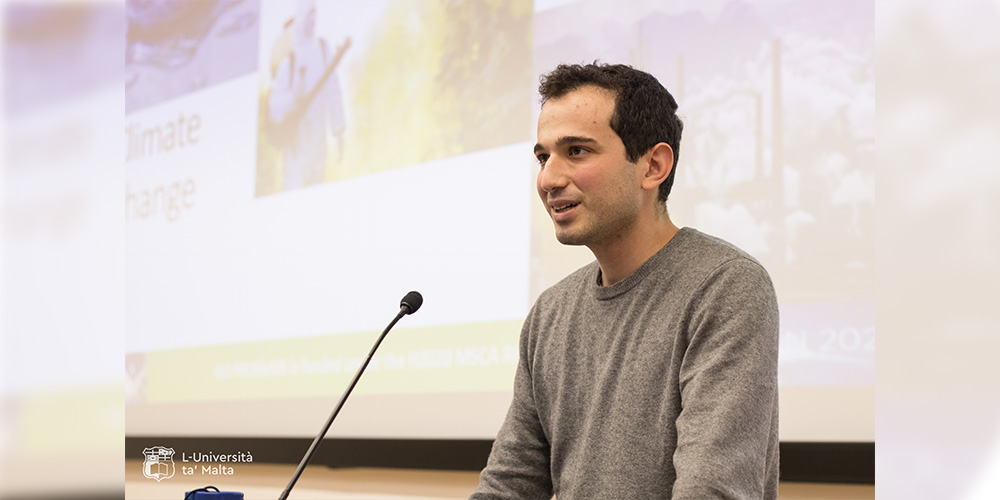
It started with a high school project. ‘Every year, the school needed students to [adopt] a beehive. Eventually I fell in love with bees – like everyone does,’ Dr Daniele Alberoni (University of Bologna) remembers the beginnings of a journey that later became his research, his business, and his lifestyle. He shared these thoughts with THINK when he visited the University of Malta in December 2019. Having become a beekeeper at the age of 16, the Italian scientist is working to develop new remedies against common bee illnesses.
‘I kept the number of honey bee colonies at five hives. When I started university, to cover the cost of living and Erasmus studies abroad, I increased the number of them to pay with the honey. Now, together with my partner, we started a farm,’ Alberoni continues. Their farm, currently converting to organic, counts over a hundred hives, selling honey at local markets and village fairs.
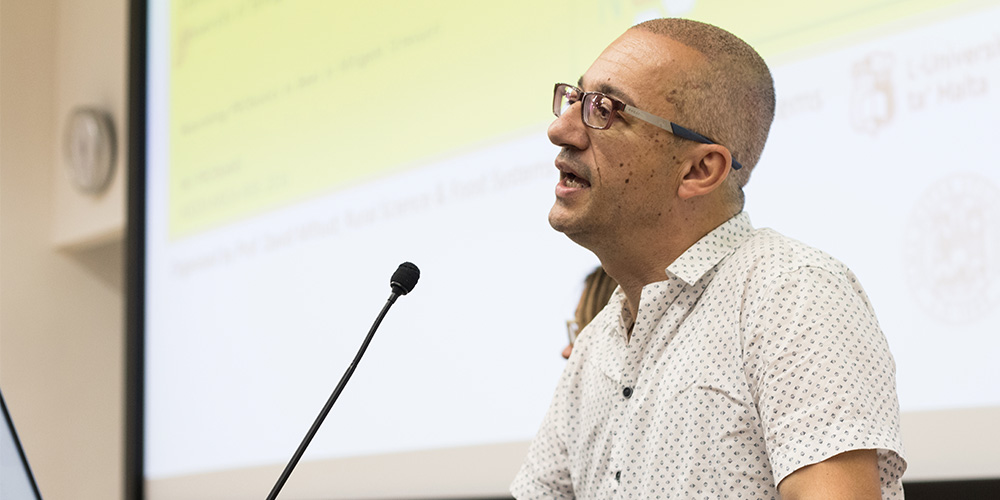
Apart from harvesting honey, beekeepers are also racing against time and parasites. Climate change and pesticides are stressing bees out and Alberoni is trying to help them by boosting their immunity. He visited Malta with his colleague Dr Francesca Gaggia (University of Bologna) to take part in NO PROBleMS (NOurishing PRObiotics to Bees to Mitigate Stressors), a Research and Innovation Staff Exchange funded by the EU’s Marie Skłodowska-Curie Actions. Prof. David Mifsud (University of Malta) initiated this exchange. The conference room was packed with Maltese beekeepers eager to learn about this state-of-the-art research.
The international research team is looking for technologies to counteract a particularly nasty honey bee gut parasite, Nosema ceranae, which can kill a bee colony in a matter of weeks. Alberoni’s own bees have been affected. ‘It’s a major problem for me and other beekeepers, because it’s an exotic disease, so the bees have not [developed] a defence or a balance of coexistence,’ he says. ‘It also shows synergy with other stress factors, such as pesticides.’
The disease is a scientific challenge, too: it is a fungus, but it behaves like a virus. ‘It reproduces using the system of the host cell to multiply. It is really hard to go inside the gut epithelial cells of a honey bee to counteract it.’ The disease does not show any symptoms right away, and when bees start getting sick, it is usually too late to take action.
‘Our research in the framework of NO PROBleMS action takes a preventive approach. In addition to measures preventing infection, [boosting bees’ immune system] is the only way to counteract the emergence of such subtle and ferocious diseases with eco-friendly methods,’ Alberoni says. ‘We want to try natural compounds, and maybe mix them to get a better [immunity boost].’ Plant extracts coupled with probiotics will be sourced from Malta and Ireland, and field experiments are to start this year.
Mifsud is the team leader for this project in Malta, and he’s hopeful. ‘We have isolated beneficial bacteria from honeybees which were never exposed to pesticides and to varroa [parasitic mite] treatments. We are culturing these bacteria in large numbers, finding efficient and compatible plant extracts, and combining all this as a food source for bees. Initial experiments are giving positive results. Let’s hope all this will work for the benefit of our bees.’ What started from a school project grew into an international effort to save bees – key to our economy and environment.



Comments are closed for this article!