
Dr Andrew Zammit Mangion writes about his career: from CERN to winning awards for research based on data released by WikiLeaks
In the summer of 2007 the University of Malta (UoM) gave me the opportunity to visit the world’s largest scientific experiment at CERN in Geneva, Switzerland. CERN houses a particle accelerator looking into what makes up all matter in the universe. There I saw for the first time the vast amount of data being used to find answers to big questions in science. Over one petabyte of data is processed daily at CERN. A stack of DVDs storing this amount of data would reach the top of Dingli Cliffs, Malta’s highest point at 253 metres. My experience at CERN was to leave its mark on my future career.
I had just finished my undergraduate degree in Electrical Engineering (UoM) and intended to pursue a career in this field. Following CERN I completed a placement with the German Aerospace Centre through the student organisation IAESTE, and worked with Computime Ltd as a network engineer. Soon after I applied for and was awarded a Ph.D. scholarship at the University of Sheffield. My research focused initially on signal processing and control, subjects I had specialised in during my undergraduate degree, but I soon found that these techniques could be used in the up-and-coming ‘big data’ arena.
A year into my Ph.D. I made the conscious choice to move out of my ‘comfort zone’ and dedicate my time to applying engineering tools to study complex systems. The hard work only paid off in 2012, when I applied algorithms developed in my Ph.D. to the controversial WikiLeaks data set. Using data recorded by the US military I showed that one could identify the likelihood of conflict in a region a year in advance. The predictions were based on records of events which occurred between 2003 and 2009 in Afghanistan, such as patrol incidents or strategic operations. The work was published in the Proceedings of the National Academy of Sciences (NAS) of the USA and awarded a prize in Applied Statistics and Engineering by that institution, and won an award for best doctoral dissertation by the Institute of Engineering and Technology in the UK. It was featured in newspapers and technology websites around the world such as Wired and The New York Times. Based on these findings I wrote a short book.
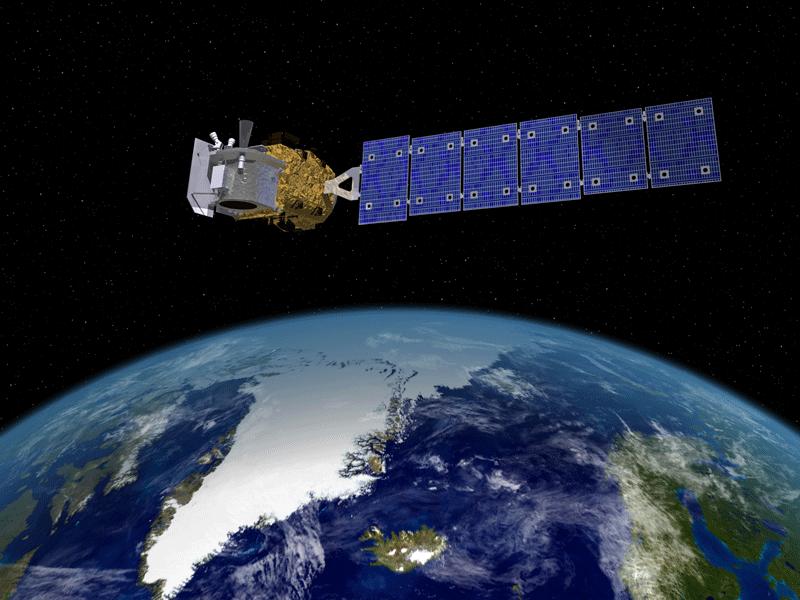
Today, seven years after CERN, a Ph.D. and two post-doctoral positions, I use data to study complex phenomena on a daily basis. Recently I shifted my focus to an area known as environmental informatics. For the past two years I have studied satellite data from NASA and the European Space Agency to analyse sea-level rise due to ice melting in Antarctica. This summer I will take up a research position in Australia to carry out similar work for other environmental problems, such as greenhouse gas build-up in the atmosphere.
Looking back I see the gamble of venturing into the unknown and steering away from my comfort zone as a determining factor to a successful career path. I intend to continue venturing out of this zone as much as possible. I believe this is necessary for successfully tackling emerging and exciting research questions in the new world of big data.




Comments are closed for this article!